Industrial style is one of those decor trends that never runs out of steam, and I think it makes the most sense of all in a workspace. Between raw metal, solid wood and clean lines, it creates an atmosphere that supports both focus and creativity. An industrial home office is also a chance to play with honest materials and strong colors to build a corner that genuinely makes you want to sit down and get to work. Find more ideas in our industrial decor and home office decor sections.
Today I’m sharing 14 inspiring setups to help you create an industrial home office that’s as practical as it is good-looking, with concrete ideas you can borrow depending on your taste and your space. We’ll start with the core principles, then look at colors and materials, furniture and decor, and finally three moods: vintage, modern and plant-filled. Short on space? My small home office ideas and closet office ideas pair perfectly with the industrial look, and the industrial decor guide covers the rest of the house.
Contents
1. The essentials of a practical industrial home office
2. Colors and materials for an industrial home office
3. Furniture and decor for an industrial home office
4. Three moods for an industrial home office
The essentials of a practical industrial home office
Before choosing furniture or colors, I think it’s important to understand what really makes an industrial-style office work. The first principle I always follow is to put function first without sacrificing style. A successful industrial office relies on simple lines and crisp geometric shapes that structure the workspace. I love it when every piece has a reason to be there and nothing looks placed at random. Metal legs, solid wood desktops and open shelving all follow this logic where useful becomes beautiful. It’s a style that rejects the superfluous, and in an office, that’s exactly what you need to stay focused.
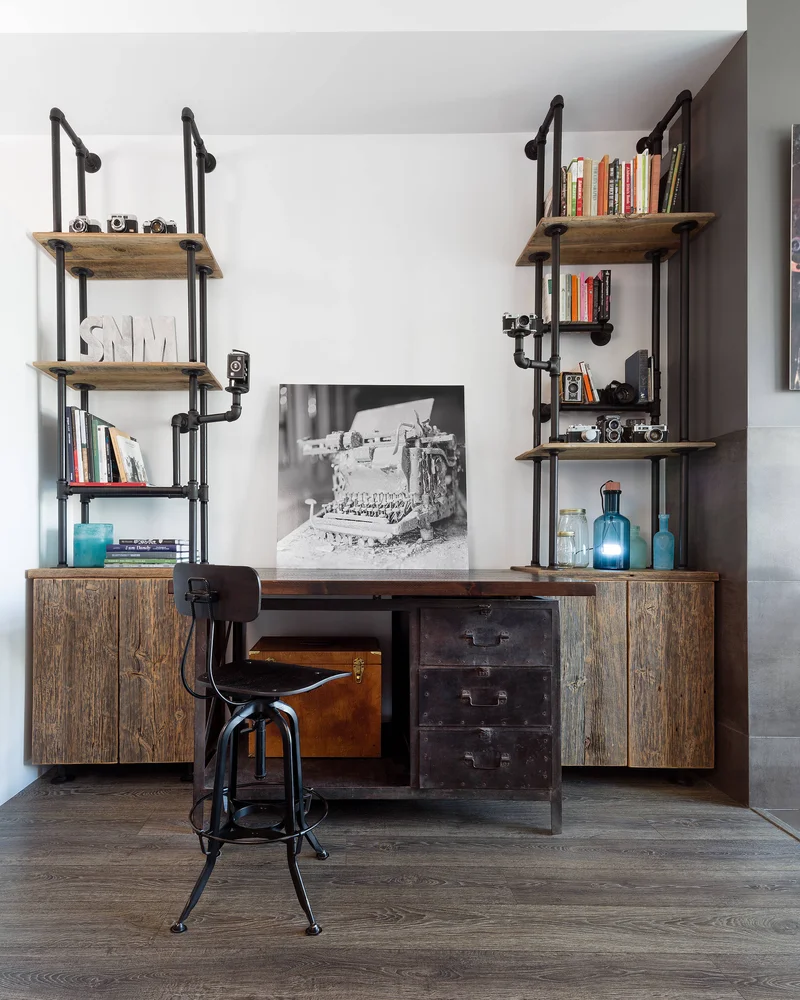
1. Pipe-and-plank shelving towers on either side of a reclaimed wood desk © Houzz
The second thing I keep in mind is light. The old workshops and factories that inspired this style had huge openings, glass roofs and plenty of natural light. In a home office, I recreate that effect by keeping windows as clear as possible and choosing fixtures like architect lamps or metal pendants that direct light where it’s needed. Good task lighting makes all the difference when I work long hours, but natural light remains the best ally of a productive workspace. Ideally, place your desk perpendicular to the window so you get daylight without glare on your screen.
Finally, I pay close attention to ergonomics. Just because I love raw metal chairs doesn’t mean they’re comfortable for eight hours a day. I don’t hesitate to mix a modern ergonomic chair with the rest of the industrial furniture, and nobody will hold it against me. What matters is that the desk is at the right height (around 28–30 inches (71–76 cm) for most people), the screen is at eye level and everything is within easy reach from your seat. Industrial style is flexible enough to absorb contemporary pieces without losing its character, and that adaptability is exactly what makes it such a good fit for a workspace.
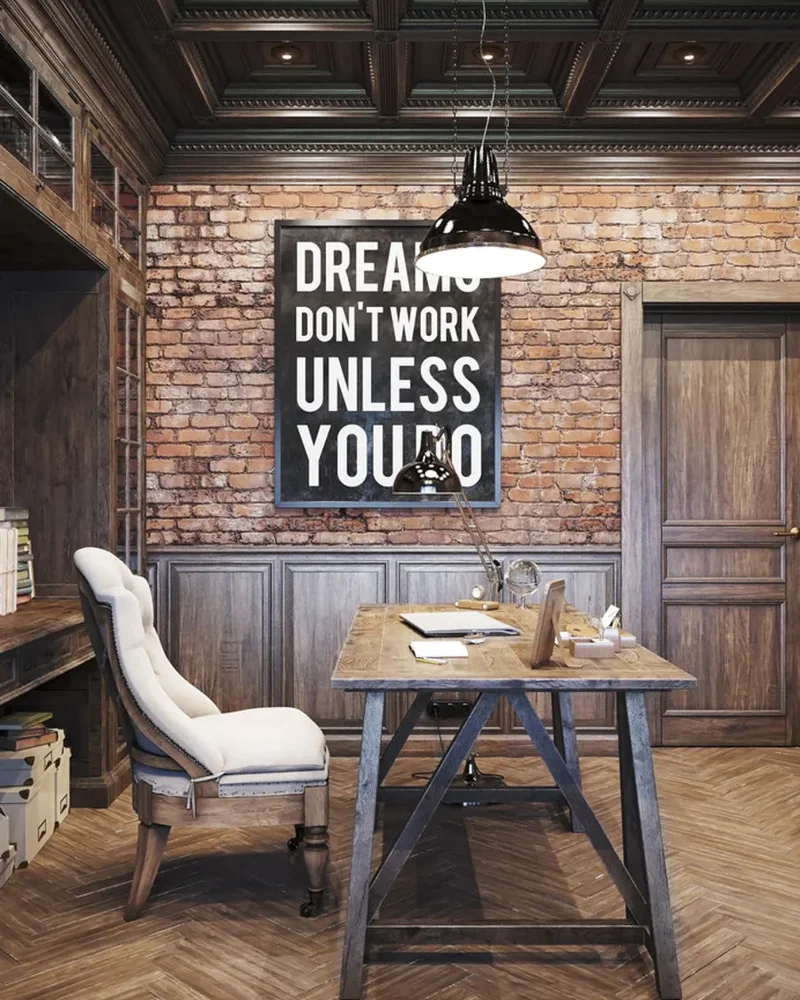
2. A trestle desk under a black dome pendant against brick and a bold typography poster © Frenchy Fancy
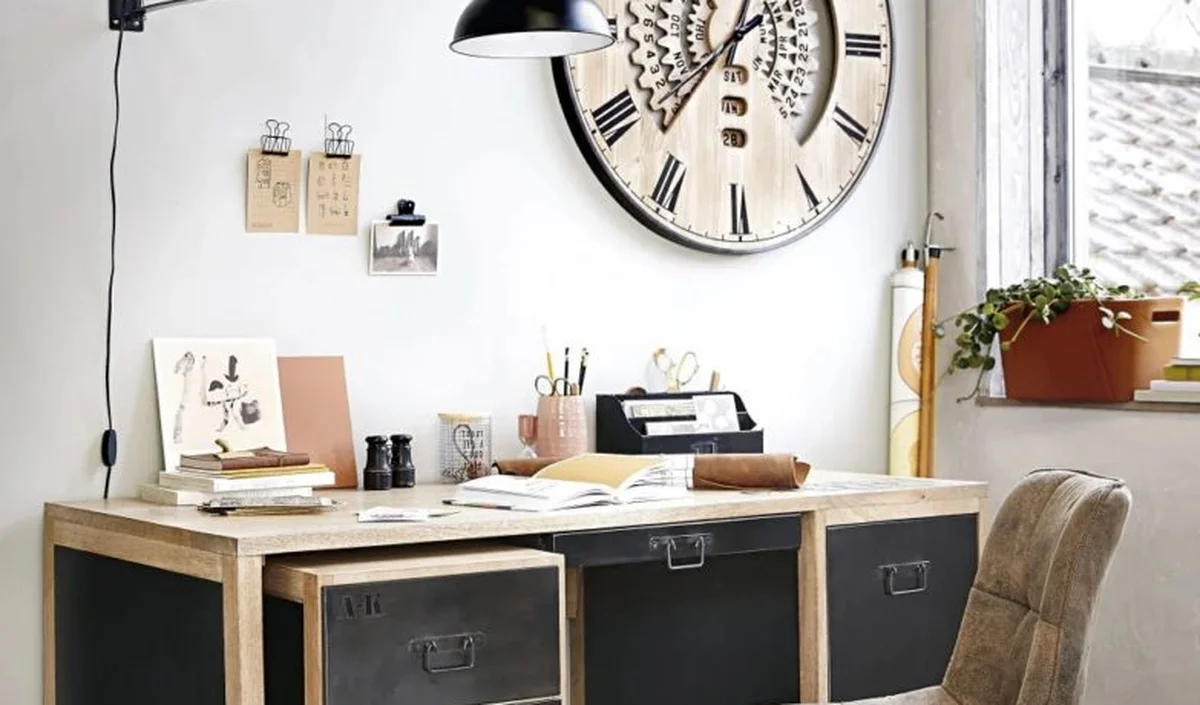
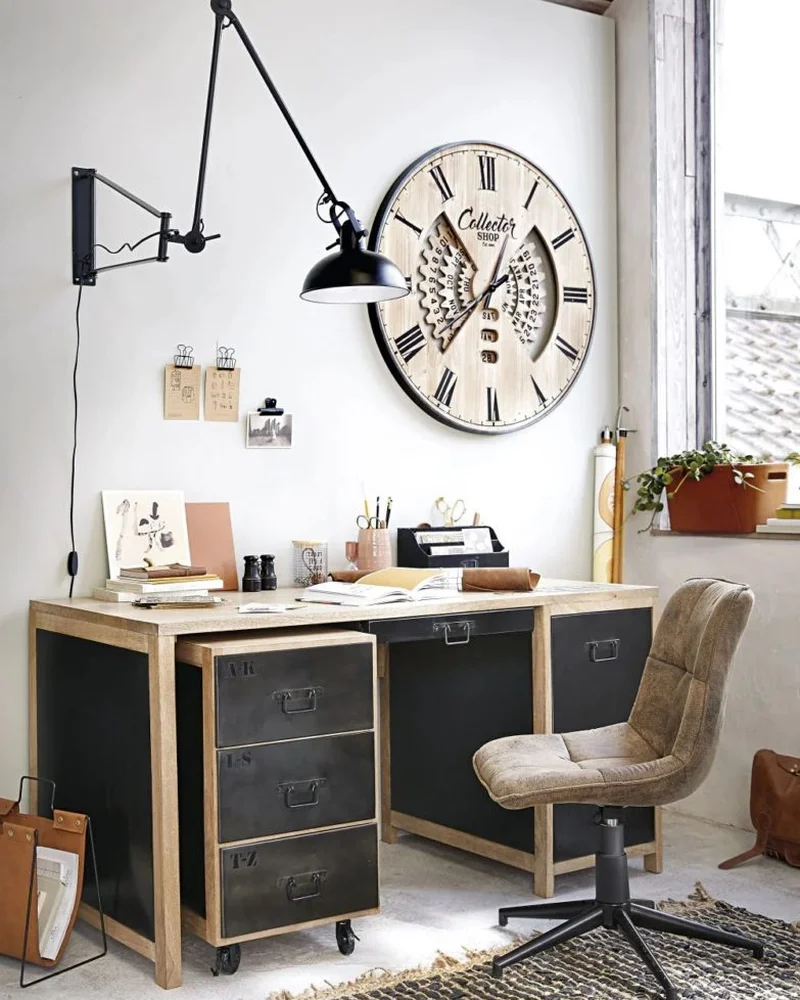
3. A wood-and-metal desk on casters with a swing-arm lamp and oversized clock © Maisons du Monde
I’ve also noticed that industrial style ages particularly well. Its materials, patinated metal and old wood, gain character over time instead of looking worn out. A brand-new varnished pine desk can look tired after a few years, while a raw oak top on steel trestles will look even better ten years from now. That makes it a smart investment for a room you use every day: raw materials age gracefully and tell a story as time goes by.
Colors and materials for an industrial home office
Choosing colors and materials is the backbone of any successful industrial workspace. The palette keeps your eyes rested through long workdays, while the textures give the room its workshop character. Here’s how I approach both.
Which shades suit an industrial-inspired office?
The color palette of an industrial office revolves mainly around neutral, deep tones: black, charcoal gray, off-white and earthy browns that recall old manufacturing workshops. These shades never tire the eye, which is crucial when you spend hours working. I like to paint a dark gray wall behind my screen to reduce visual fatigue. Neutral tones create the perfect backdrop for concentrating without distraction.
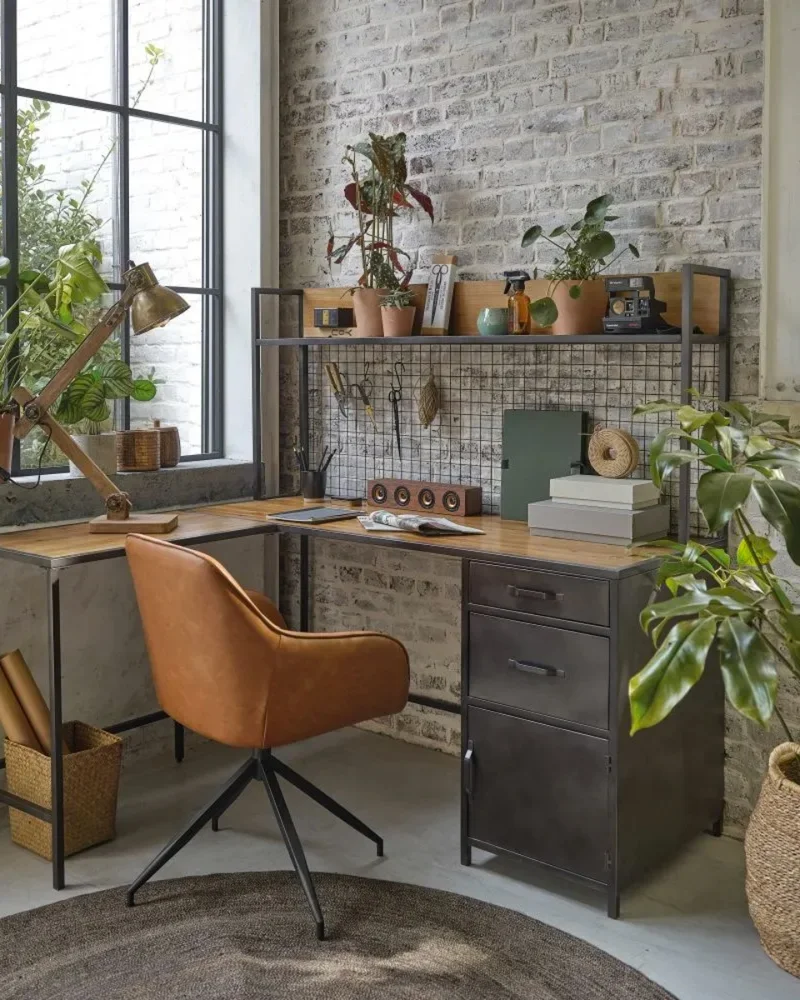
4. A cognac swivel chair, steel shelving and plants against whitewashed brick © Nuage Déco
White plays an interesting role in this palette, because it lightens the whole room and visually enlarges a small space. I often use it on the main walls and ceiling to keep things bright, especially if the room lacks windows. The contrast between a white wall and black metal furniture instantly creates the graphic tension that defines industrial style. It’s simple but incredibly effective: a white backdrop makes every piece of furniture stand out.
To break up an overly sober palette, I sometimes introduce an accent color. Khaki green, petrol blue and terracotta work very well in an industrial office without betraying the spirit of the style. I use them sparingly, on a chair cushion, a pencil cup or a frame, just enough to wake up the eye. The key is to stay with shades that evoke nature or old pigments; a well-chosen accent adds depth without changing the look.
Metal, raw wood and brick: the key textures
Metal is, of course, the undisputed star of industrial style, and in an office it comes in every form: desk legs, wall shelves, articulated lamps and even drawer pulls. Matte black steel is my favorite because it fits in everywhere effortlessly and immediately gives any piece character. Brushed metal or aged brass are also nice options to vary the finishes, but matte black remains the safe bet for anchoring an office in the workshop spirit.
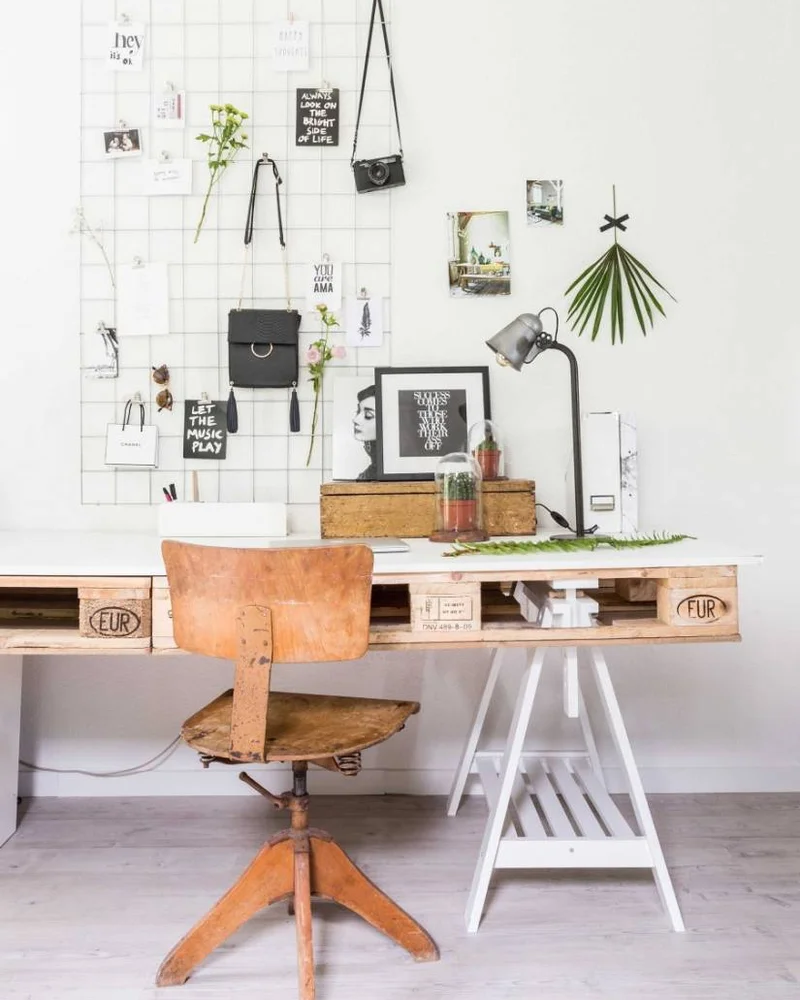
5. A pallet desk on white trestles with a vintage swivel chair and wire grid board © Made in Meubles
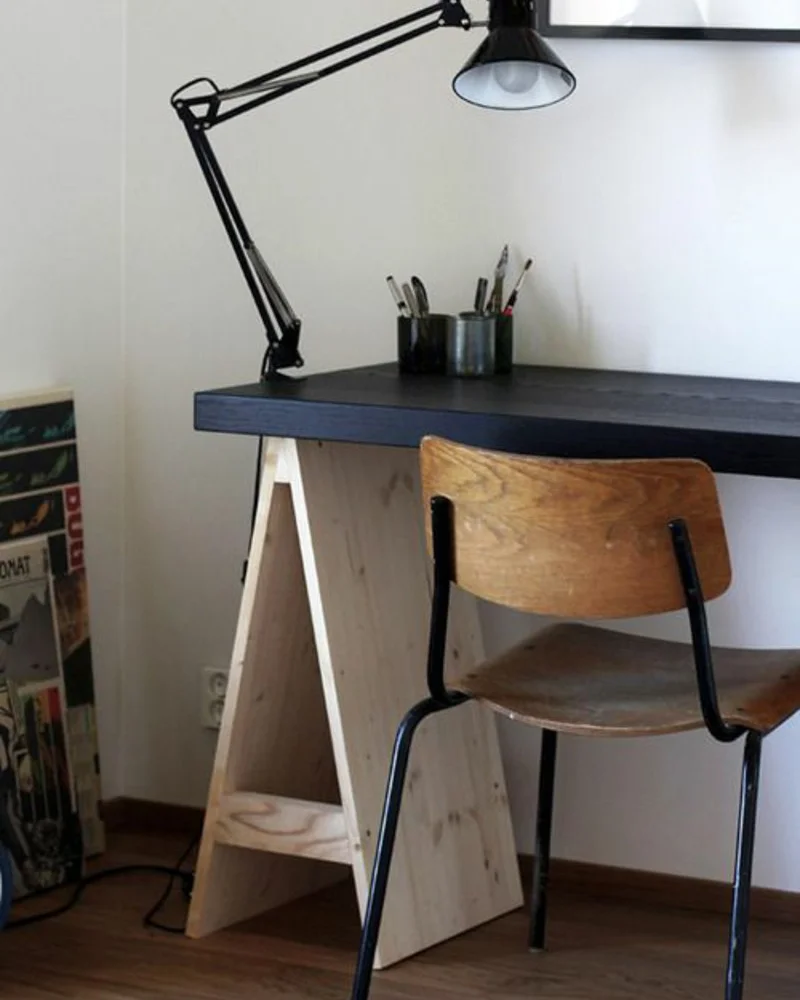
6. A black desktop on plywood sawhorses with an architect lamp and school chair © Frenchy Fancy
Raw wood tempers the coolness of metal and brings the office to life. I prefer species with visible grain, like oak, mango wood or old pine, whose knots and veining tell a story. A solid wood desktop with a live, irregular edge on a metal frame is the founding duo of the industrial aesthetic. I’m careful not to over-finish the wood so it keeps its raw, authentic look; a matte oil is usually enough to protect it from coffee rings.
Brick, whether real or veneer, adds strong texture to an office wall. I love the effect of a red or whitewashed brick wall behind a desk, which instantly creates a New York loft backdrop. If real brick isn’t possible, thin brick veneer panels do the job perfectly and are fairly easy to install. Polished concrete on the floor or as a backsplash is another option I’m fond of for reinforcing the raw side. Brick and concrete bring the patina that overly new interiors often lack.
Furniture and decor for an industrial home office
Your choice of furniture and accessories makes all the difference between an office that vaguely resembles a loft and a truly finished industrial workspace. Start with the desk, chair and storage, then let lighting and wall decor set the mood.
Choosing the right furniture for an industrial workspace
The central piece is, obviously, the desk itself, and I recommend a model with a wood top and a metal frame. Size matters: a desk that’s too small forces you to stack things and breaks the clean look of the style, so I prefer a large, simple top to a small desk crowded with drawers. For storage, I turn to metal lockers or open steel-and-wood shelves that recall old factory libraries. A large, clear desktop boosts productivity and shows off the lines of the furniture.
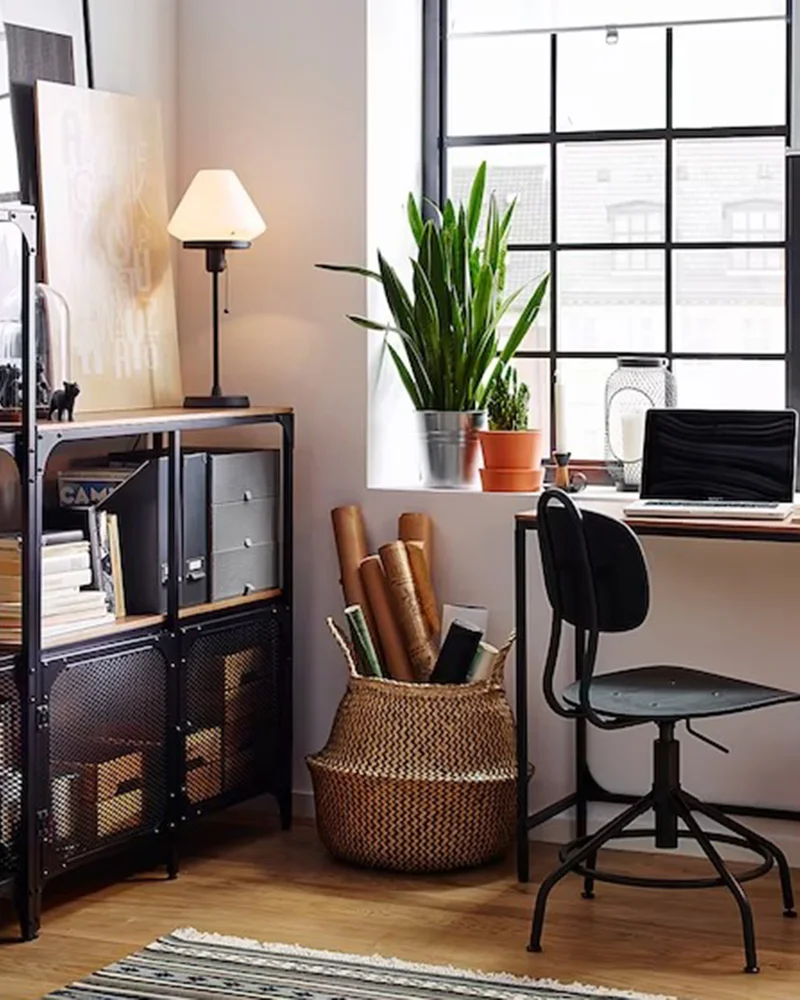
7. Black steel shelving and a corner desk beside a gridded window © Elle
The desk chair is a tricky choice in this style. Worn leather models with metal bases are beautiful and fit the mood perfectly, but check that they offer good lumbar support. I used an old patinated leather office chair for a long time before realizing my back was paying the price. My current solution is a modern ergonomic chair in dark gray fabric that blends into the decor without clashing. Seating comfort should never be sacrificed, even in a room with a strong personality.
Industrial storage furniture is easy to find at flea markets, salvage yards and specialty dealers. Think old metal workshop lockers, hardware-store drawer units, or glass-front factory cabinets turned into bookcases. These pieces have a history you can read in every scratch and touch of controlled rust, and they bring a soul no new piece can quite reproduce. Thrifted furniture guarantees a unique, authentic office.
Decor details that define the industrial look
Accessories are what make an industrial office come together, and I always start with lighting. An articulated black metal architect lamp is the absolute icon of the style in a workspace. I set it directly on the desk or mount it on the wall with a swing arm to free up space. Perforated metal or bell-shaped industrial pendants complete the main lighting perfectly. If you buy only one accessory to set the mood, make it the architect lamp.
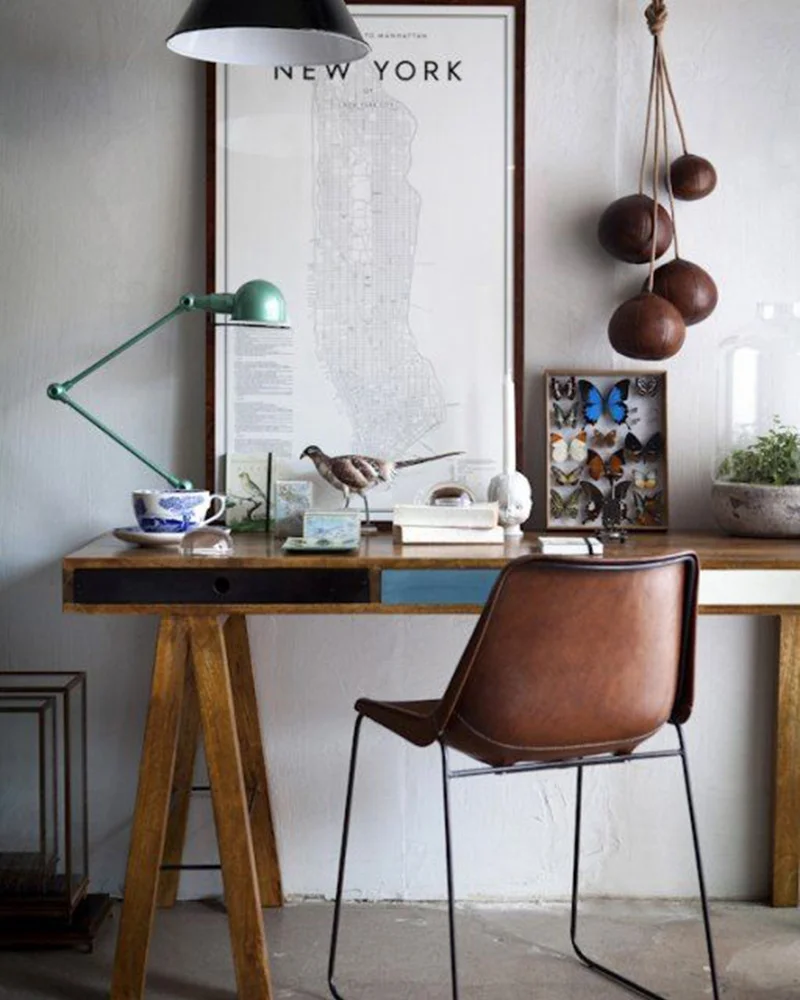
8. A leather sling chair, green desk lamp and New York map above a wood desk © Pinterest
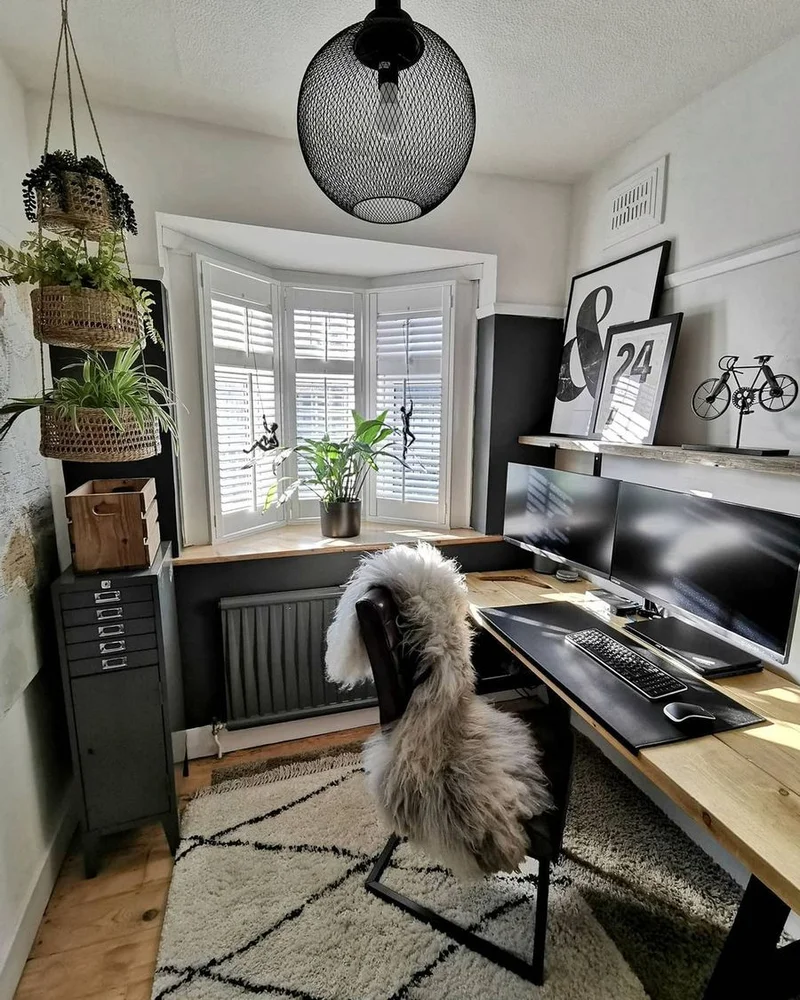
9. A sheepskin-draped chair, black drawer unit and hanging planters by a bay window © Curated Interiors
On the desk, I choose utilitarian accessories with a raw design: a concrete pencil cup, a perforated metal letter tray, a wall clock with an open face. These details reinforce the atmosphere without cluttering. Galvanized metal or reclaimed wood storage boxes are great for organizing cables and stationery. I avoid plastic, which completely undermines the style and clashes with everything else; every accessory in a raw material adds to the visual coherence.
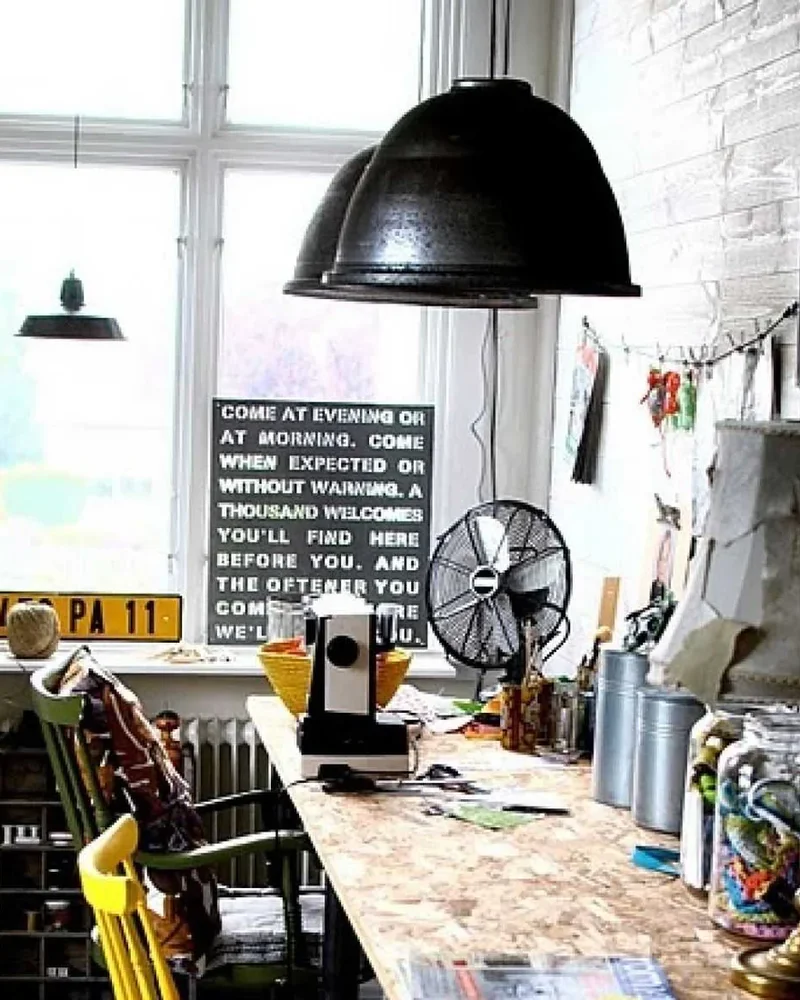
10. Black enamel pendants over a plywood worktable crowded with craft supplies © Pinterest
Wall decor deserves attention too. I go for black-and-white typography posters, vintage botanical prints or large photographs in thin black metal frames. Decorative metal letters mounted directly on the wall make a striking statement, especially in a big room, and oversized clocks with exposed gears become true decorative pieces. Wall decor gives the room personality without overloading the workspace.
Three moods for an industrial home office
Industrial style comes in several variations, and I find it fascinating to explore the ones that work best in an office. Here are three directions, from the warm patina of vintage pieces to sleek black lines and a jungle of plants, so you can pick the one that fits the way you work.
A vintage industrial office with old-world charm
Pairing industrial and vintage creates a truly unique office atmosphere, as if you were working in an early 20th-century architect’s studio. To get there, I hunt for furniture with a past: a wood desk with corners rounded by wear, a riveted steel swivel chair, old printer’s drawers turned into storage. Natural patina is this look’s best friend, and old workshop or trade furniture makes the best centerpieces.
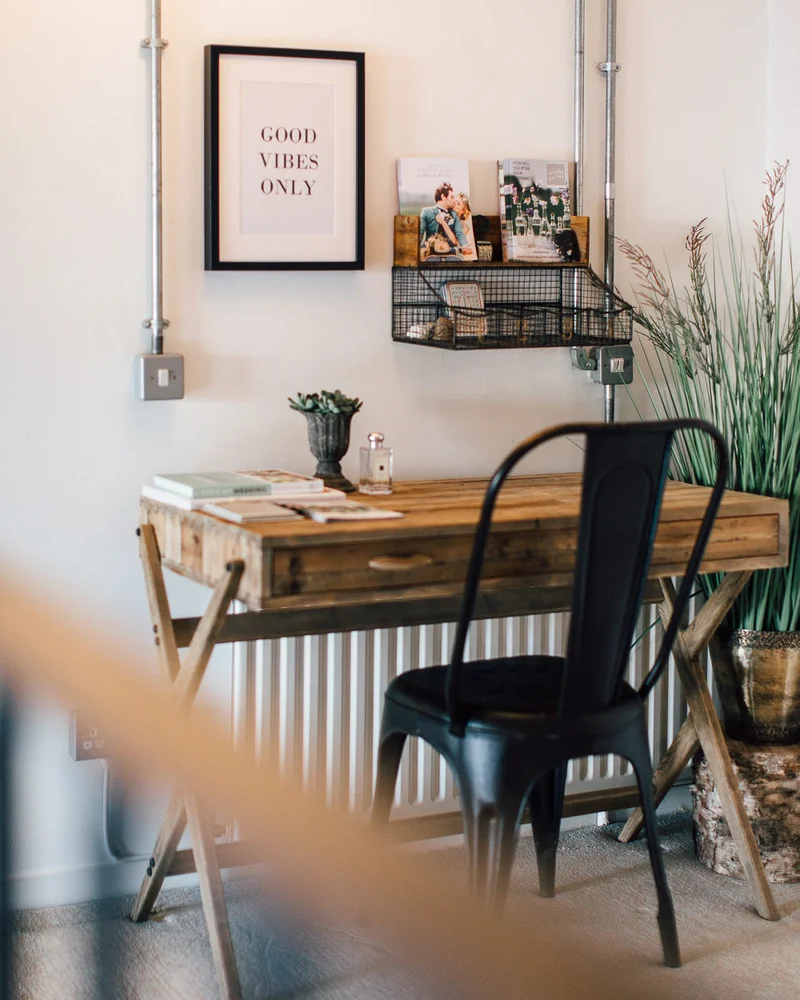
11. A reclaimed wood desk, black metal chair and wire wall basket © Pinterest
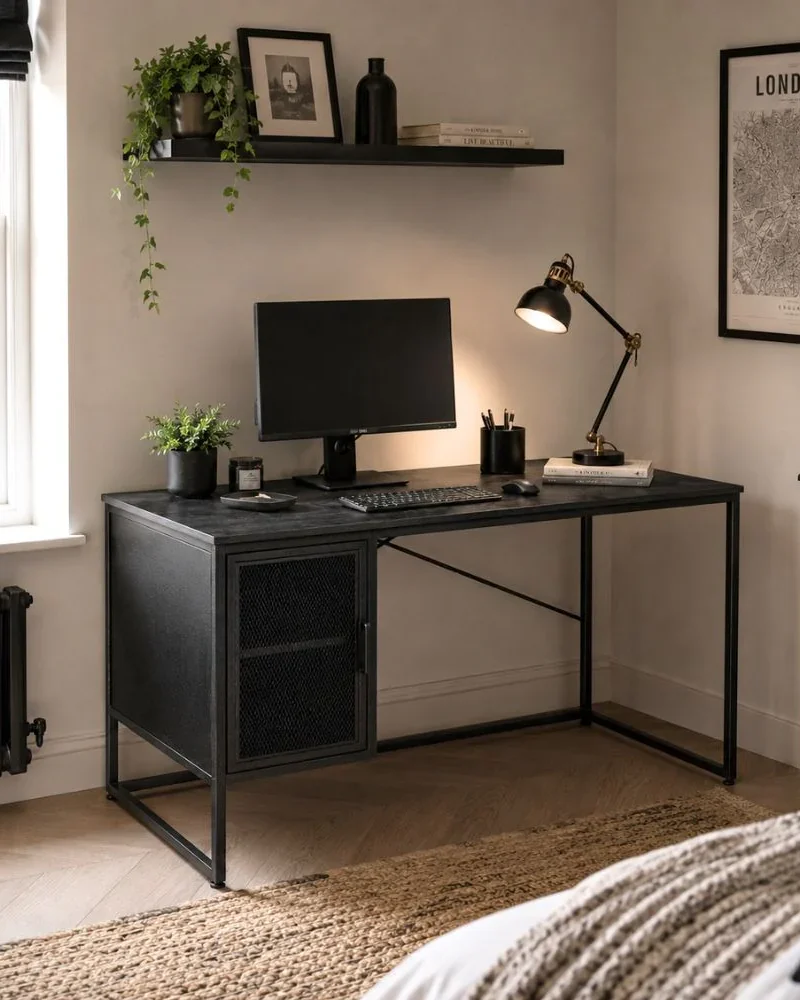
12. A matte black desk with a mesh cabinet and a trailing plant above © The Urban Mill
The colors of this mood lean toward warm, patinated tones. Cognac leather, oxidized copper, dark honey wood and rust hues make up a palette that smells of years gone by. I add objects with a strong story, like an old globe, a typewriter used as decor, glass jars filled with supplies or stacks of old books. These pieces aren’t just decorative; they tell a story.
For lighting in this vintage version, I favor exposed-filament bulbs in brass or aged copper pendants. They give off a soft golden glow that reinforces the retro feel. I add an adjustable desk lamp in patinated brass for direct light on the work surface. Mixing golden ambient light with focused task light works beautifully here, and filament bulbs have become a classic of vintage industrial decor.
A modern industrial office with clean lines
The modern industrial office takes minimalism even further by combining factory codes with a resolutely current design. Think very straight-lined furniture, impeccable matte black metal finishes and smooth surfaces that contrast with the rawness of a concrete or brick wall. The result is a crisp, almost graphic workspace that radiates efficiency.
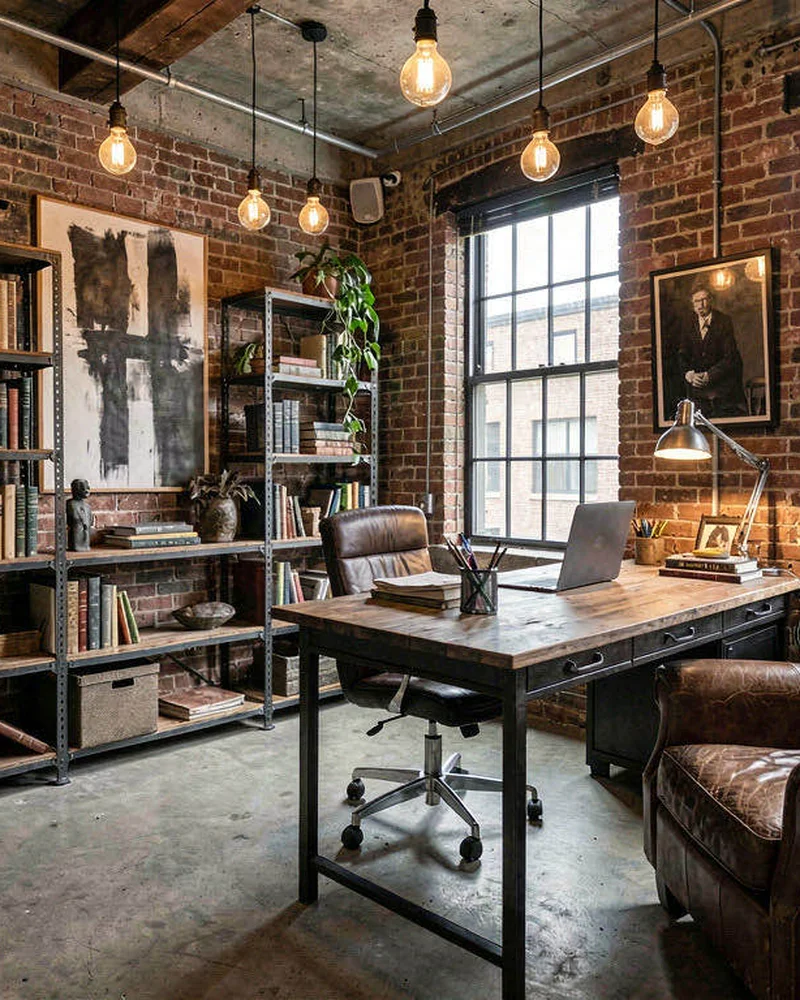
13. Bare-bulb pendants, a leather desk chair and bookshelves in a brick loft office © Remodel IA
In this modern version, I limit the palette to two or three colors at most. Black, white and concrete gray form an unbeatable trio that works in any layout. Furniture is often custom or minimalist, with a floating desk fixed to the wall on steel brackets or a work surface on slim tubular legs. I especially love rolling metal carts that recall workshop trolleys and serve as mobile storage next to the desk.
Tech accessories blend easily into this kind of decor because black cables and screens disappear into the palette. I choose metal cable organizers, steel monitor stands and minimalist speakers that add to the look instead of fighting it. A metal pegboard on the wall is a storage solution I adore: it holds accessories while nodding to old workshop tool panels. It’s functional and perfectly on theme.
A plant-filled industrial office
One of my favorite combinations is industrial style with lots of greenery. Plants have an extraordinary power to break up the hardness of metal and concrete, creating a space that stays raw but feels alive. I set trailing plants on metal shelves, a big ficus in a terracotta pot near the desk and succulents in concrete planters on the windowsill. The green of the leaves contrasts beautifully with black metal and gray concrete.
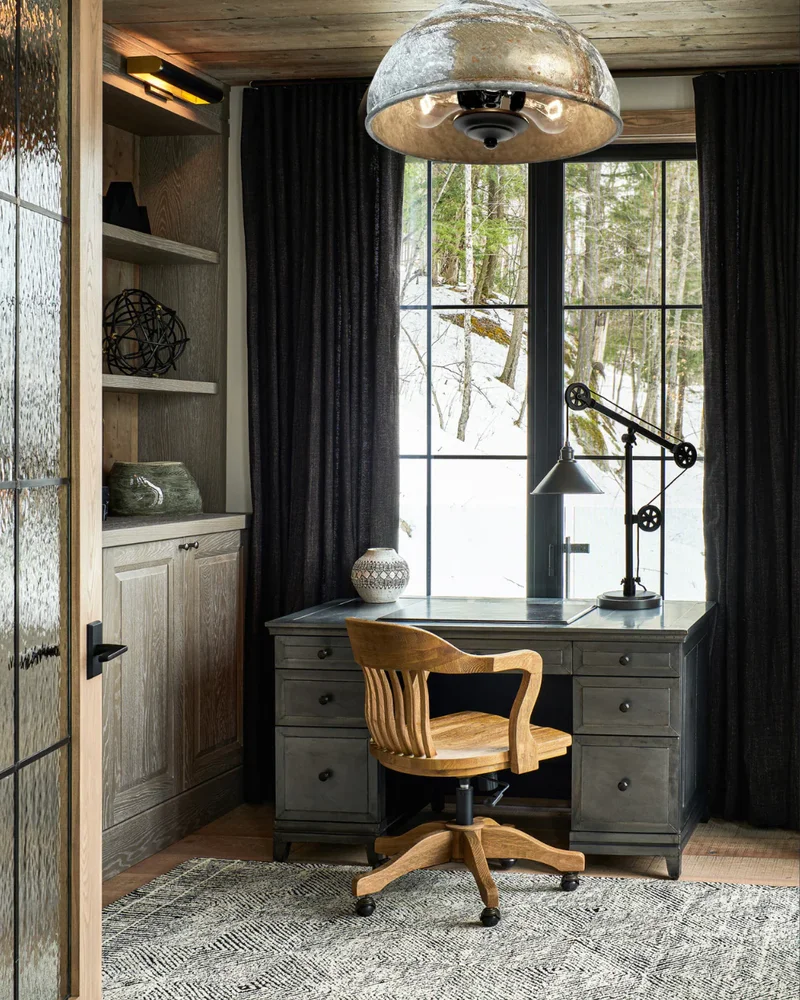
14. A gray vintage desk, wood swivel chair and black task lamp by a snowy window © Good Lamps
For this pairing to work, I make sure the planters stay in the industrial spirit: cast concrete pots, galvanized metal planters, macramé hangers hooked onto exposed pipes. Plants also have a real impact on well-being, helping the room feel calmer and more pleasant during long workdays. Pothos, monstera and snake plants are my favorites because they need little care and tolerate varied light. This plant-filled approach is probably the one that will appeal to most people, because it softens what some find too cold in pure industrial style, whether you have a big open loft or a small desk nook in a studio.
Frequently asked questions
How do I set up an industrial home office in a small space?
Choose a compact desk with black or brushed steel legs and push it against a wall to keep the floor clear. A raw wood wall shelf above it replaces bulky drawer units, so you build up rather than out. A stool that slides under the desktop saves space, and keep only what you really use on the desk.
What materials work best for an industrial-style desk?
Steel for the frame, solid wood or raw plywood for the work surface and a concrete-look or gray plaster finish on the walls is a winning trio. Stick to matte finishes and keep tones in the same muted range: rust, charcoal and natural unfinished wood.
How should I light an industrial home office?
Plan two layers: an articulated metal desk lamp for precise task light, and softer ambient light from a pendant with an exposed bulb. Avoid cold fluorescent tubes, which tire the eyes. Warm filament bulbs pair beautifully with steel and raw wood.
How can I keep an industrial office organized without losing the look?
Lean into visible storage: open metal lockers, galvanized steel boxes, a pegboard and wall hooks for cables and accessories. Industrial style tolerates objects on display as long as they’re functional and tidy. A rolling drawer unit under the desk handles paperwork discreetly.
What kind of desk chair suits an industrial interior?
Look for a balance between real comfort and visual coherence. An ergonomic chair with a metal base works well, as does a vintage leather executive chair or one in charcoal fabric. Adjustable height and good lumbar support are non-negotiable if you work there all day.