A Scandinavian kitchen is defined by its clean, functional design, its light colors and its natural materials, which together create a bright, welcoming room where you actually want to linger over a morning coffee or a long weekend breakfast. It’s a style that suits the kitchen particularly well, since it puts practicality first without ever sacrificing good looks. For more ideas in the same spirit, explore our Scandinavian decor and kitchen decor sections.
Below you’ll find plenty of ideas and inspiration to bring Nordic style into your own kitchen: the colors that work, the materials to favor, the furniture and accessories that make the look, and three moods to choose from, modern, vintage and boho, each illustrated with real kitchens. Whether you’re designing a new kitchen from scratch or simply want to refresh your cabinets, open shelves and textiles, you’ll find practical ideas to borrow and adapt to your space and budget.
Contents
1. What defines Scandinavian style
2. Choosing the colors and materials for your kitchen
3. Furniture and accessories for a Nordic kitchen
4. Three Scandinavian kitchen moods to try
What defines Scandinavian style
Scandinavian decor embodies functional elegance and refined simplicity. It stands out for its use of light tones, such as white, gray and beige, which create a bright, spacious feel. Natural materials like wood and linen are everywhere, bringing warmth and comfort. Furniture is usually defined by clean lines and simple shapes that put function first without compromising style. The main goal is to create a harmonious, welcoming space that’s easy to live in.
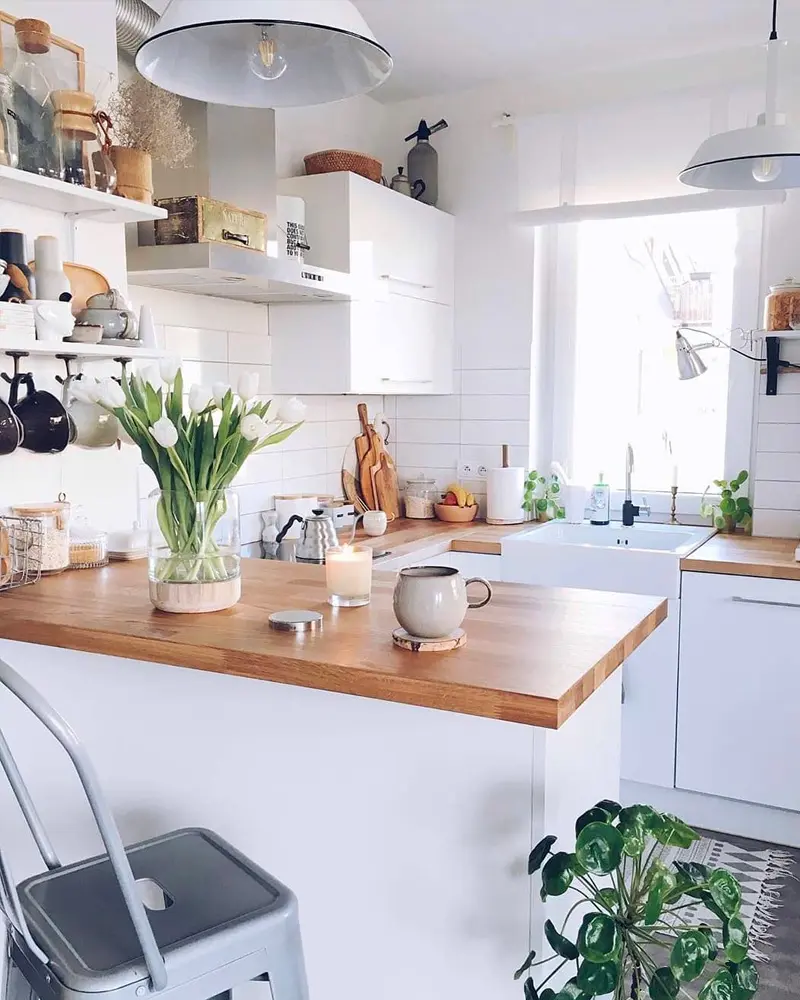
1. A butcher-block counter, open shelving and white enamel pendants in a sunny white kitchen © Nouvelle Déco
An important feature of Scandinavian style is its love of minimalism. Spaces are uncluttered and well organized, with few unnecessary objects. This creates a calm, serene atmosphere that’s good for relaxing and focusing. Key pieces get to shine, whether it’s a solid wood dining table or a chair with a timeless design. Each element is chosen carefully for its quality and its function while keeping a pared-back look.
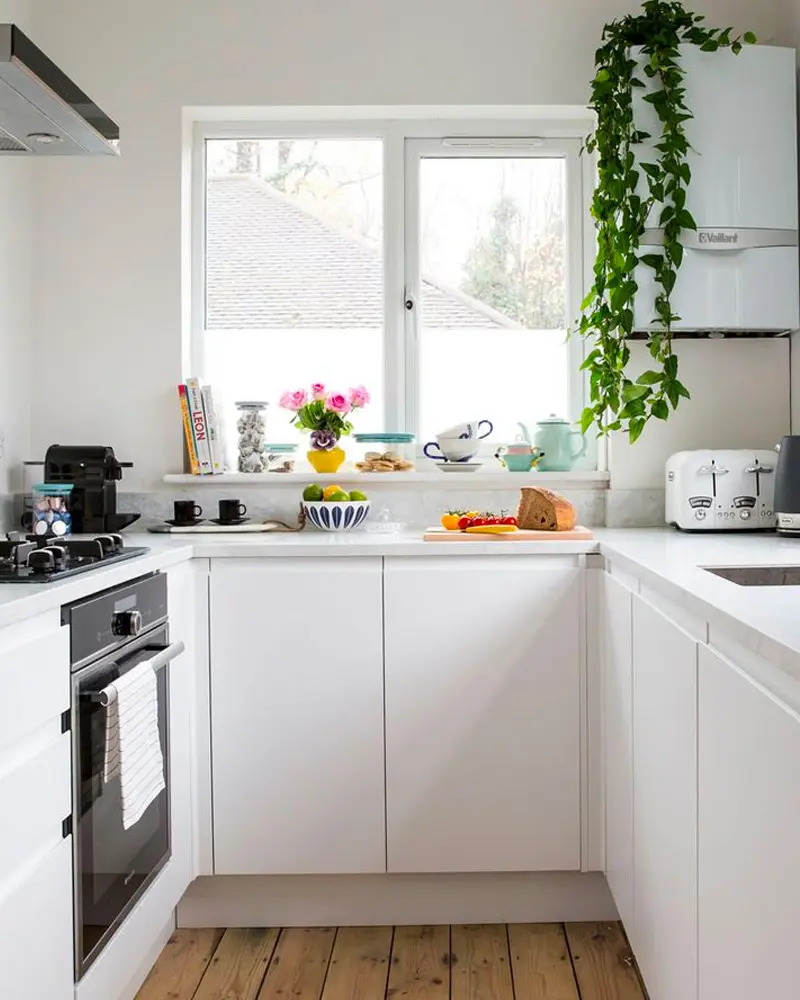
2. Handleless white cabinets in a U-shaped layout, with a trailing pothos framing the window © Pinterest
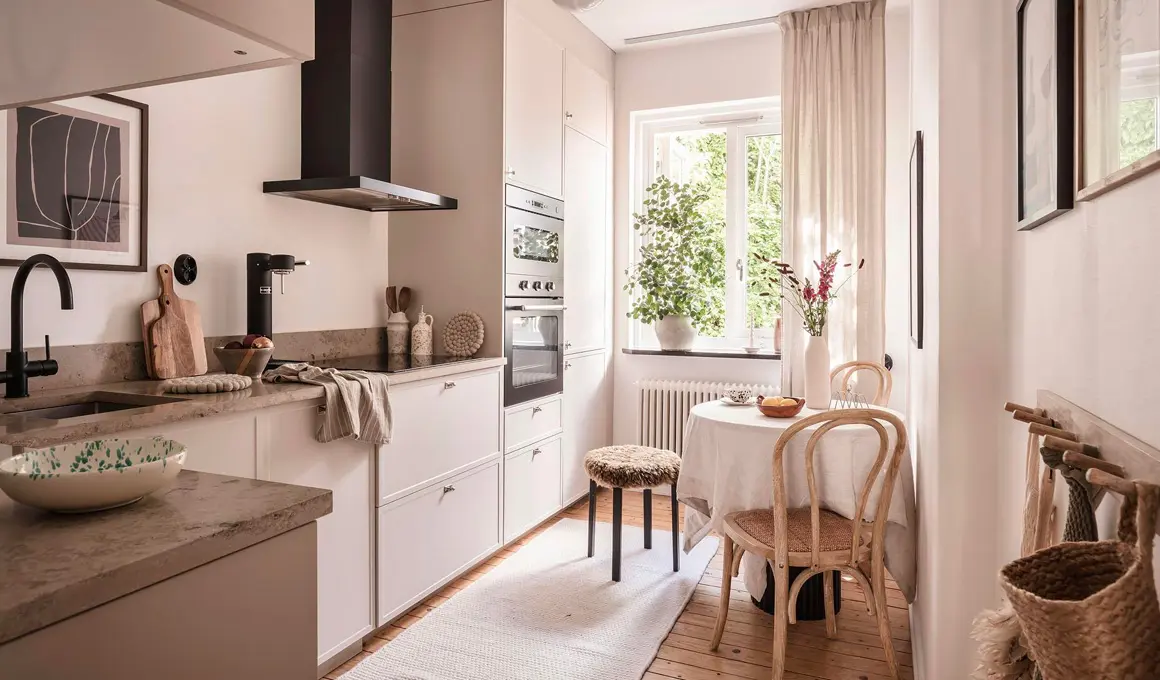
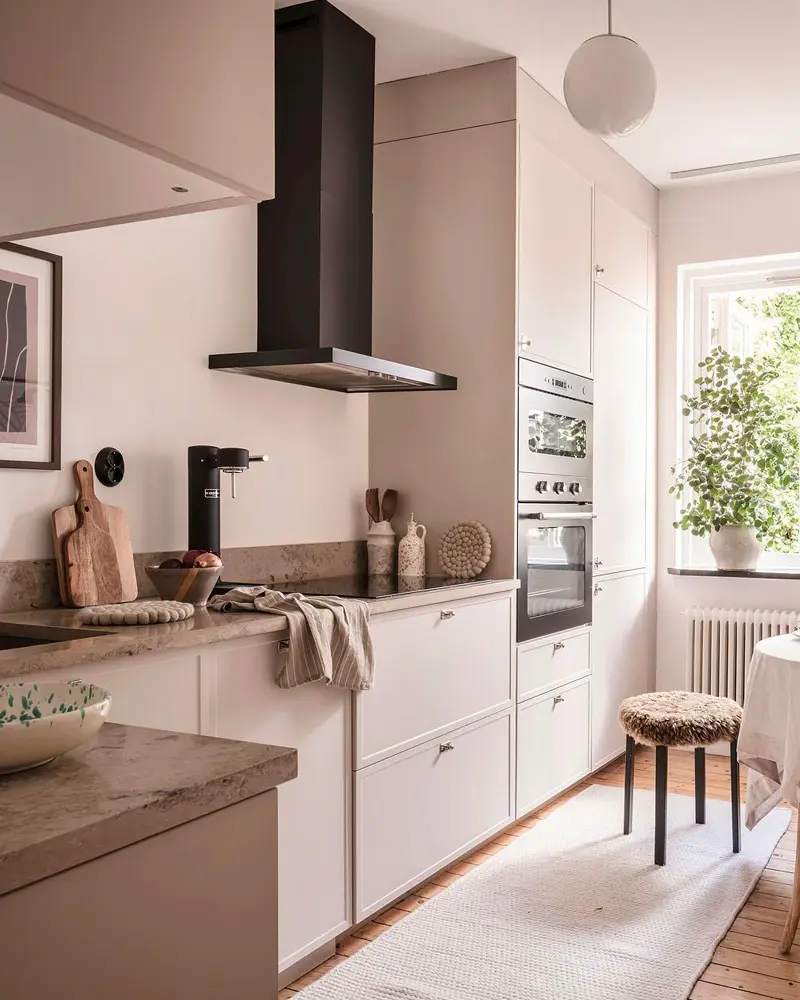
3. Taupe cabinets, a black hood and concrete-look counters in a calm modern kitchen © Alvhem
Textures also play an important role in Scandinavian decor. Wool rugs, linen pillows and faux fur throws add comfort and softness. These textiles bring depth and visual warmth in contrast to smooth, pared-back surfaces. Geometric motifs and nature-inspired prints are often used to add energy and interest. In the kitchen, that might mean a striped runner, a linen tea towel or a patterned wallpaper on one wall.
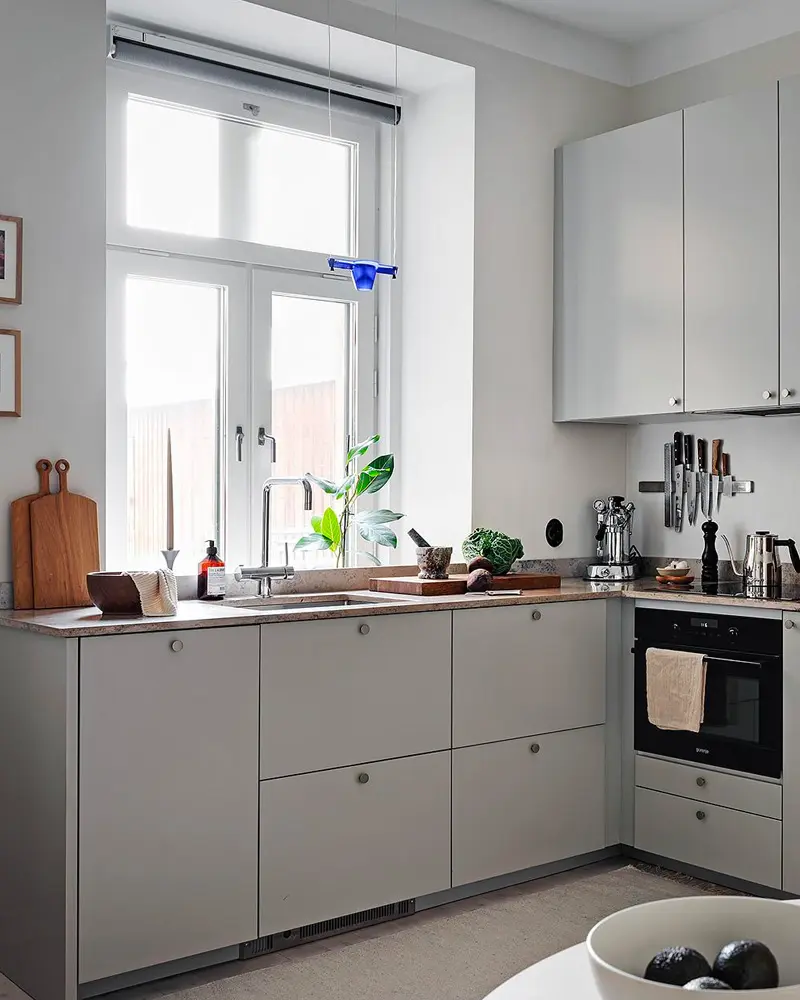
4. Pale gray drawer fronts and a wood cutting board in an L-shaped kitchen by the window © Pinterest
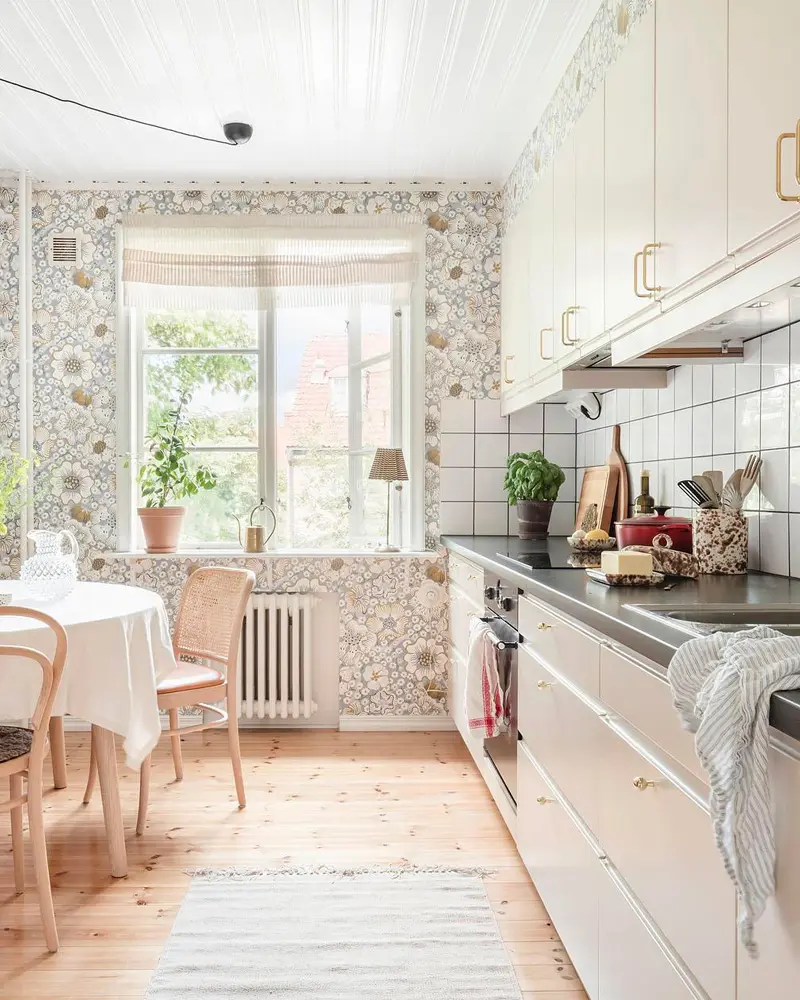
5. Floral wallpaper, a round table and bentwood chairs at the end of a white galley kitchen © My Blog Deco
Finally, light is essential to Scandinavian style. Interiors are designed to maximize daylight, with large windows and sheer curtains. Light fixtures are chosen for their clean designs and their ability to give off a soft, pleasant glow. Metal table lamps, wooden pendants or candles create a warm, convivial feel that’s perfect for long winter evenings. In short, Scandinavian decor combines function, elegance and comfort for interiors that are both beautiful and practical. For the full overview, see my guide to Scandinavian decor.
Choosing the colors and materials for your kitchen
Here are the colors and materials that work best for a Scandinavian kitchen. The formula is simple: a light, neutral backdrop, warm wood, and a few natural textures to keep the room from feeling clinical.
White and soft neutrals, warmed up with pastels and wood
In a Scandinavian kitchen, color is crucial to creating a bright, welcoming atmosphere. Light tones such as white, beige, gray and natural wood are widely favored for their calming qualities and their ability to reflect light. Cabinets and walls painted white or a soft neutral are a central feature, offering a clean, bright backdrop that makes the space look bigger. White is the perfect canvas for showing off other elements and brings freshness to the kitchen.
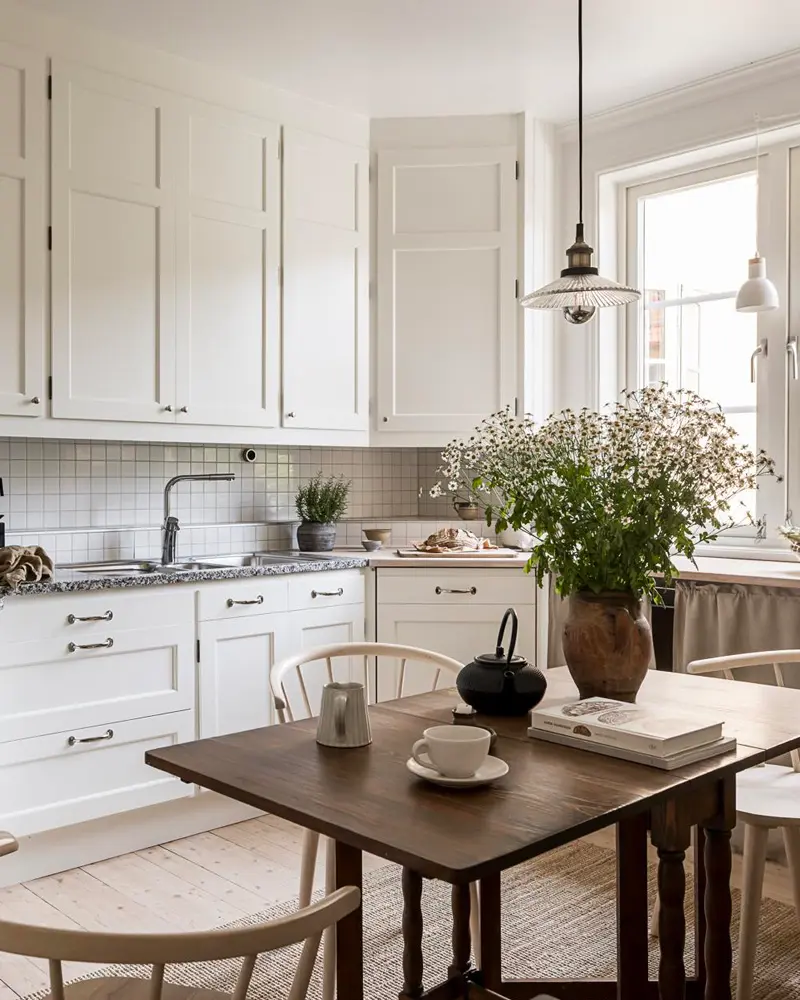
6. Classic white cabinets, a dark wood table and a big bunch of wildflowers © Alvhem
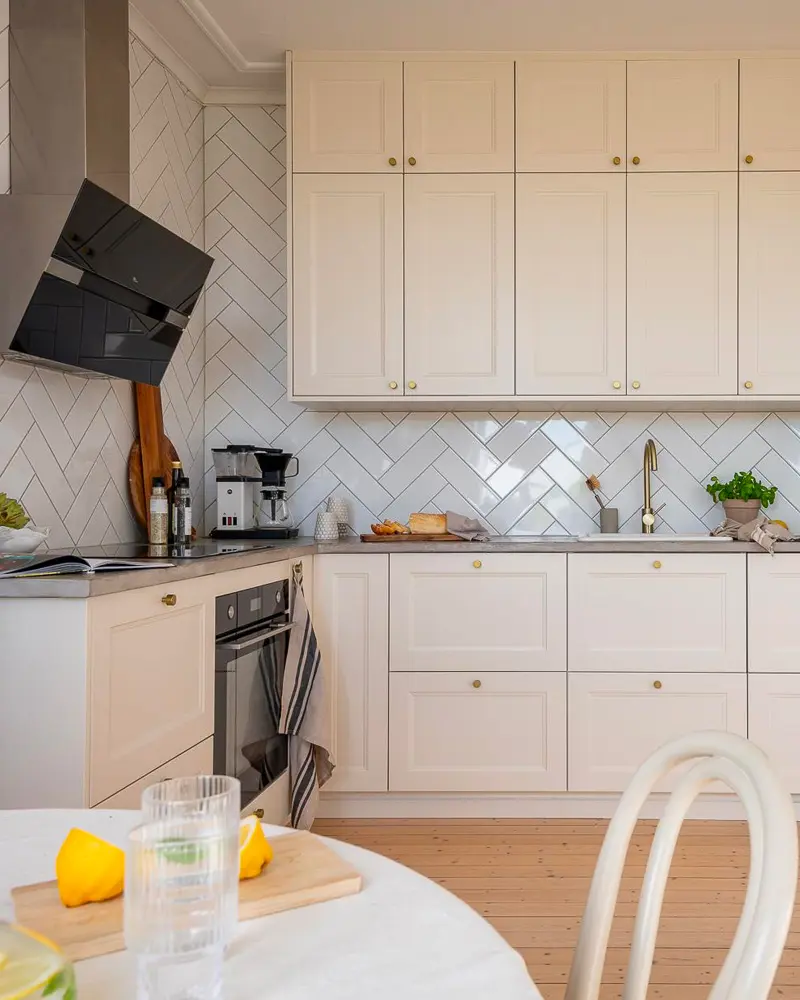
Alongside the neutrals, touches of soft color can add warmth and personality. Pastel shades like dusty pink, light blue, mint green or soft yellow are popular for their subtlety and their ability to brighten a room without overwhelming it. These touches can come in through utensils, textiles like napkins or chair cushions, or even potted plants. Warm beige is another great option, as the kitchens below show: it feels softer than pure white while staying just as bright.
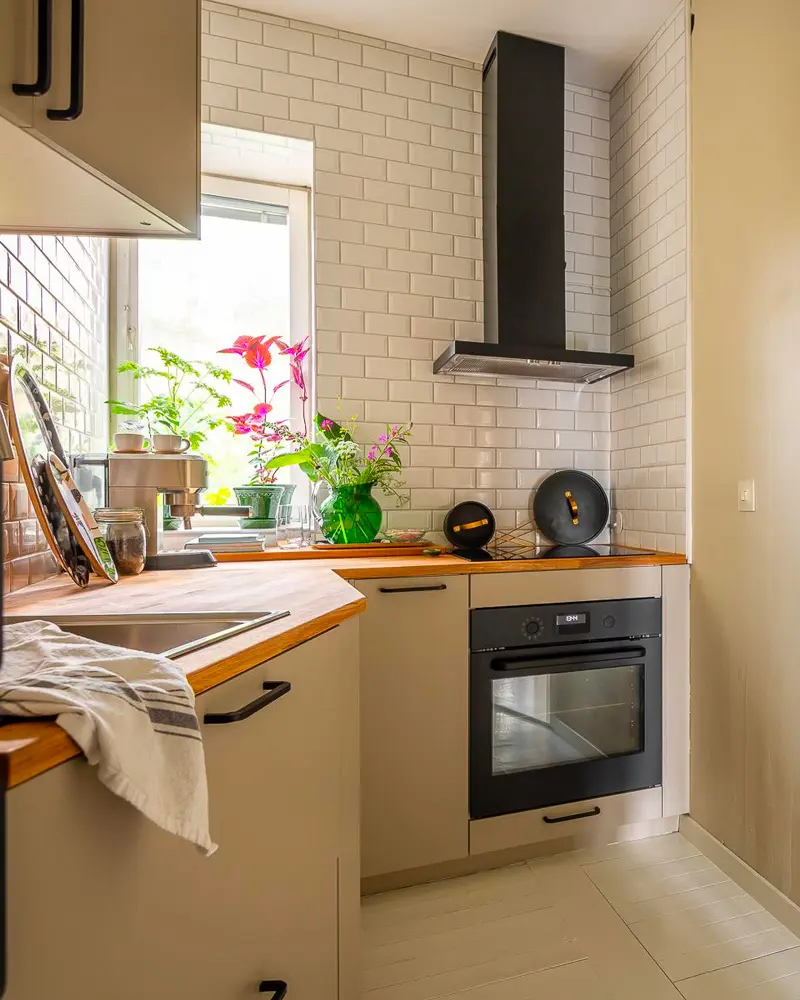
7. White subway tile, a black hood and a wood counter in a compact beige kitchen © Pinterest
8. Cream cabinets, a herringbone tile backsplash and a marble table set with lemons © Côté Maison
Wood is a must in a Scandinavian kitchen, offering natural warmth and a pleasing contrast with the light tones. Cabinets, countertops or islands in light wood or oak are commonly used for a warm, slightly rustic feel. Wood can also come in through floating shelves, bar stools or kitchen tools. It adds texture and visual richness while reinforcing the Nordic character. In short, the colors for a Scandinavian kitchen center on light, neutral tones, with touches of soft color and plenty of wood. For more warm, natural ideas, see my beige decor guide.
Wood, stone, steel and linen: the materials to favor
The choice of materials is crucial to creating a warm, authentic Scandinavian kitchen. Natural materials are widely favored for their comfort and their connection to nature. Wood is one of the most emblematic. Choose cabinets, islands or shelves in light wood, such as birch, oak or pine, for a warm, organic touch. Untreated or lightly whitewashed natural wood is often chosen for its authentic texture, though in a kitchen a matte oil or varnish will protect it from water and grease.
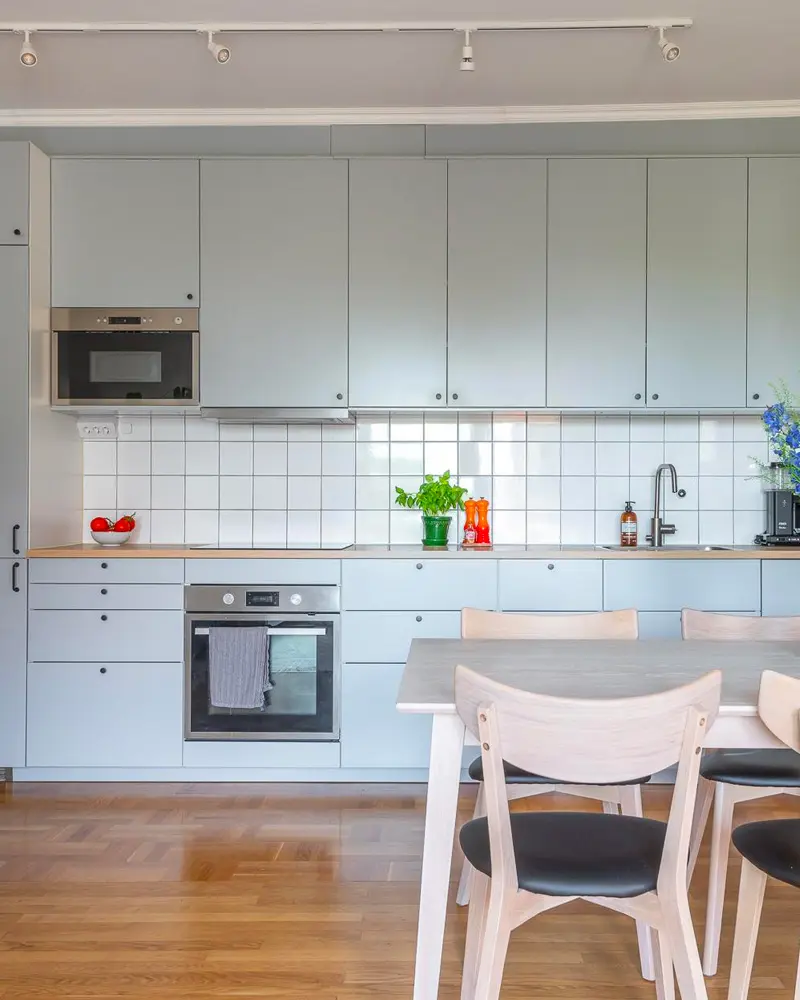
9. Powder-blue cabinets, a wood counter and white wood chairs around a gray table © Alvhem
Beyond wood, other natural materials like stone and marble can be used for countertops. Quartz is a practical alternative to marble, offering a similar look while being more resistant to stains and scratches. Metal, especially stainless steel, also has its place, bringing a modern, functional touch. Stainless steel appliances, light fixtures or utensils add subtle industrial accents to the space.
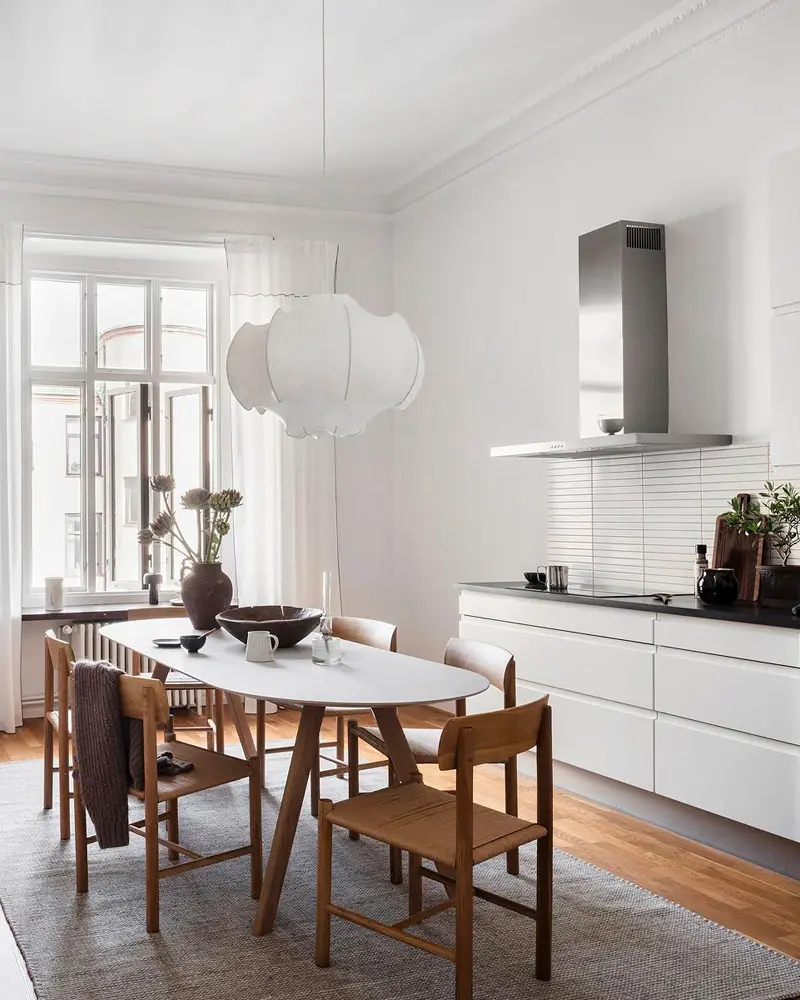
10. A stainless hood, a cloud-like pendant and wood chairs around an oval table © Marie Claire
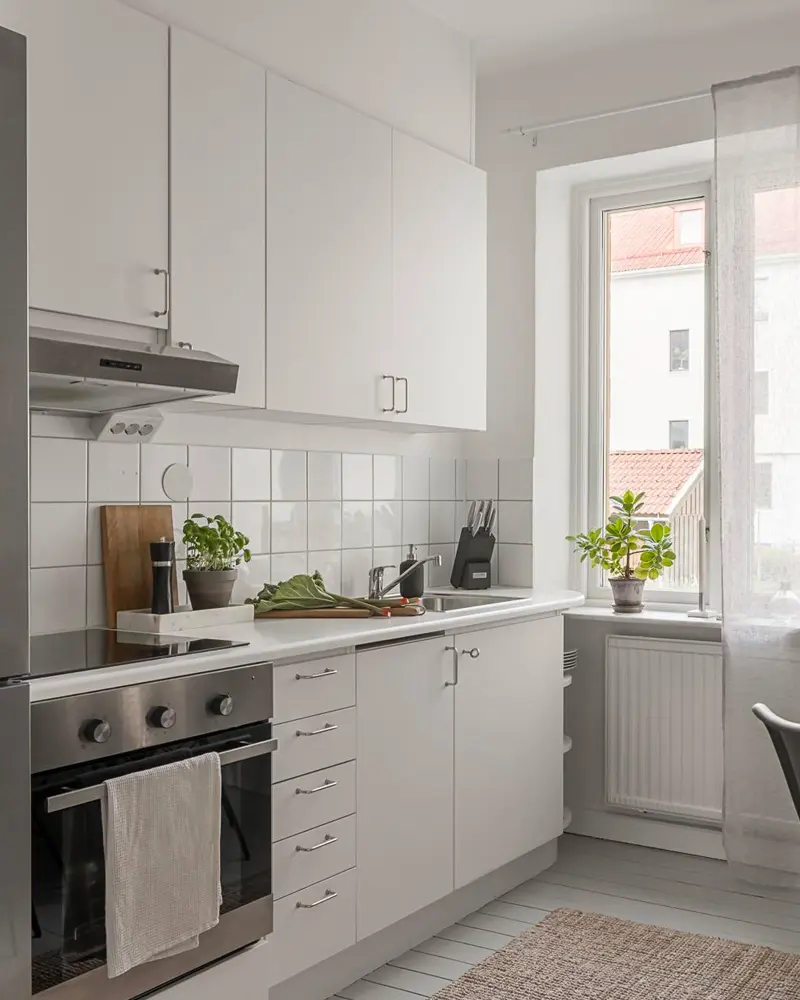
11. A narrow white kitchen with square tile, a wood cutting board and windowsill plants © Pinterest
Textiles matter too, adding warmth and texture. Sheer linen or cotton curtains let light in while preserving privacy, while wool or jute rugs define work zones and add comfort underfoot. Dish towels, napkins and tablecloths in linen are chosen for their natural look and durability. In short, the materials for a Scandinavian kitchen are mostly natural, putting wood, stone and metal forward for a warm, authentic and functional space. My wood decor ideas show more ways to work with timber.
Furniture and accessories for a Nordic kitchen
Wondering which furniture and accessories to choose for a Scandinavian kitchen? Start with simple, practical pieces in light wood, then add character with wooden tools, linen, ceramics and plants.
Cabinets, tables and storage with clean lines
Furniture is essential to a Scandinavian kitchen that’s both functional and attractive. The style favors clean lines and simple shapes, putting function first without sacrificing style. Cabinets are often made in light wood, like birch or oak, for natural warmth. Choose flat-front doors and discreet hardware for a minimalist look. Islands are also popular, offering extra space for meal prep as well as casual dining.
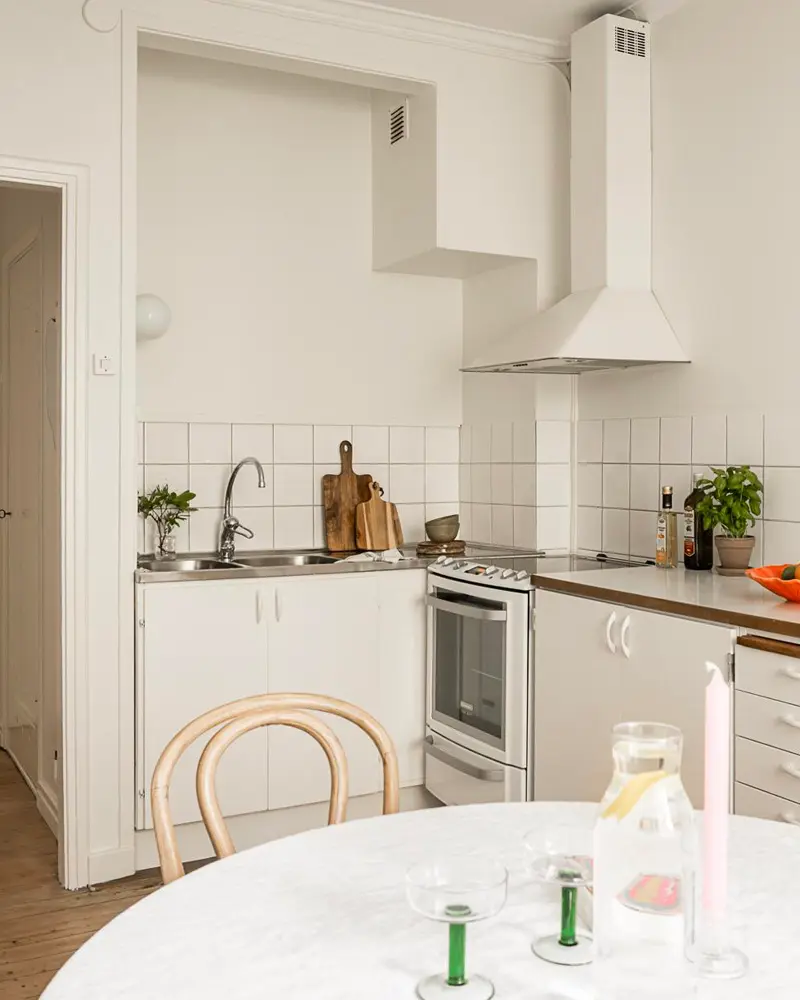
12. A white hood, square tile and a round marble table with a bentwood chair © Alvhem
Dining tables and chairs are key pieces in a Scandinavian kitchen. Solid wood tables, ideally extendable to adapt to your needs, are often chosen for their durability and simple look. Chairs can be wood, metal or molded plastic, with clean, comfortable designs. Bar stools are a popular option for kitchens with an island, adding seating while keeping a consistent look. Mixing chair styles around one table, as in the green kitchens below, is an easy way to add personality.
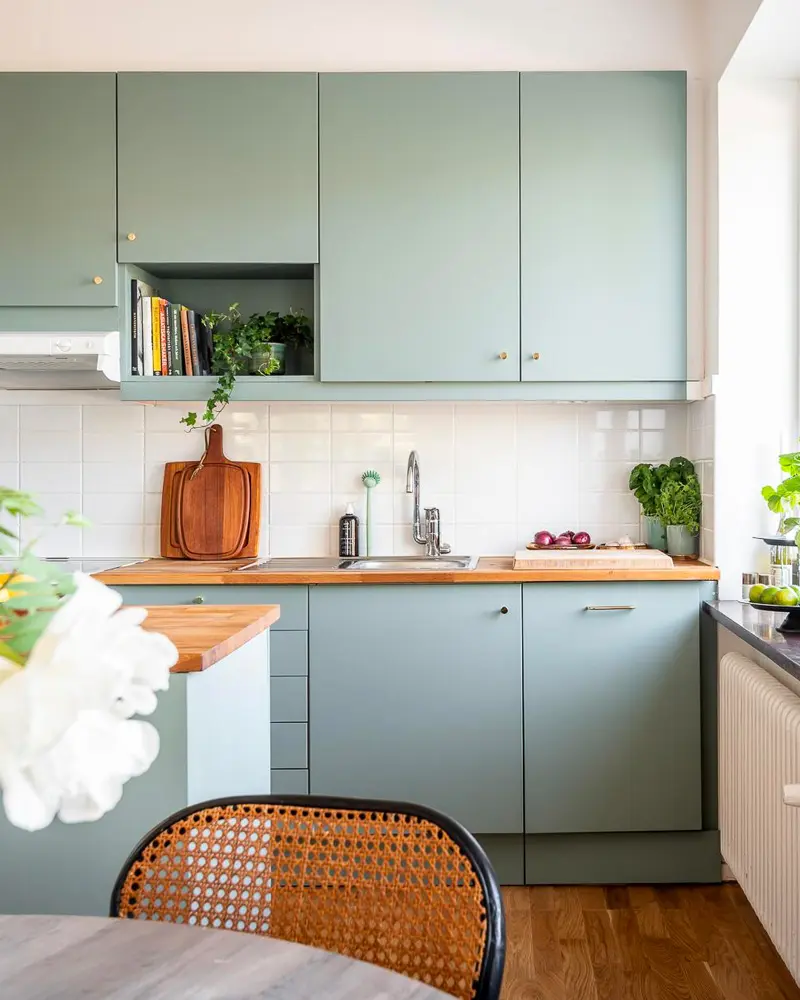
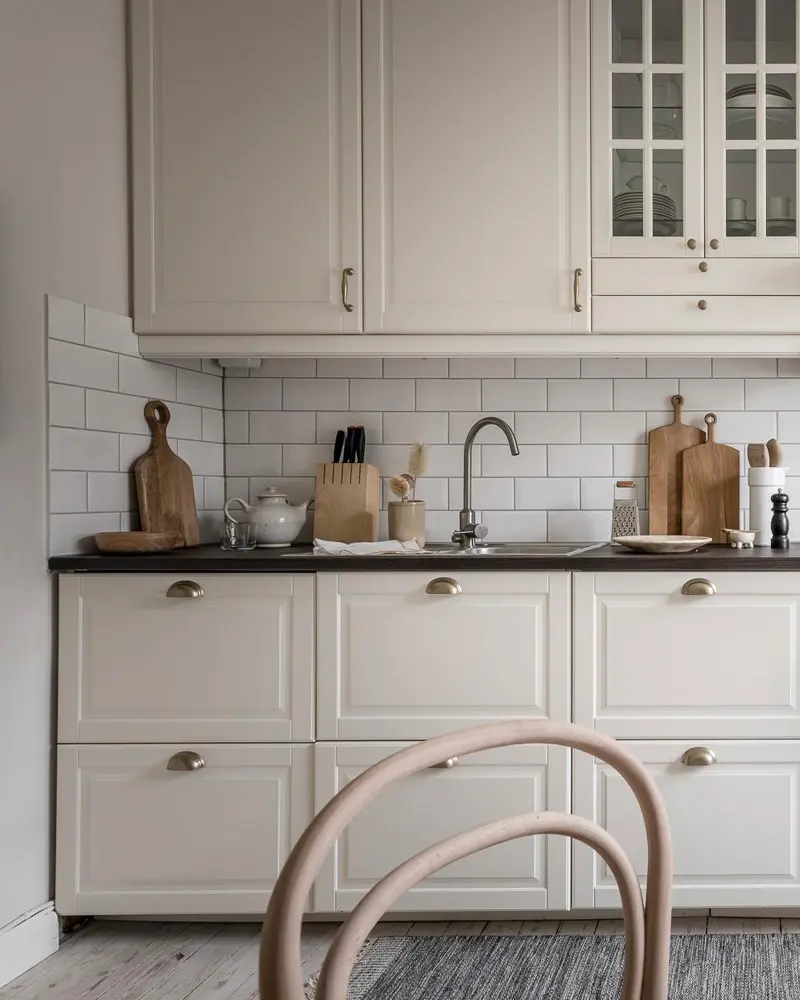
13. Sage cabinets, a butcher-block counter and a cane-back chair in a fresh green kitchen © Pinterest
14. Greige shaker cabinets with brass cup pulls and a glass-front upper cabinet © Planète Déco
Storage is an important part of a Scandinavian kitchen, where organization and function come first. In addition to cabinets, open wood shelves can display dishes or decorative pieces while adding visual depth. Buffets and sideboards are also practical for storing dishes, utensils or food while providing extra surface for prep. The trick with open shelving is to edit ruthlessly: display your prettiest everyday pieces and hide the rest behind doors.
Wooden tools, linen, ceramics and plants
In a Scandinavian kitchen, accessories bring color, texture and personality. They’re usually chosen for their minimalist design and practical use. Wooden tools are essential, bringing natural warmth and rustic charm. Cutting boards, spatulas, spoons and wooden bowls can be displayed on counters or hung on the wall for easy access while doubling as decor.
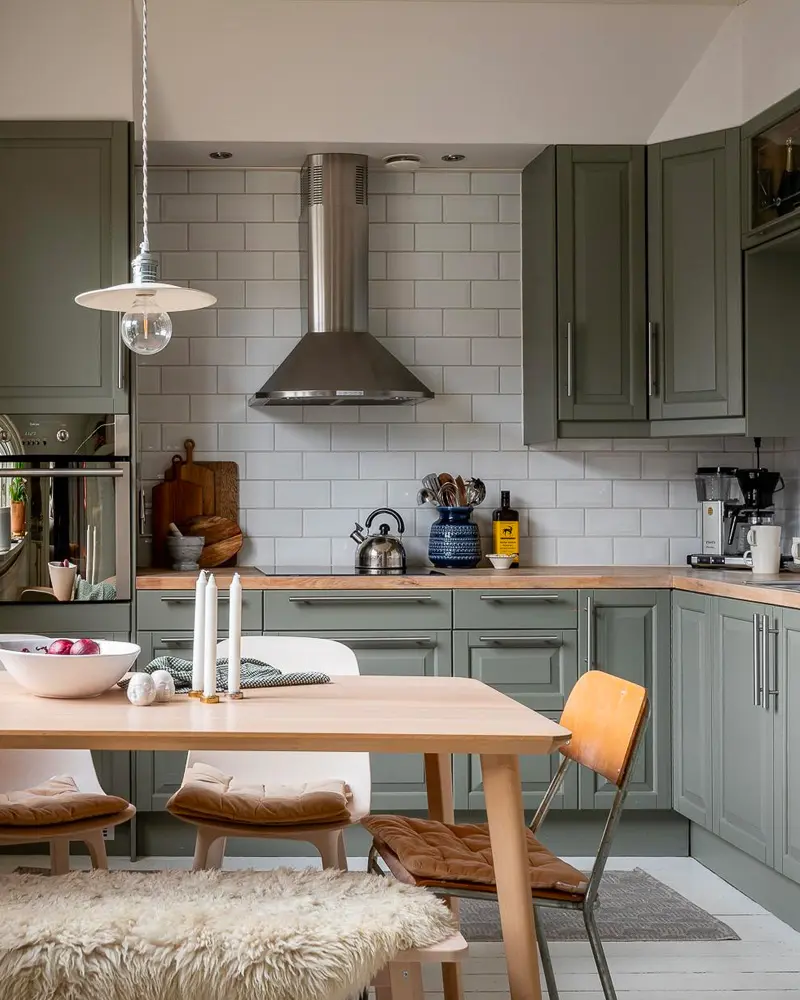
15. Sage cabinets, subway tile and a sheepskin-draped chair at a light wood table © Alvhem
Textiles soften hard surfaces and add warmth. Choose dish towels, pot holders, napkins and aprons in natural materials like linen or cotton, with simple patterns or stripes to stay true to the style. Textiles can also bring touches of color, with cushions on chairs, light curtains at the windows or a rug underfoot. A sheepskin on a chair, like the one above, instantly makes a kitchen corner feel cozier.
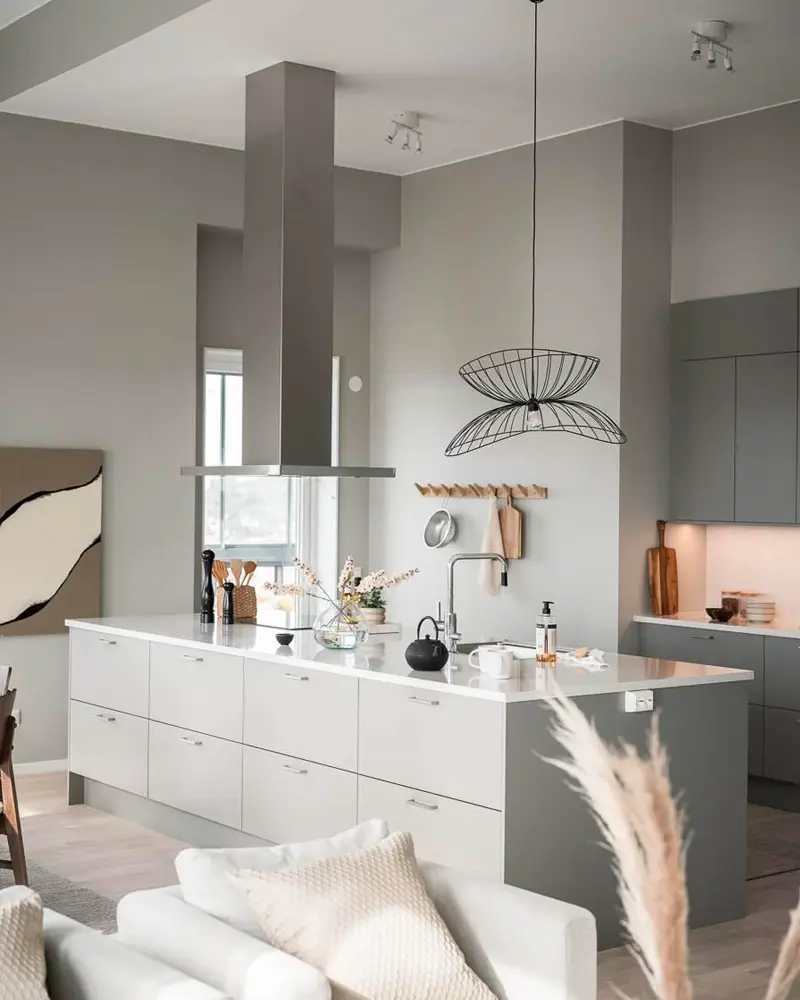
16. A gray island under a stainless hood and a wire pendant, with pampas grass in the foreground © Planète Déco
Dishes also contribute to the Scandinavian look. Choose ceramic or porcelain in neutral or pastel tones with simple, elegant designs. Bowls, plates, cups and serving dishes can be displayed on shelves or in glass-front cabinets for texture and depth. Wooden spice jars, glass canisters and woven baskets are other accessories that are both practical and decorative for keeping the kitchen organized.
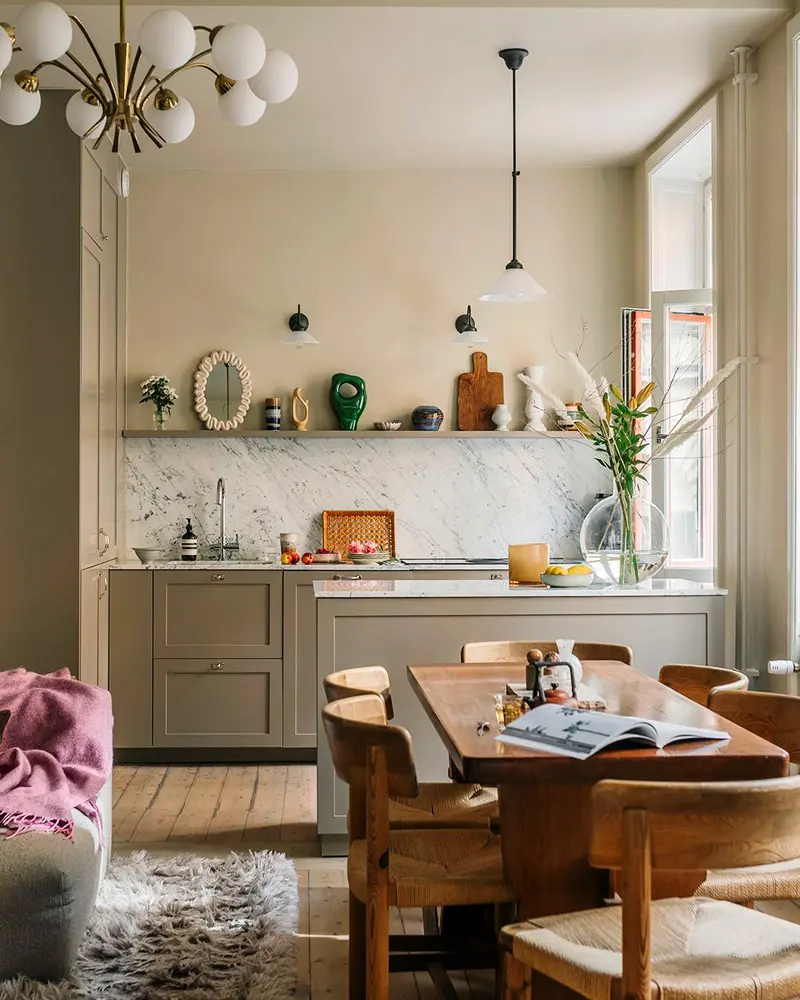
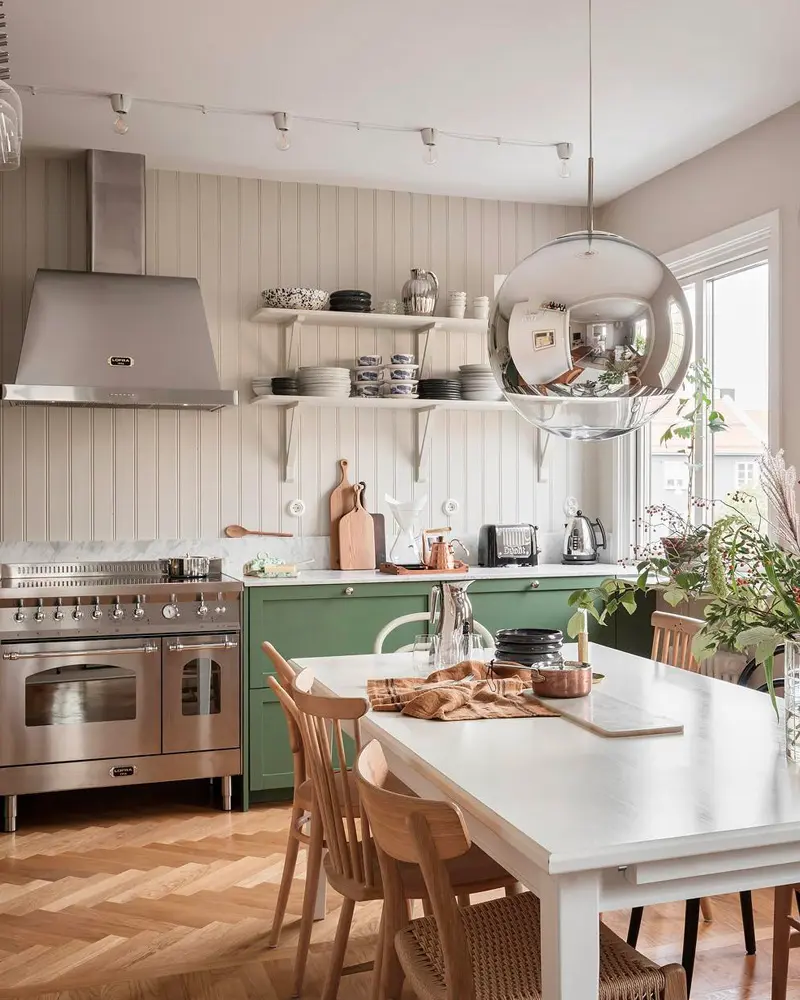
17. An olive kitchen with a marble backsplash, a shelf of ceramics and a globe chandelier © Historiska
18. Green lower cabinets, a stainless range and open shelves above a long white table © Alvhem
Finally, houseplants are an essential part of Scandinavian decor, bringing freshness and life. Herbs in ceramic pots on the windowsill, hanging plants in macramé over the sink or succulents on shelves are all ways to introduce greenery. Plants add color and texture, and a pot of basil or parsley by the window is as useful as it is pretty. In short, accessories for a Scandinavian kitchen are chosen for their simplicity, their function and their ability to bring warmth and personality.
Three Scandinavian kitchen moods to try
To finish, here’s plenty of inspiration for mixing styles in a Scandinavian kitchen. Each of these three looks, modern, vintage and boho, keeps the Nordic basics but plays with different materials and details.
The modern Scandinavian kitchen: sleek and functional
A modern Scandinavian kitchen combines the clean Nordic aesthetic with contemporary elements for a space that’s functional and elegant. These kitchens are often defined by clean lines, smooth surfaces and innovative materials. Light wood remains popular for cabinets, but more modern finishes like lacquer or matte paint can be chosen for a contemporary look. Quartz or marble countertops, with their clean appearance and durability, often complete the style.
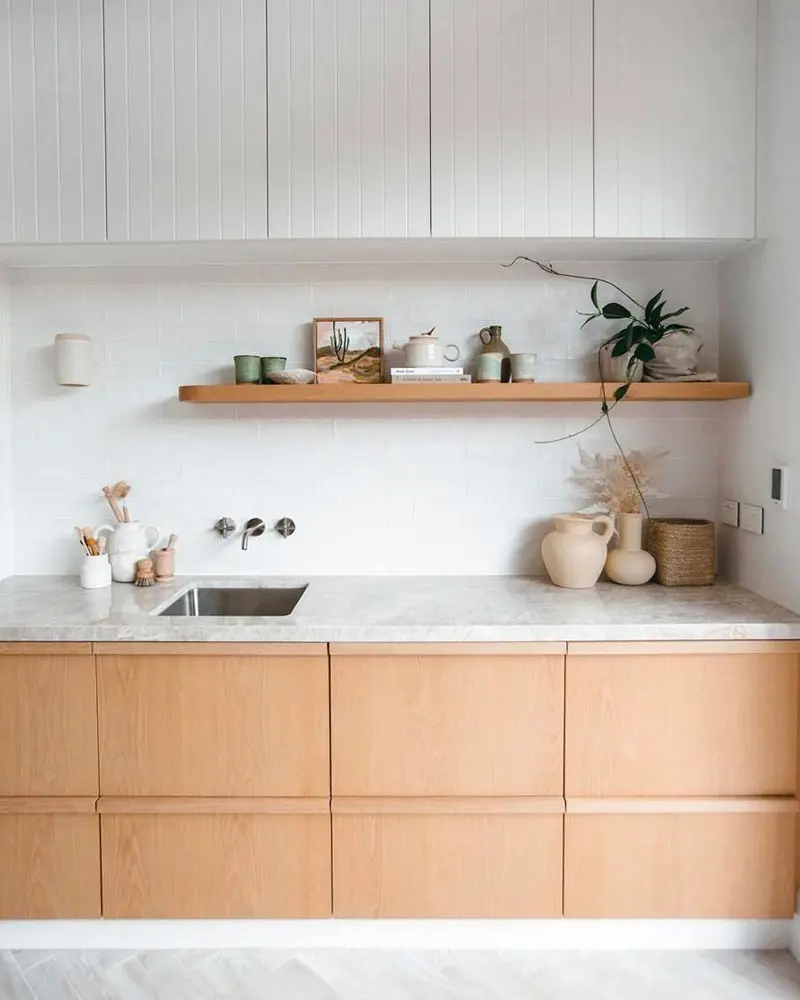
19. Flat-front wood cabinets, a pale stone counter and a single floating shelf of ceramics © Pinterest
Lighting is essential in a modern Scandinavian kitchen. Minimalist fixtures, such as black metal pendants or recessed spotlights, add sophistication while providing functional light. LED strips under cabinets or shelves add practical, elegant task lighting. Generous windows let daylight in, creating a bright, open feel.
Appliances are another key element. Stainless steel appliances with clean designs blend into the space, offering modern features while keeping an elegant look. Built-in refrigerators and dishwashers hidden behind cabinet panels help maintain a clean, uniform look. Faucets and sinks with minimalist designs add sophistication too. Panel-ready appliances are worth considering if you want that seamless wall of cabinetry.
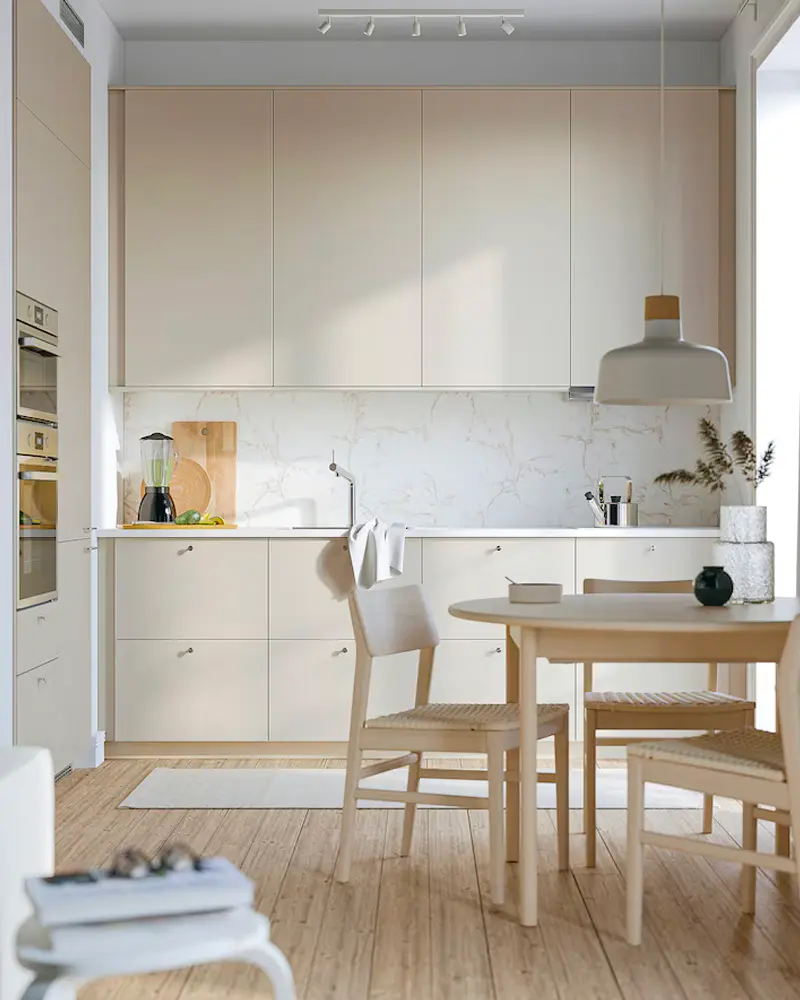
20. Beige handleless cabinets and a light wood table and chairs under a white pendant © Ikea
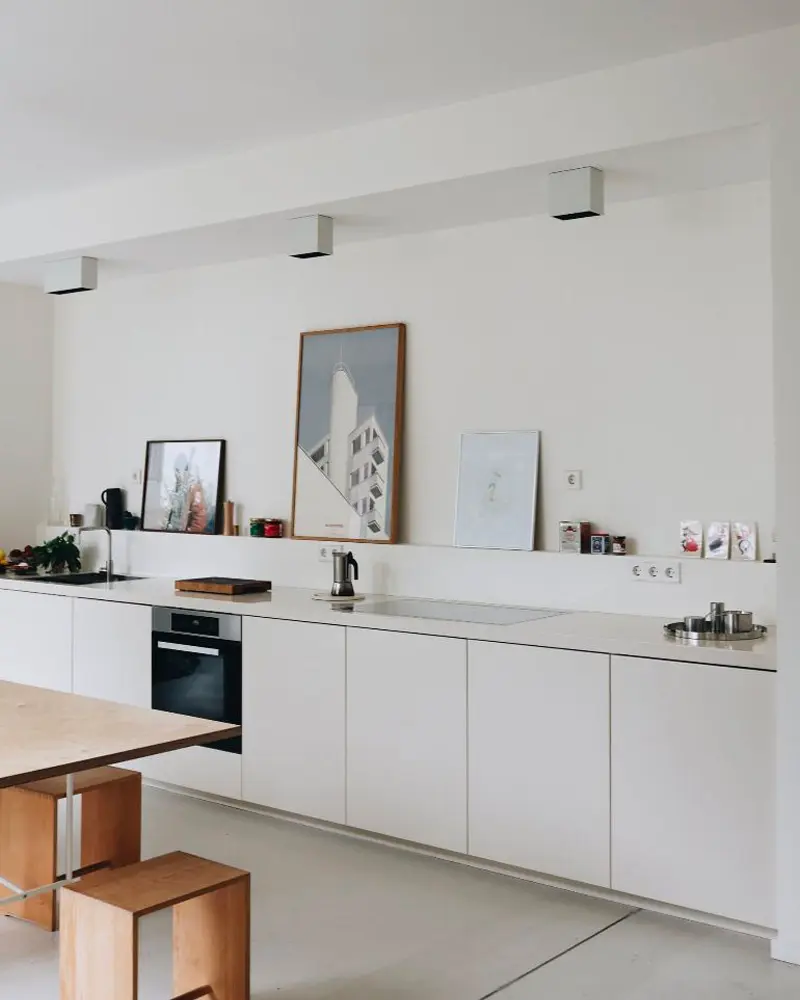
21. A long run of white cabinets with framed art leaning on the counter and wood stools © Pinterest
Finally, color in a modern Scandinavian kitchen can be subtle but impactful. Accents can come from accessories, textiles or even an island painted in a bold tone like navy or black. Most of the time, though, soothing neutrals like white, gray and beige take the lead to keep the room bright and airy. In short, a modern Scandinavian kitchen combines function, elegance and simplicity for a contemporary, welcoming space.
Vintage Scandinavian: a kitchen with retro character
A vintage Scandinavian kitchen combines the timeless charm of Nordic style with retro elements for a warm, welcoming atmosphere. To get the look, choose light wood cabinets with delicate details, like brass pulls or geometric patterns on the doors. Vintage cabinets, whether thrifted or new but designed in a retro style, add character and authenticity.
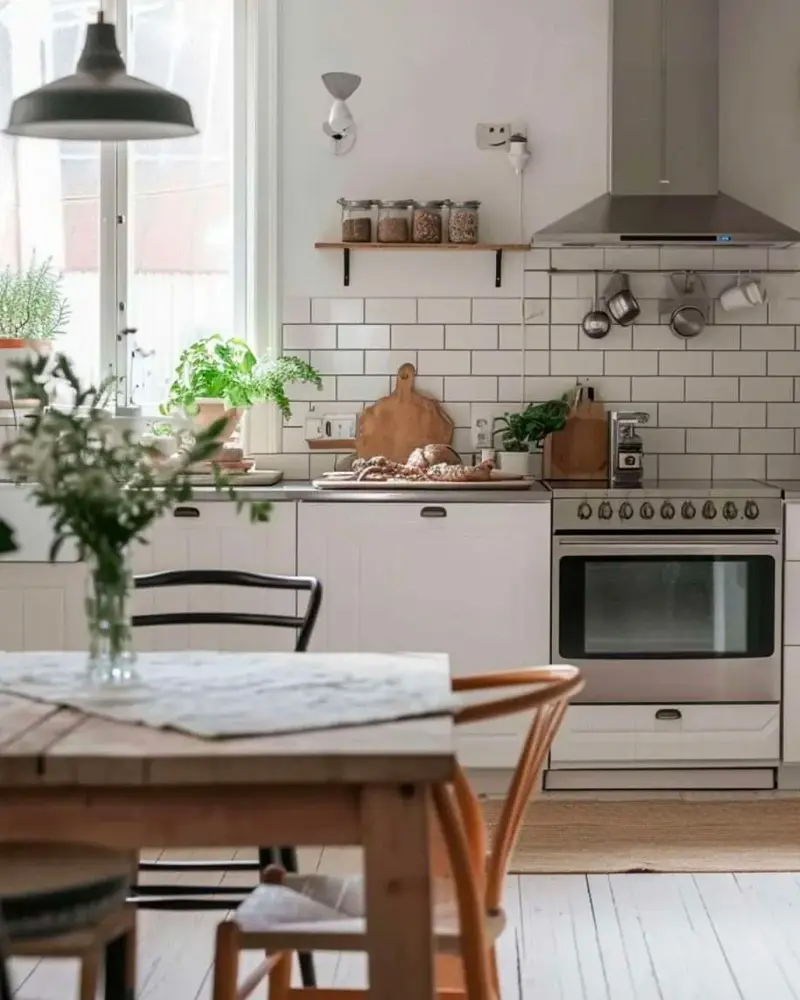
22. Subway tile, a stainless range and a weathered wood table with bentwood chairs © Melanie Jade
Solid wood or natural stone countertops are perfect for this look. Wood brings natural warmth, while stone adds texture and elegance. Retro ceramic tiles can also be used for a backsplash, adding color and pattern while staying true to the vintage aesthetic. A checkerboard floor or rug, like in the galley kitchen below, is another easy retro nod.
Retro appliances are a key element for perfecting the vintage mood. Choose a 1950s-style refrigerator or a range with colorful knobs or chrome details. These appliances add character and style while offering modern performance.
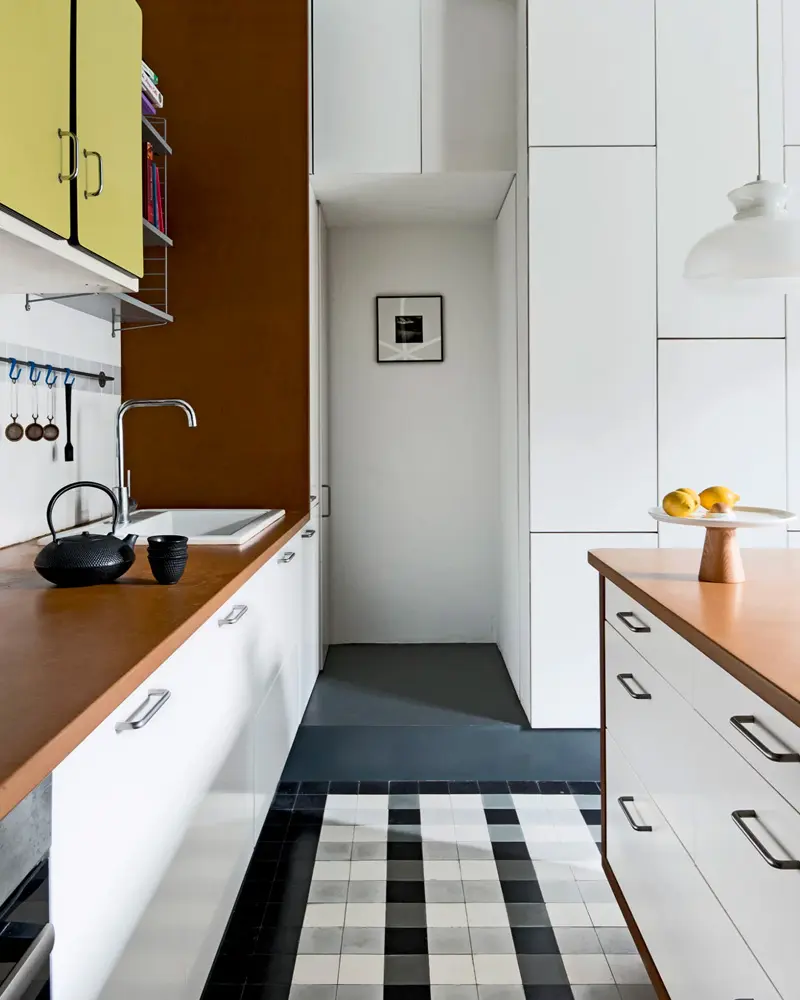
23. Wood counters, a cast-iron teapot and a black-and-white checked runner in a galley kitchen © Marie Claire
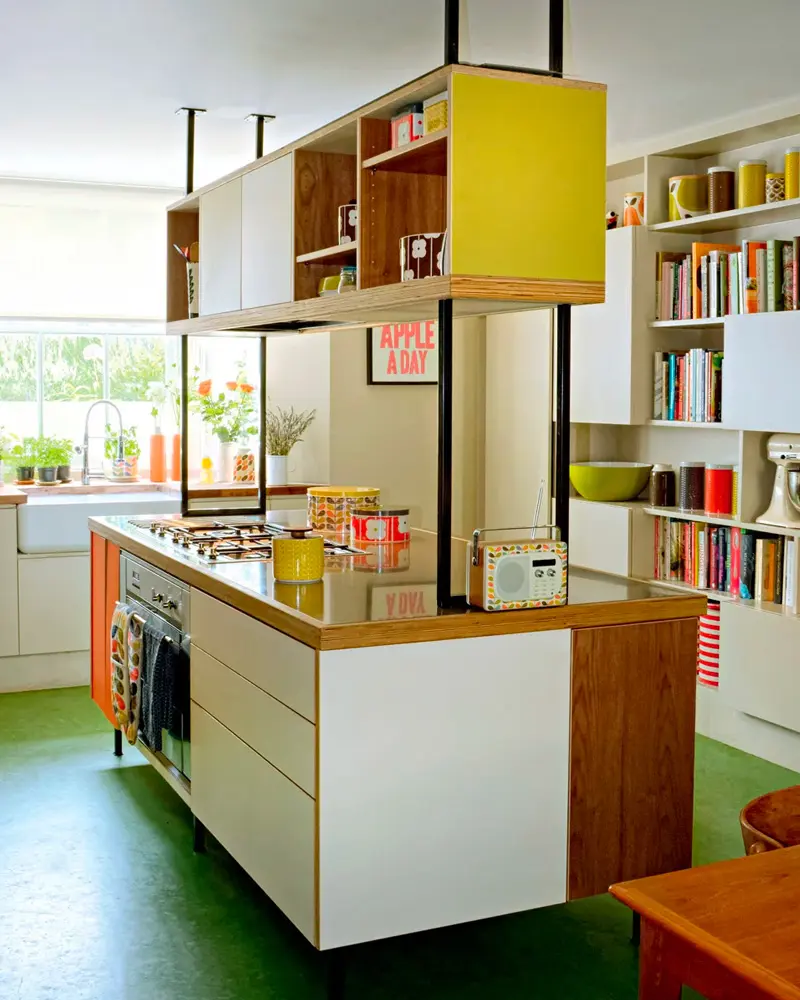
24. A yellow hanging cabinet over the island, colorful bookshelves and a green floor © Pinterest
Accessories and details are what bring a vintage Scandinavian kitchen to life. Enamel cookware, antique glass jars and wicker baskets all contribute to an authentic feel. Add color with textiles like patterned tablecloths, floral curtains or vintage cushions. Finally, don’t forget green plants for freshness and life. In short, a vintage Scandinavian kitchen pairs timeless Nordic charm with retro elements for a cozy space full of character.
Scandi-boho: a relaxed and eclectic kitchen
To create a Scandinavian boho kitchen, the idea is to combine Nordic minimalism with bohemian, eclectic touches for a relaxed atmosphere full of personality. Start with cabinets in light tones like white or beige, choosing simple designs with subtle details such as brass pulls or open shelves to display colorful dishes. Mix and match different chairs around the dining table, using vintage wood chairs, rattan chairs or reclaimed wood benches.
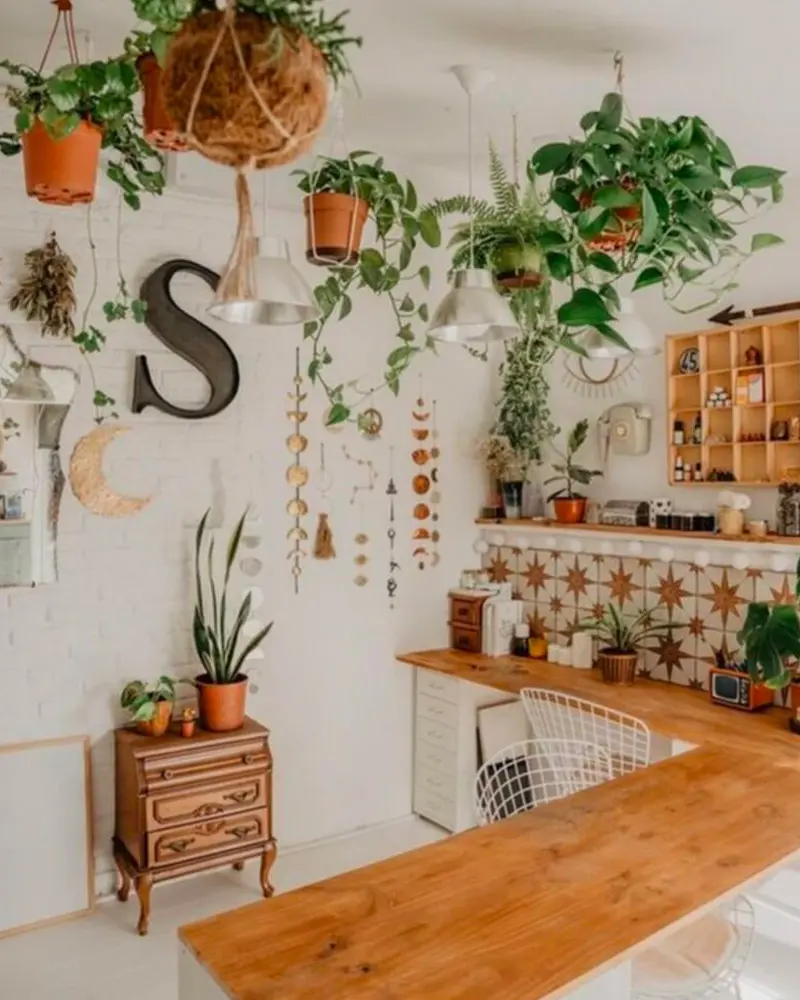
25. Trailing plants, a wooden letter and a vintage chest around a warm wood counter © 20 Minutes
In a Scandinavian boho kitchen, textiles add warmth and texture. Choose Berber or kilim rugs with vibrant patterns and earthy colors to define zones. Brightly colored cushions on chairs and light linen curtains create a relaxed bohemian feel. For countertops, natural wood remains a favorite for its warmth, but you can also bring in patterned cement tile or natural stone for a boho-chic effect.
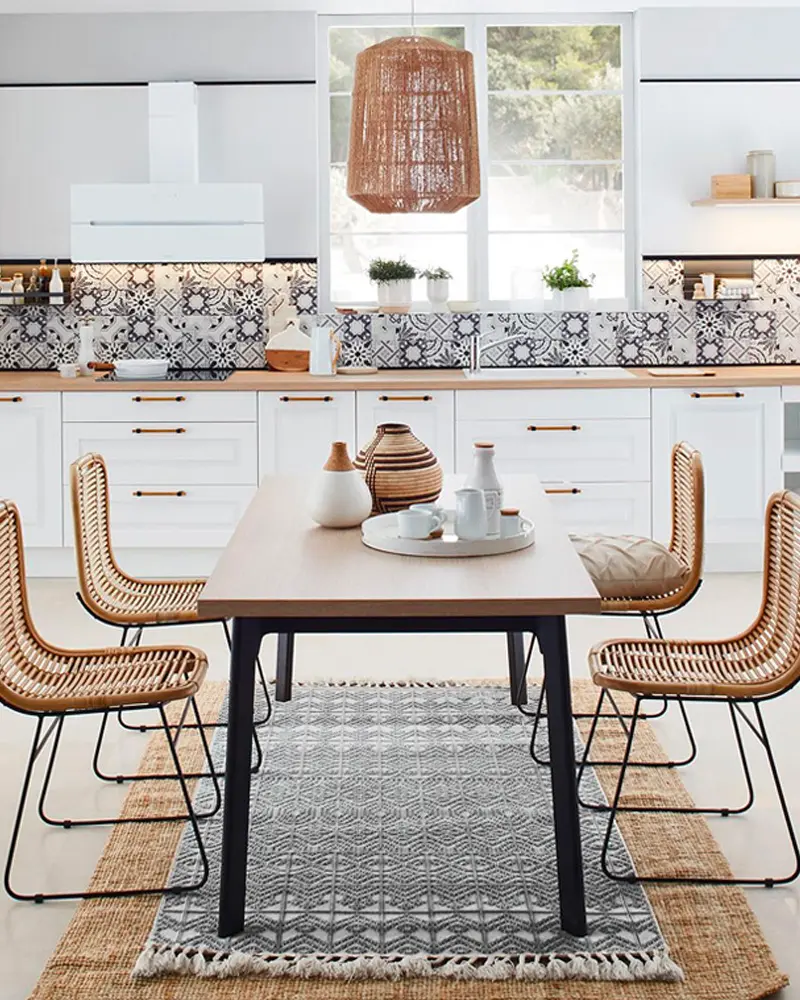
26. Patterned cement tile, a woven pendant and rattan chairs around a black-legged table © My Blog Deco
Accessories are your chance to add a touch of whimsy. Hang rattan or macramé pendants over the island or dining table. Use open shelves to display hanging plants, handmade ceramic pots and vintage dish collections. Woven baskets and wicker trays can store fruit and vegetables or hang on the wall as decor. Finally, houseplants will liven up the space and bring a natural feel.
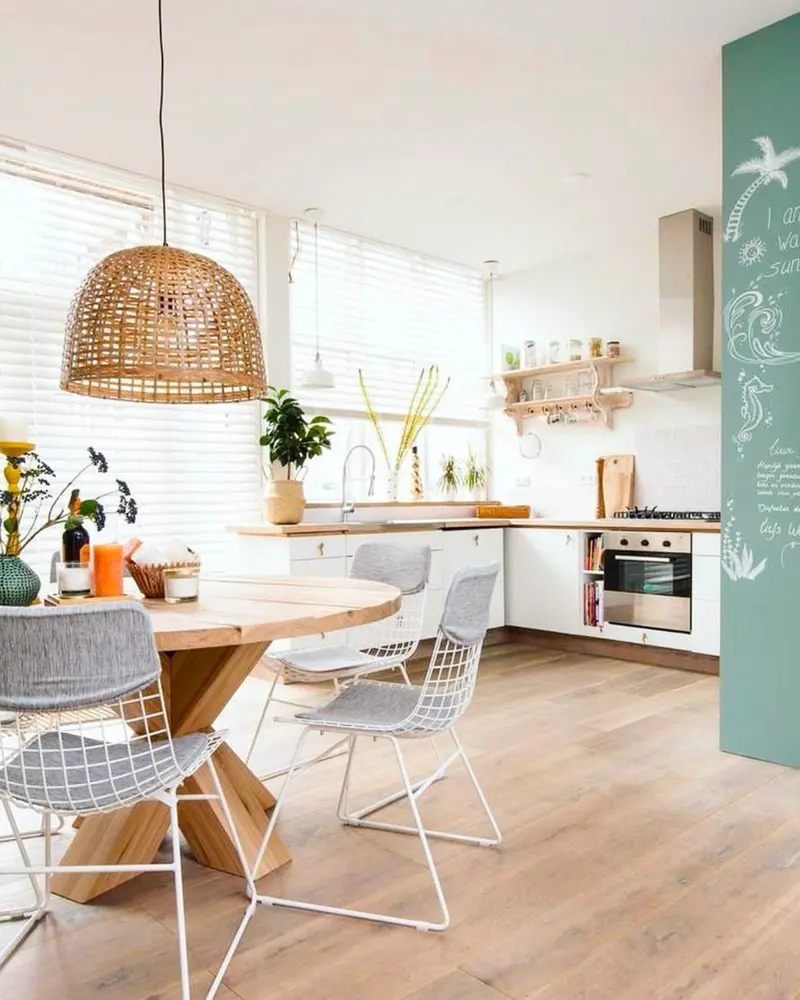
27. A woven rattan pendant over a round wood table and white wire chairs © Pinterest
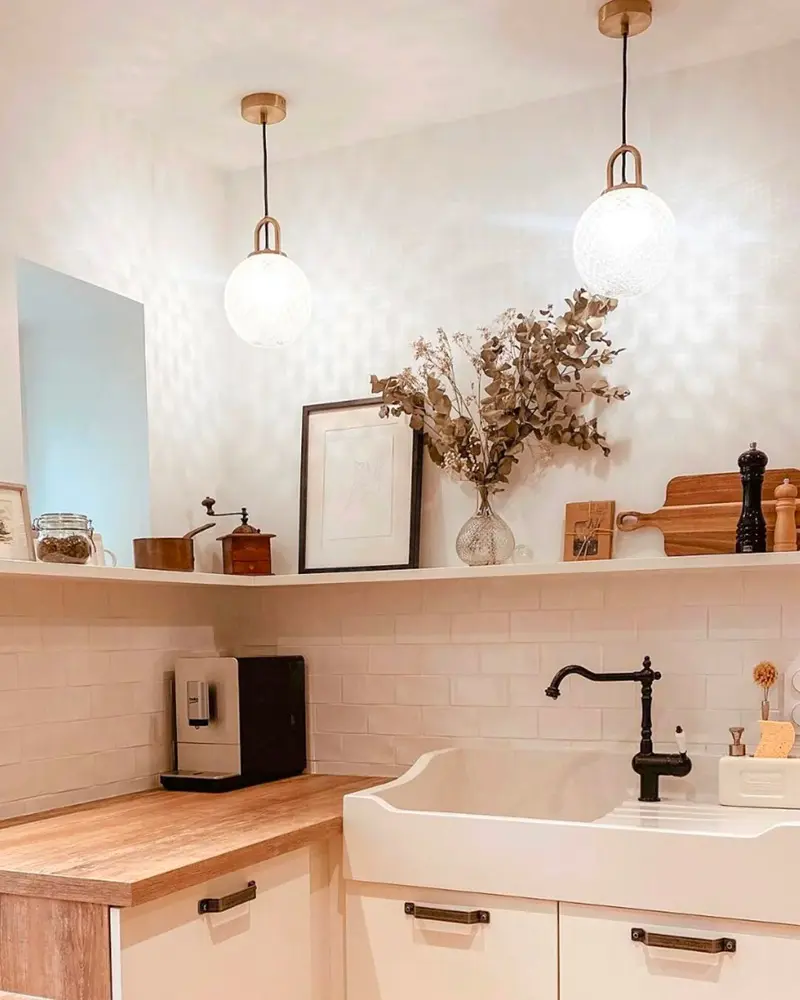
28. A wood counter, farmhouse sink and dried flowers under two globe pendants © Cuisissimo
In short, a Scandinavian boho kitchen marries Nordic minimalism with bohemian elements for a space that’s welcoming and eclectic. Play with textures, patterns and colors to create a relaxed, lively atmosphere while keeping the function and comfort that define Scandinavian style. For more free-spirited ideas, see my guide to boho decor, and for a matching dining area, my dining banquette ideas.
Frequently asked questions
What colors are used in a Scandinavian kitchen?
White, beige and light gray lead, alongside natural wood tones. Soft accents like pastel blue, sage or mint add personality, and sage or olive cabinets are a popular way to bring in color.
What materials work best in a Scandinavian kitchen?
Light wood such as pine, birch or oak, paired with stone or quartz counters, matte black or stainless metal, white or beige ceramics, and linen or cotton textiles.
How do you light a Scandinavian kitchen?
Make the most of daylight with light shades or sheer curtains, then add pendants over the table or island, under-cabinet LED strips for prep, and a few warm lamps or candles for the evening.
Can you mix Scandinavian style with other styles?
Yes. It pairs well with industrial, boho and vintage looks. Keep the pared-back base and natural materials, then add pieces from the other style in moderation.
Are open shelves practical in a Scandinavian kitchen?
They are if you keep them edited. Display everyday dishes you use often so nothing gathers dust, and store everything else in closed cabinets to keep the look calm.