

Scandinavian decor comes from the Nordic countries and is known for its simplicity, its minimalism and its functional good looks. The style has its roots in long, dark winters, which explains its love of light colors, natural materials and cozy textiles that make a home feel warm and bright. It’s one of the most popular looks in our Scandinavian decor section, and it adapts to almost any home, from a tiny city apartment to a family house.
If you’d like to play with this style in your own home, you’re going to love today’s post! Below I’m sharing everything you need to know to make Scandinavian style work: its key features, the colors and materials that define it, and then room-by-room ideas for the living room, dining room, bedroom, home office, bathroom and kitchen, each illustrated with photos so you can see how the principles translate into real, livable spaces.
Contents
1. What makes Scandinavian decor so recognizable?
2. The Nordic palette: colors and materials that define the look
3. Bringing Nordic style into every room of the house
What makes Scandinavian decor so recognizable?
Inspired by the Nordic countries, Scandinavian style is widely recognized for its minimalism, its practicality and its understated elegance. It grew out of the need to bring warmth and brightness into homes that are often dark and cold during the long northern winters. One of its most distinctive traits is the way it makes the most of natural light: open floor plans and generous windows let daylight reach deep into each room, and very little is allowed to block it.

1. Cream sofa, a chunky round pedestal table and a cane chair in soft beige daylight © Côté Maison
Scandinavian interiors are defined by light, neutral tones such as white, beige, gray and the soft shades of pale wood. These colors create a bright, airy atmosphere and a perfect backdrop for subtle accents of color. Soft hues, often pastels or small touches of black, add warmth and contrast to the space. On top of that, the style celebrates natural materials like wood, rattan, linen and leather, which bring a feeling of comfort and a real connection to nature.

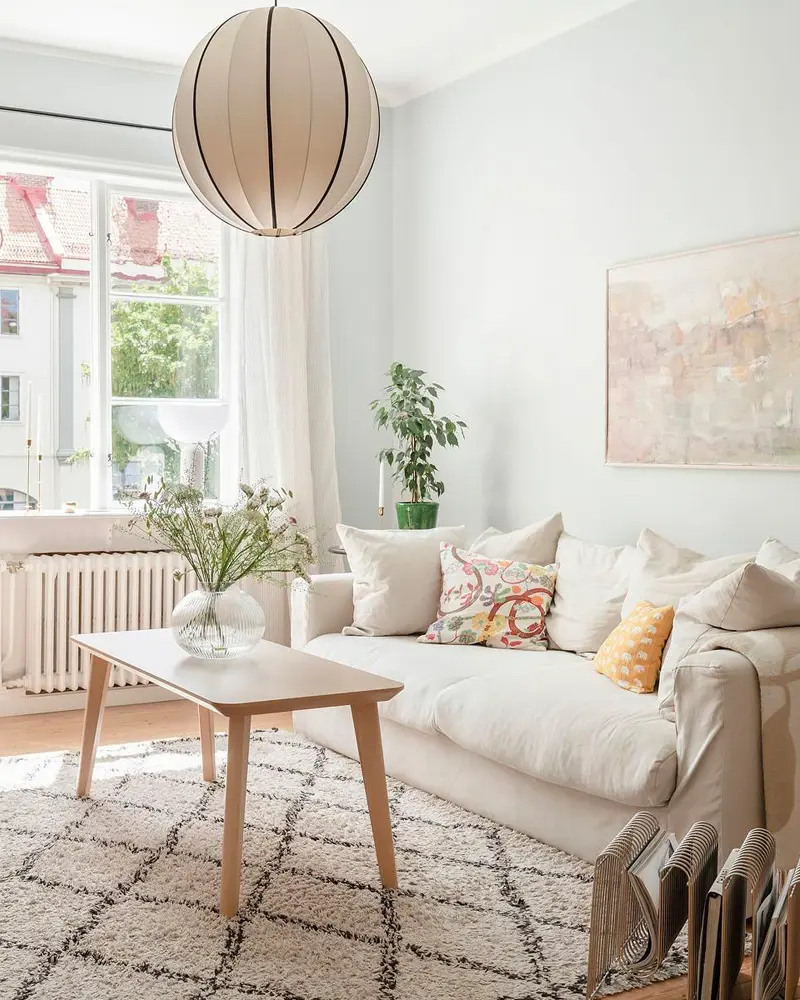
2. Blush walls, rumpled linen and a waffle throw make this bedroom feel lived-in and warm © Alvhem
3. A paper globe pendant floats over a linen sofa and Berber-style rug © Pinterest
Scandinavian furniture is known for its clean, functional and timeless design. Simple, uncluttered lines show off the natural beauty of the materials, and function is always the priority. Pieces are often versatile and modular, which lets you use every square foot efficiently, a big plus in smaller homes. Finally, the Scandinavian approach also values craftsmanship and one-of-a-kind pieces, which add a sense of authenticity and personality to every room so it never feels like a showroom.
In practice, that means a Scandinavian room usually has fewer pieces than you’d expect, but each one earns its place: a bench that doubles as storage, a side table that can move from the sofa to the bedside, a vintage chair found at a flea market. Mixing one or two older, handmade items with simple modern furniture is what keeps the look personal rather than sterile.
The Nordic palette: colors and materials that define the look
Keep in mind that the goal isn’t to make everything white and beige. It’s to build a calm, bright base, then add warmth through natural textures and a few carefully chosen accents.
Whites, grays and soft neutrals: the Nordic base
Scandinavian style favors light, soft colors that create a bright, soothing atmosphere. White often dominates walls, ceilings and even floors, reflecting natural light and giving an impression of space. It creates a neutral backdrop that allows the other elements of the decor to stand out. Shades of white such as off-white or cream are also very popular, because they add warmth while keeping the room just as bright. If your room faces north, a creamy white usually feels less cold than a stark, blue-based one.

4. Black-framed prints and a bold geometric rug sharpening a gray sofa corner © La Maison du Convertible
Beyond white, neutral tones like beige, light gray and taupe are widely used in Scandinavian interiors. These colors add depth and texture to the space while staying within the family of light tones. They’re perfect for flooring, rugs, curtains and upholstery. Shades of gray in particular bring a modern, sophisticated touch while creating a subtle contrast with white, which keeps an all-light room from looking flat.


5. Bentwood chairs around a linen-draped round table under a woven pendant © Alvhem
6. Slipcovered linen bed, plug-in wall sconces and a paper lantern overhead © Pinterest
Color accents in Scandinavian decor are generally soft and understated. Pastels like dusty pink, sky blue and sage green, along with a touch of mustard yellow, are often used to add color without compromising the neutral palette. They bring freshness and vitality to the space while keeping the mood calm and uncluttered. It’s best to use them sparingly, for example through throw pillows, accessories or even small touches of paint on a door or a piece of furniture. Finally, a touch of black can be added to create contrast and visually anchor the room: a black picture frame, a lamp base or a chair is often all it takes. For a warmer take on the neutral palette, see my beige decor ideas.
Why light wood and natural textiles matter so much
Scandinavian style is characterized by natural materials that add warmth and texture to the space, and wood is without a doubt the most iconic of them. You’ll find it in many forms, especially light woods like pine, birch and oak. These natural woods create a warm, inviting atmosphere while building a link with nature, which is a core value of Scandinavian design. Solid wood furniture, such as tables, chairs and shelves, as well as wood flooring, are popular choices for authentic Scandinavian decor. My wood decor post has plenty more ideas.

7. Rust and patterned pillows, a teak coffee table and cane chair by the window © Pinterest
Besides wood, textiles are an essential part of Scandinavian decor. Natural fabrics such as cotton, linen and wool are used everywhere for pillows, rugs, curtains and throws. These soft, comfortable textiles add warmth and gentleness to the space while offering a texture that’s pleasant to the touch. Geometric patterns, stripes and nature-inspired motifs often appear on Scandinavian textiles, bringing visual interest without being too bold. Layering several textures in the same color family is the easiest way to make a minimalist room feel cozy.
Metal is also used in Scandinavian decor, but in a more discreet way. Metal accents such as light fixtures, mirror frames and small accessories are often made of brass, copper or black steel. These metallic touches add a modern, sophisticated note to the room while contrasting with the natural textures of wood and textiles. One or two metal finishes per room is usually plenty.


8. A black wire chair and old ladder shelf giving character to a white work corner © Planète Déco
9. An eclectic gallery on a sage wall above a white sofa and round coffee table © Découvrir l’Endroit du Décor
Finally, natural materials such as stone and ceramic are used in Scandinavian decor too, although more sparingly. Stone kitchen countertops, ceramic tile in the bathroom and clay or stoneware accessories bring a sense of solidity and stability to the space. These materials also add variations in texture that enrich the visual palette of the room, while staying true to the natural, pared-back aesthetic of Scandinavian style.
Bringing Nordic style into every room of the house
Nordic style isn’t limited to one showpiece room: the same principles of light, natural materials and clean lines carry through the whole house. Below, we walk through the living room, dining room, bedroom, home office, bathroom and kitchen, with ideas to adapt Scandinavian decor to each space and the way you use it.
A Scandinavian living room built for slow evenings
Scandinavian decor in the living room relies on simple but effective principles that aim to create a space that’s functional, comfortable and pleasing to the eye. To start, neutral tones are the go-to choice. White or light-colored walls provide a bright backdrop that showcases everything else in the room. Soft colors such as beige, light gray and off-white are common too, creating a calm, peaceful atmosphere where you’ll want to curl up at the end of the day.

10. A striped chair and lantern on painted gray floorboards, leading to a bright bedroom © Pinterest
When it comes to furniture, simplicity and function are essential in a Scandinavian living room. Clean-lined sofas, often in light colors, are a popular choice, along with comfortable armchairs and simple coffee tables. Natural wood furniture is widely preferred for its warm look and timeless quality. Open wood shelves are common as well, offering practical storage while displaying decorative objects, books and plants.
Textiles play an important role in a Scandinavian living room. Plump pillows, cozy throws and comfortable rugs add texture and warmth to the space. Choose natural materials like cotton, linen and wool in neutral tones or subtle geometric patterns for an authentic Scandinavian touch. Lightweight linen or cotton curtains let natural light pour in while still offering privacy and a soft, diffused glow.


11. Sheer curtains, a feathery chandelier and plenty of plants around a light gray sofa © Côté Maison
12. A wood-framed bench with ochre cushions near the balcony door and a large abstract print © Pinterest
Finally, greenery is a must in a Scandinavian living room. Houseplants bring freshness and life to the space and create that connection with nature the style holds so dear. Go for easy-care plants like ferns, succulents or tropical foliage plants to add color and vitality to your living room. Terracotta or natural ceramic pots complete the picture with an organic touch. For 26 more ideas, check out my Scandinavian living room guide, where I go deeper into furniture layouts and lighting.
Scandinavian dining room ideas for relaxed meals
A Scandinavian dining room embodies a balance between function, simplicity and elegance. At the heart of the style you’ll find clean lines, natural materials and a soft color palette. To create an authentic Scandinavian dining room, start by choosing simple, practical furniture. Go for a light wood dining table with clean lines, paired with matching chairs in a minimalist design. Solid wood furniture, whether oak, birch or pine, brings natural warmth to the room and blends perfectly with the Scandinavian look.

13. Black bentwood chairs around a white-draped table in a kitchen with white cabinetry © Alvhem
As for the color palette, stick to light, natural tones for a bright and calming atmosphere. White walls or soft shades like beige or light gray are classic choices for a Scandinavian dining room. These colors maximize the natural light in the room while creating a welcoming feel. You can add touches of color with accessories or decorative pieces, but be sure to keep them soft and natural so the whole room stays in harmony.
Natural materials are also at the core of Scandinavian decor in the dining room. Besides wood, you can bring in other materials like rattan, bamboo or linen. Rattan chairs or bamboo pendant lights add an organic, authentic touch to the room, while linen textiles add texture and comfort. Natural linen tablecloths, chair cushions and curtains create a soft, enveloping atmosphere that’s typical of Scandinavian style.


14. Light wood chairs around a round white table with fresh greenery on a pink wall © Pinterest
15. A mushroom pendant over a round wood table and bentwood chairs by a sunny window © Marie Claire
Finally, to complete your Scandinavian dining room, don’t forget to add some greenery. Houseplants bring freshness and life to the space. Choose potted plants in different sizes and shapes and arrange them on the table, a sideboard or a shelf. Plants like monstera, fiddle leaf fig or ferns are perfect for Scandinavian decor, with their lush foliage and naturally relaxed look.
How to bring Nordic calm to the bedroom
To create a Scandinavian feel in your bedroom, start by choosing simple, functional furniture. Go for a bed with a minimalist design, ideally in light wood, with clean lines. A simple headboard or a solid wood bed frame adds a natural, warm touch to the room. You can also add a matching dresser to store your clothes, making sure to keep the overall look sober and uncluttered.

16. Grid-print bedding, a chocolate throw and a curtain screening off the sleeping area © Alvhem
When it comes to color, stick to light, neutral tones to create a bright, soothing atmosphere. White walls or soft shades like light gray or beige are typical of Scandinavian style. These colors make the most of the room’s natural light and create a serene, welcoming atmosphere. You can add touches of color with bedding, pillows or rugs, but keep them soft and natural so everything stays in harmony.
Natural materials are essential for an authentic Scandinavian bedroom. Besides wood, favor materials like linen, cotton and wool. Choose washed linen sheets for a soft, relaxed effect, and dress your bed with a down comforter for a feeling of warmth and well-being. Wool rugs bring texture and comfort underfoot on cold mornings, while cotton curtains filter the light in a soft, subtle way.


17. Striped pillows, a ribbed throw and piles of books on a bench at the foot of the bed © Ekkla
18. A teal wall, triangle-print pillow and wire cage pendant adding graphic energy © 4 Murs
Finally, don’t forget to add decorative touches to complete the Scandinavian mood in your bedroom. Bedside lamps with a clean design, wood-framed mirrors and small wall shelves are perfect for adding character to the room. You can also bring in a bit of greenery with houseplants such as ferns, succulents or air plants for a touch of freshness and vitality. For 25 more ideas, see my Scandinavian bedroom guide.
A Nordic home office that helps you focus
Adopting Scandinavian style for your home office is a smart way to create a space that’s functional, comfortable and good-looking all at once. This Nordic style is all about minimalism, simplicity and natural materials. To start, favor light, neutral colors such as white, beige or gray, which are emblematic of Scandinavian decor. These shades bring a feeling of brightness and space, ideal for a pleasant work environment where you can actually concentrate.

19. A simple wood desk and stool facing a big window, with a leaning ladder shelf © MBS Design
When it comes to furniture, choose clean-lined, functional pieces. Light wood desks with slim metal or wood legs are a perfect match for this style. Pair yours with a comfortable ergonomic chair, ideally in light tones too, to create a workspace that’s both ergonomic and attractive. Open shelves or bookcases in natural wood offer practical storage while adding warmth and a friendly feel to the room.


20. Oak desk, mustard pendant and black wall-mounted shelving in a clean modern setup © Pinterest
21. Pastel triangle wallpaper behind a wood desk and leather cantilever chair © Etsy
To add character and personality to your home office, don’t hesitate to bring in Scandinavian decor accents. Green plants are an essential element of the style, adding freshness and a bit of nature to your workspace. Accessories like wooden lamps, rugs with geometric patterns or small black metal wall shelves complete the Scandinavian mood perfectly. In short, adopting Scandinavian style in your office lets you create a functional, attractive space that supports focus and productivity. Short on space? My small home office ideas can help.
A spa-like Scandinavian bathroom
Scandinavian decor in the bathroom combines function, simplicity and elegance to create a calm, comfortable space. To start, light, natural colors are essential to brighten the room and make it look bigger. Go for white, shades of beige or light gray, which bring natural brightness and a feeling of freshness. These colors can be complemented with touches of light wood, a Scandinavian signature, for a warm and welcoming atmosphere.

22. Two softly shaped mirrors over a floating wood vanity, with a fluffy stool and diamond rug © Alex Profit
Natural materials are also at the heart of a Scandinavian bathroom. Wood, used for furniture, accessories or decor, brings an organic, authentic touch to the space. Choose a light wood bathroom vanity with clean, functional lines. Wicker or rattan baskets, cotton bath mats and potted green plants complete this natural, cozy atmosphere.
In a Scandinavian bathroom, restraint is the rule. Favor simple shapes and clean lines for furniture and accessories. Mirrors with natural wood frames, minimalist light fixtures and discreet wall shelves help create a calm, harmonious, spa-like mood. Avoid visual overload and make room for storage with practical, functional solutions such as built-in cabinets or open wood shelves, so the countertop stays clear.


23. White square tile, a dark patterned floor and a slim wood shelf full of plants © Planète Déco
24. A wood vanity, round mirrors and black-and-white cement tile with a dark tub © The Design Chaser
Finally, touches of color can be added sparingly to liven up the decor while staying true to Scandinavian style. Choose accessories or towels in pastel shades like dusty pink or light blue to soften the room. Green plants are another excellent way to add color and life to your bathroom; ferns and pothos generally appreciate the humidity. By following these principles, you can create a Scandinavian bathroom that’s functional, elegant and soothing.
A bright, practical Scandinavian kitchen
The Scandinavian look in the kitchen is all about a harmonious mix of function, comfort and a clean aesthetic. To start, color plays an essential role. Go for a palette dominated by light, neutral tones such as white, beige, gray and natural wood. These colors create a feeling of space and brightness, which is essential in a Scandinavian kitchen. You can add soft touches of color, like pastel blue or seafoam green, for a fresh note that doesn’t overwhelm the space.

25. Handleless white cabinets and an oval table with wood chairs under a paper pendant © Alvhem
Natural materials are at the core of Scandinavian kitchen decor. Wood is used widely for cabinets, countertops, shelves and even accessories. Choose a light wood such as birch or oak to create a warm, authentic atmosphere. Pair it with materials like metal, glass or stone for a subtle, elegant contrast. Natural materials bring a sense of closeness to nature, reinforcing the cozy, welcoming feel of a Scandinavian kitchen.
In a Scandinavian kitchen, function is paramount. Choose simple but well-designed furniture and appliances that offer as much storage and ease of use as possible. Built-in cabinets, multipurpose kitchen islands and open shelving are common features of this style. Favor clean lines and simple shapes for furniture and accessories too, for a minimalist, practical look.
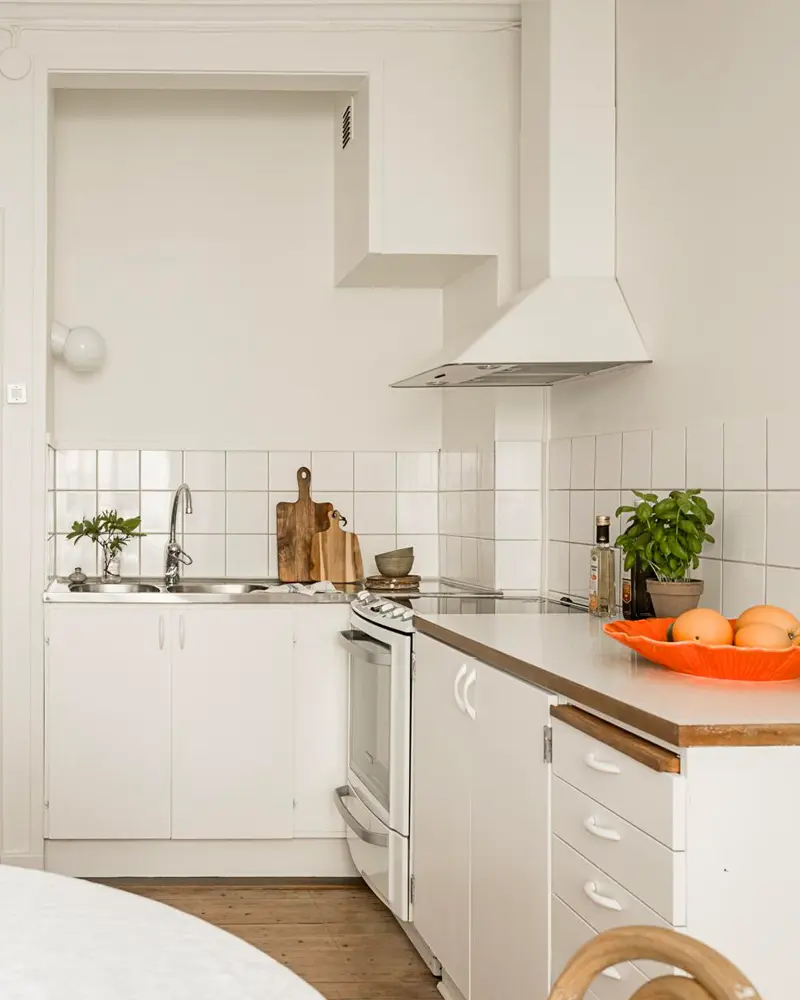

26. White cabinets, a butcher-block counter and simple tile in a bright galley © Pinterest
27. Sage green cabinets and white subway tile above a wood table with mismatched chairs © Pinterest
Finally, don’t forget to add decorative touches to personalize your Scandinavian kitchen. Green plants bring freshness and life to the space while echoing the connection with nature. Choose simple, elegant accessories like ceramic bowls, wooden utensils or clean-lined light fixtures. By following these principles, you’ll create a Scandinavian kitchen that’s practical, comfortable and beautiful. And when the holidays roll around, my Scandinavian Christmas decor ideas keep the look going all season.
Frequently asked questions
What are the main characteristics of Scandinavian decor?
Scandinavian decor is defined by simplicity, function and clean lines. Expect bright, airy rooms, light neutral colors, natural materials like light wood, linen and wool, and a minimalist approach where every object has a purpose.
What colors are used in Scandinavian design?
White, off-white, beige, light gray and natural wood tones form the base. Soft accents like sage green, dusty pink, pale blue or mustard add warmth, and a touch of black adds contrast.
What is the difference between Scandinavian and minimalist decor?
Both favor clean lines and little clutter, but Scandinavian decor is warmer and cozier. It layers natural wood, textured textiles, plants and soft lighting, while pure minimalism can feel starker and more pared down.
How do I make a small space look Scandinavian?
Paint the walls a light color, keep windows as clear as possible and choose multifunctional furniture in light wood. Limit decor to a few meaningful pieces and add warmth with a wool throw, a rug and a plant or two.
Can you do Scandinavian decor on a budget?
Yes. A coat of white paint, linen pillow covers, a few wood accessories, candles and some plants go a long way. Secondhand mid-century pieces are also a great, affordable way to get the look.