
When I first started thinking about decorating a nursery, I knew right away I wanted more than a pretty room. I wanted a space that feels soft, inspires calm, and wraps baby in a natural, reassuring world from day one. While browsing for inspiration I came across the cabin-in-the-woods theme, and I was instantly won over. Between raw wood, touches of greenery and forest-inspired motifs, this style checks every box for a nursery that’s both beautiful and soothing.
In this post, I’m sharing everything I’ve learned about creating a woodland nursery, from choosing colors and materials to concrete ideas for turning the room into a natural little nest. Whether you’re in full nesting mode or just curious, I’m sure you’ll find inspiration here, and you can browse more ideas in my nursery decor section or my favorite wood decor projects. So grab a cup of tea and let’s step into the woods together!
Contents
1. What makes a woodland nursery feel so calm and cozy
2. Forest greens, sandy beiges and earthy browns for a calm palette
3. Why natural materials set the woodland mood
4. 3 ways to bring the cabin feel into a baby’s room
What makes a woodland nursery feel so calm and cozy
A woodland nursery takes its cues from forests, mountain cabins and hideaways deep in nature. What I love most about this approach is that it’s not just about looks: it creates an enveloping atmosphere that supports both rest and discovery. Raw materials, natural tones and organic shapes come together to give baby a space that’s stimulating yet calming. It’s a timeless style that ages well and can grow with your child well beyond the baby years.
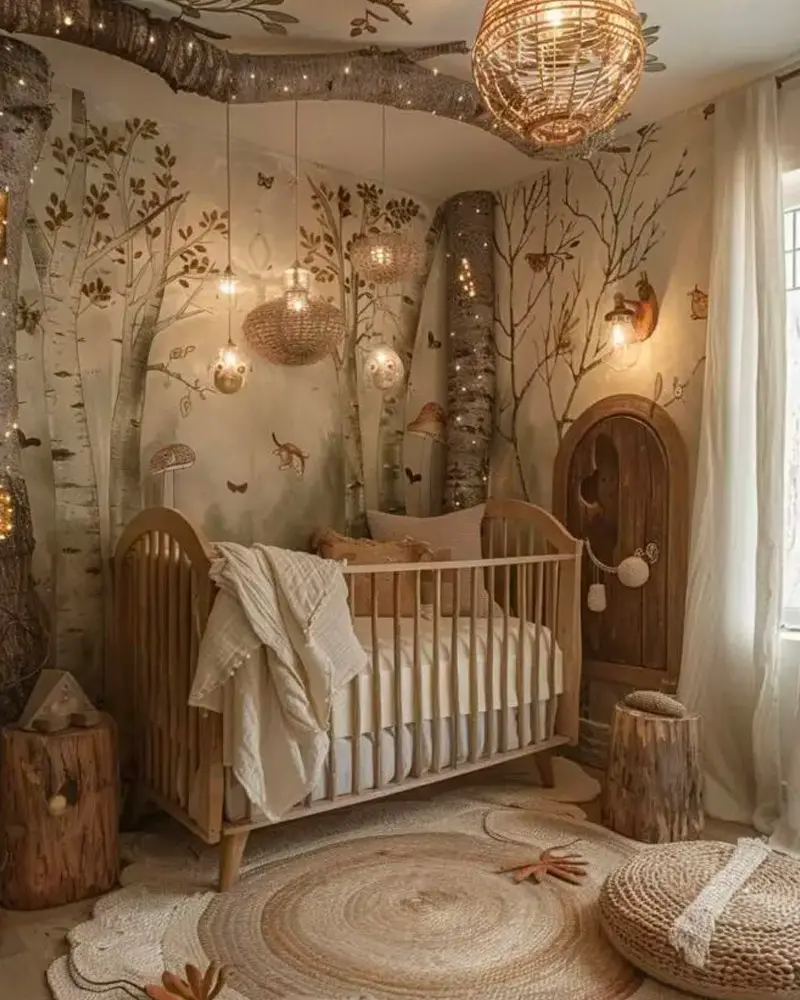
1. Birch trees painted on the walls, glowing lanterns and tree stumps around a wooden crib © Pinterest
The heart of this style is, of course, wood itself, on furniture, on the walls or in small decorative touches around the room. A wooden house-frame crib or toddler bed, for example, is enough to set the scene: a snug little hideaway where baby feels safe. I love how a single piece can turn an ordinary room into something magical. Then layer in rattan accents, wicker baskets or hand-carved objects to make the natural look feel authentic.
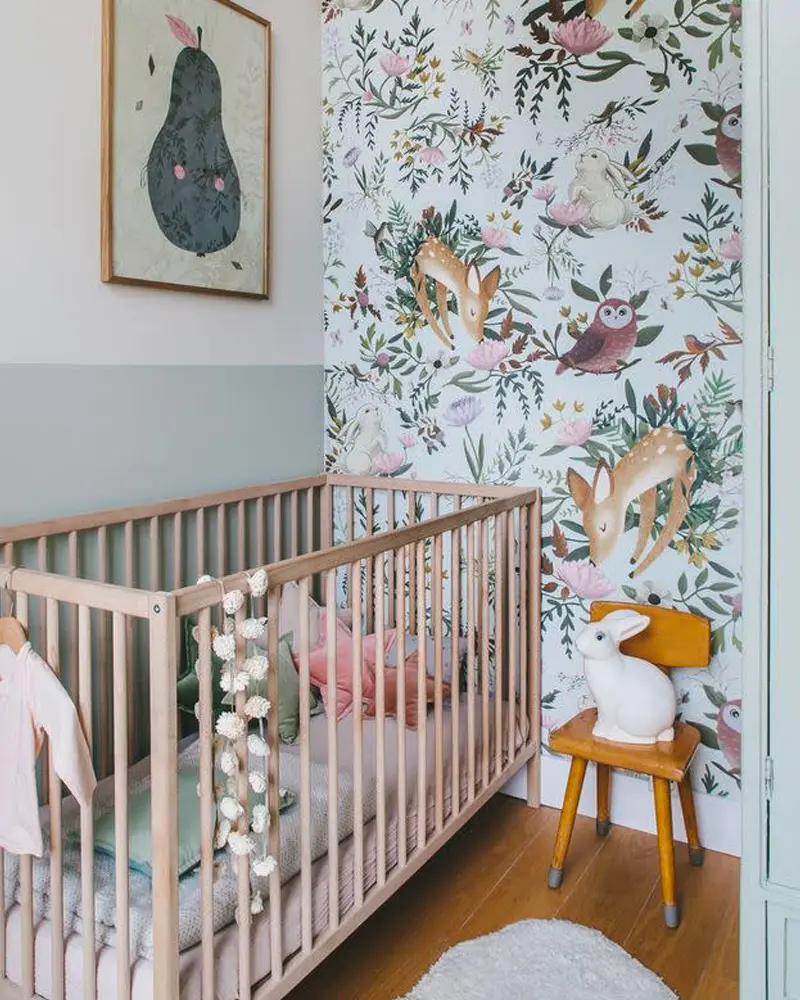
2. Deer, owls and wildflowers on the wallpaper behind a pale wood crib © Room to Bloom
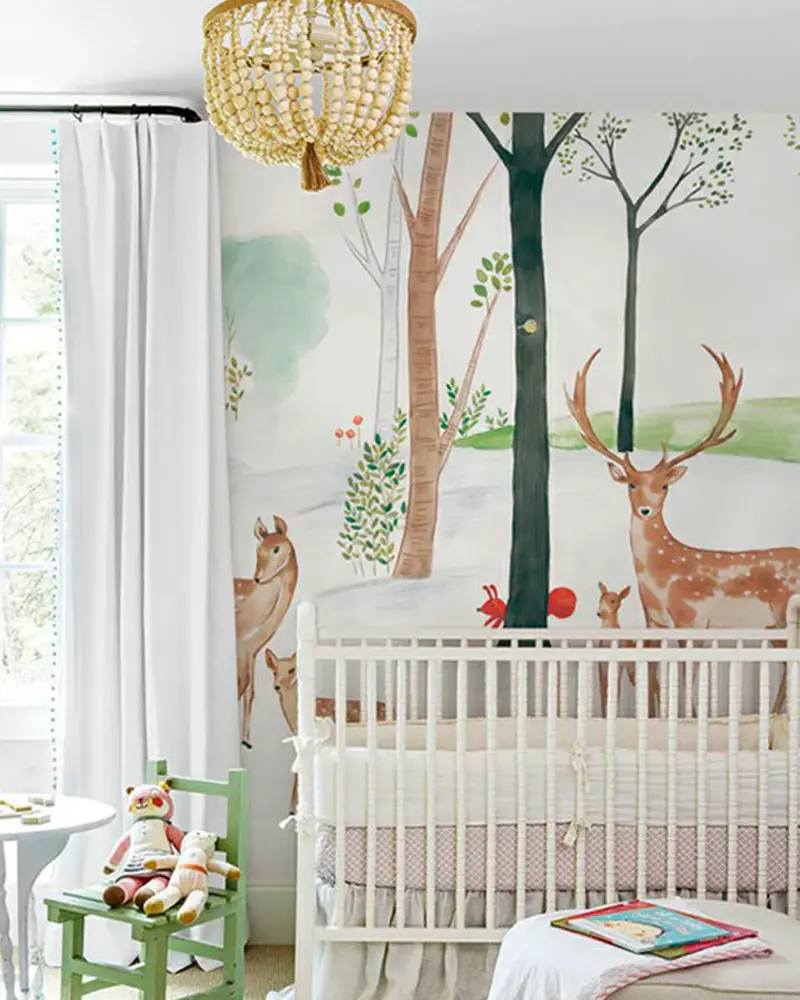
3. A watercolor mural of deer among slender trees frames a white crib © Clearhalo
Forest motifs also play a key role. Woodland animals, trees, mountains, mushrooms: these graphic elements can come in through wall decals, pillows for the reading chair, bedding or even a mural wallpaper. The idea, which I find especially charming, is to create an immersive setting that tells a story and sparks baby’s imagination from the very first glances. Every detail helps build a cohesive, poetic world: a little cabin tucked in the woods.
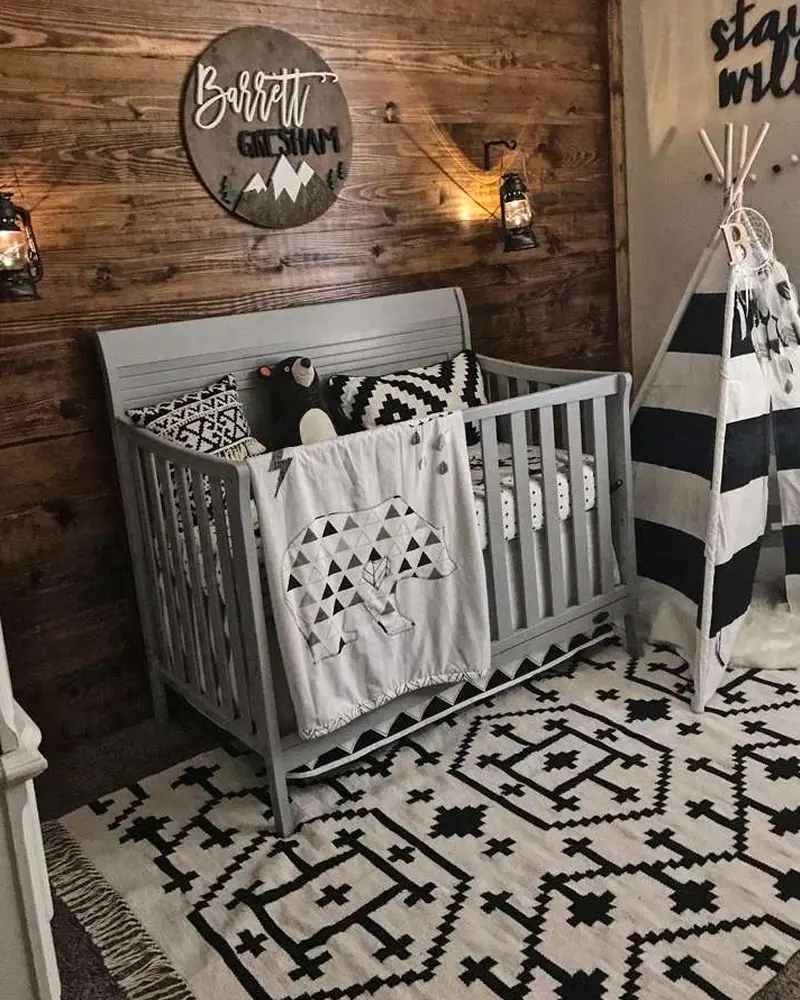
4. Gray crib, black and white teepee and a bold Aztec-style rug against barnwood planks © The Spruce
Lighting is another thing I pay close attention to in this kind of room. String lights hung well out of baby’s reach, a tree-trunk lamp or lanterns with soft, dimmable light recreate the hushed atmosphere of a night in the forest. This warm, gentle light is ideal for bedtime routines and helps baby wind down for sleep. With all these elements together, the nursery becomes a dreamy cocoon, far from the bustle of the outside world.
Forest greens, sandy beiges and earthy browns for a calm palette
To recreate the feel of a cabin in the forest, color choices are absolutely key. The palette can make the difference between a nursery that looks like any other trendy room and a space that truly feels natural and serene. The right colors should evoke nature, pair easily with wood and create a calm mood for baby and parents alike. Here are the shades I recommend.
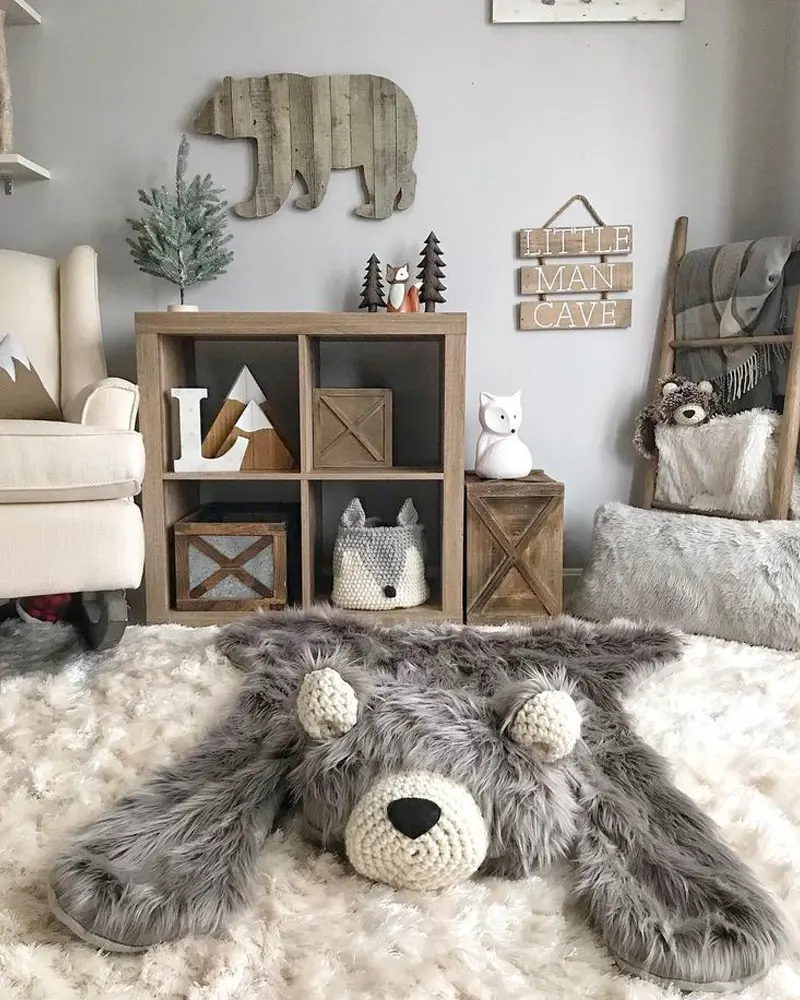
5. A plush bear rug, wooden bear wall art and cube shelves filled with forest friends © Clara Loo
Green is the must-have color for this style, since it brings to mind trees, moss and forest greenery. Use it as paint on a whole accent wall or in lighter touches through curtains, a rug or real plants placed out of reach. I especially love deeper greens like sage or forest green, which add real depth without weighing the room down. Green pairs naturally with every wood tone, from blond to dark brown. For more, see my green nursery ideas.
Beige and sandy tones are precious allies for brightening the room while keeping the warmth of wood. These neutrals form a soft backdrop for the other colors and natural materials. I like them on walls, textiles or accessories to create a light, gentle base that shows off the wood. Beige is the color of sand, pale bark and linen, everything I love about this natural style. My beige nursery post has plenty more inspiration.
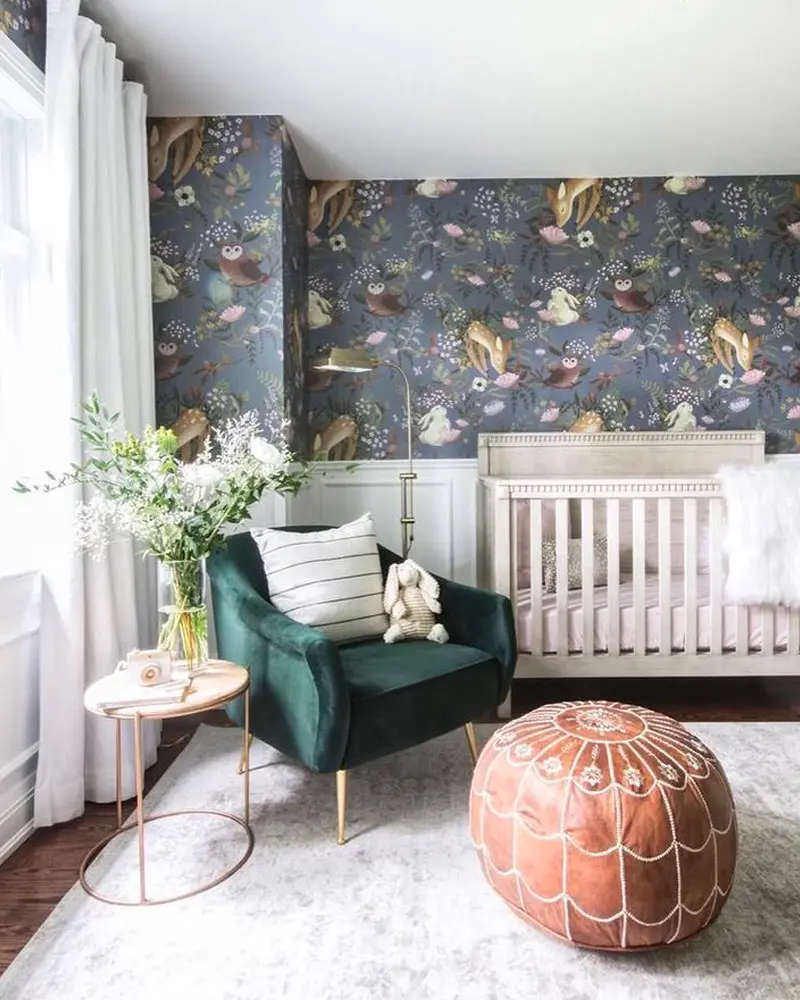
6. Moody animal-print wallpaper, an emerald velvet chair and a tan leather pouf © Leclair Deco
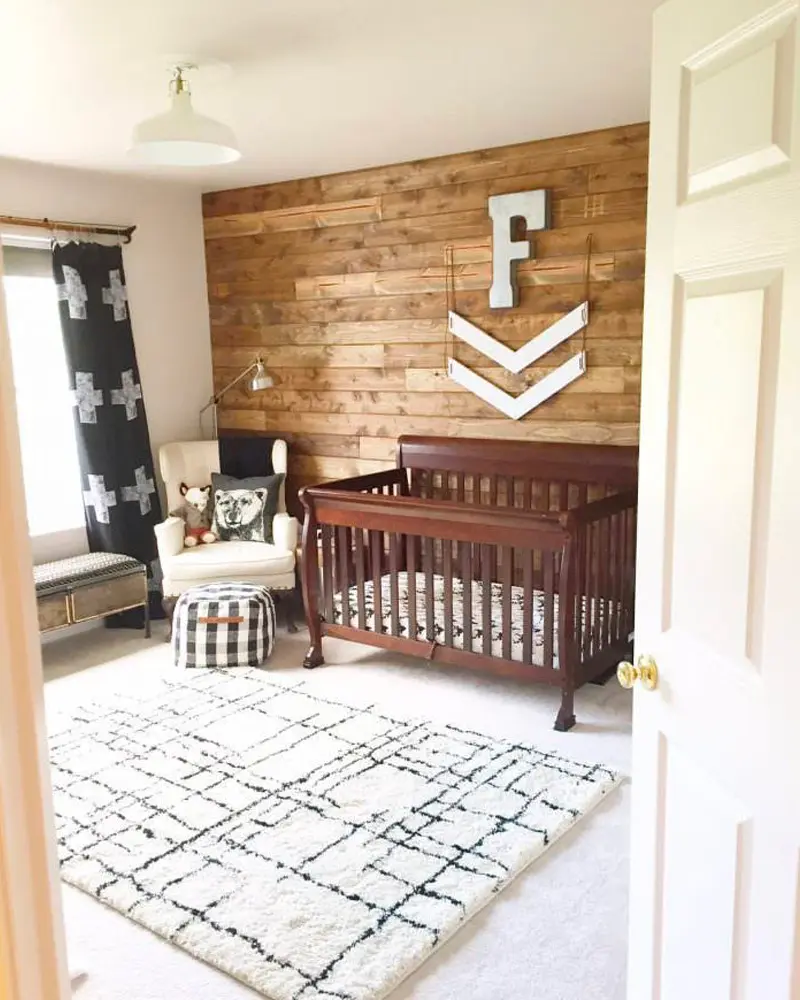
7. A reclaimed wood accent wall behind a cherry-stained crib and a cream checked rug © Pinterest
Brown and terracotta tones recall tree bark, autumn leaves and damp earth after the rain. These warm, deep colors reinforce the authentic, natural look, and I always love seeing them in small touches. Think ceramics, woven baskets or a pillow on the glider: they instantly make the room feel warmer and more enveloping. Finally, gray and stone tones add an elegant mineral note: a light gray wall or a few natural stone accessories round out the woodsy look without overpowering it.
My tip for balancing all these shades is the classic 60-30-10 rule: about 60% of a soft neutral like beige or warm white, 30% of green, and 10% of accents in terracotta, rust or stone gray. That keeps the room calm and restful, which is exactly what you want in a space meant for sleep.
Why natural materials set the woodland mood
Beyond color, materials give a forest-themed nursery its sensory richness and depth. The quality of the materials makes all the difference: they shape not only how the room looks but how it feels the moment you walk in. In this natural, authentic style, choose materials that evoke the forest, the earth and raw elements, while keeping everything soft and safe for baby.
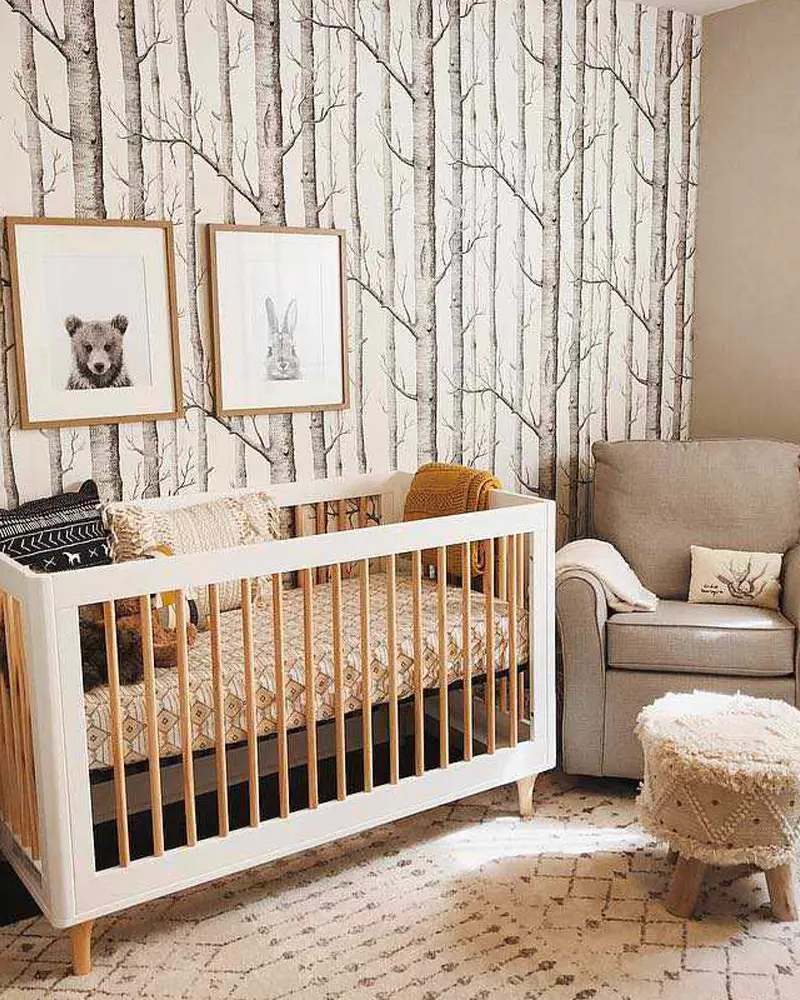
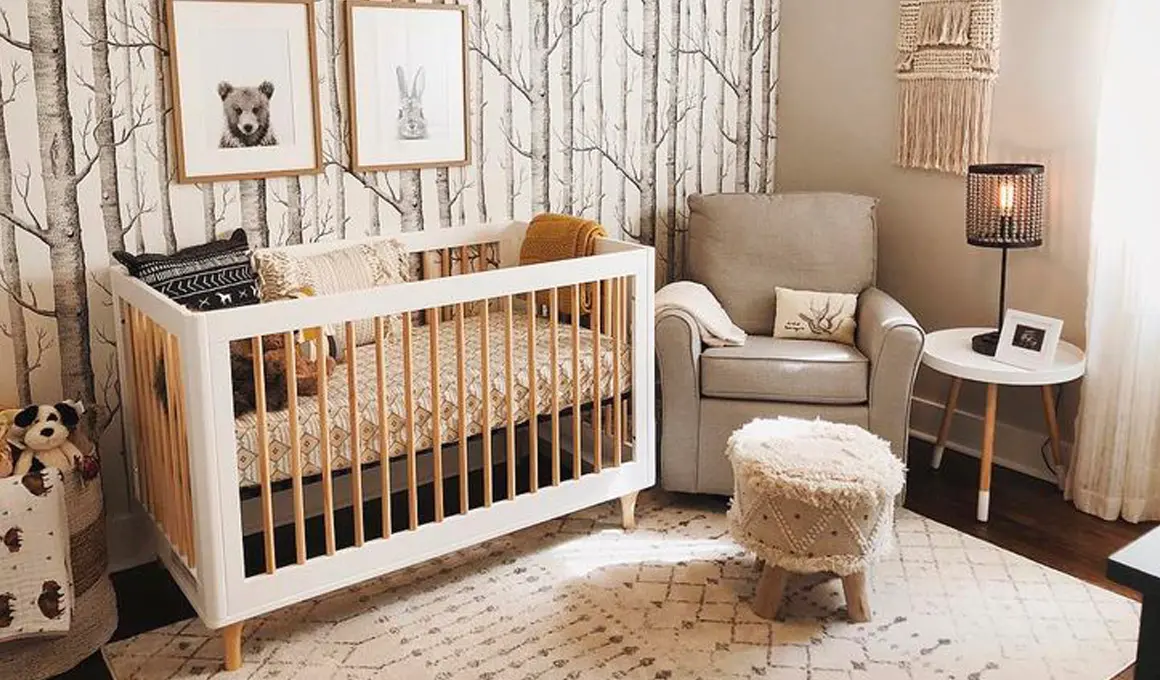
8. Birch-trunk wallpaper, bear and bunny prints and a natural wood crib with white frame © Pipcke
Wood is obviously the star material. Use it for the main furniture like the crib, dresser or wardrobe, but also on the floor with natural hardwood or on an accent wall for an immersive cabin effect. Raw, weathered or lightly distressed wood has an authentic charm I love: it tells a story and makes the room feel as if it has always been there, nestled in the forest. It’s a living material that gains character over time. Just make sure any painted or finished surface on baby furniture uses a non-toxic, child-safe finish.
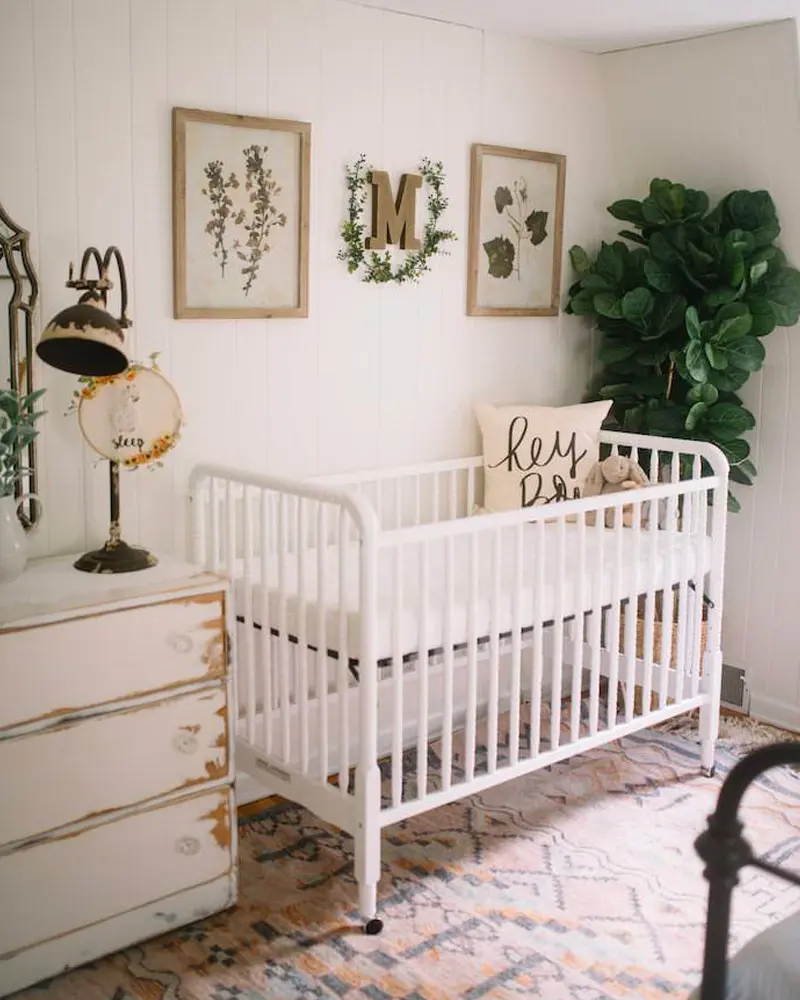
9. Pressed-botanical frames and a fiddle leaf fig above a white spindle crib © The Spruce
Linen and cotton are the go-to fabrics for this look, and I recommend them for every textile in the room. Beige linen curtains, a thick cotton blanket for the reading chair or naturally textured pillows all add to the cozy, soothing atmosphere. These fabrics breathe well, are gentle on baby’s delicate skin and fit a natural, responsible approach. I also love the slightly rumpled look of linen, which feels relaxed and authentic.
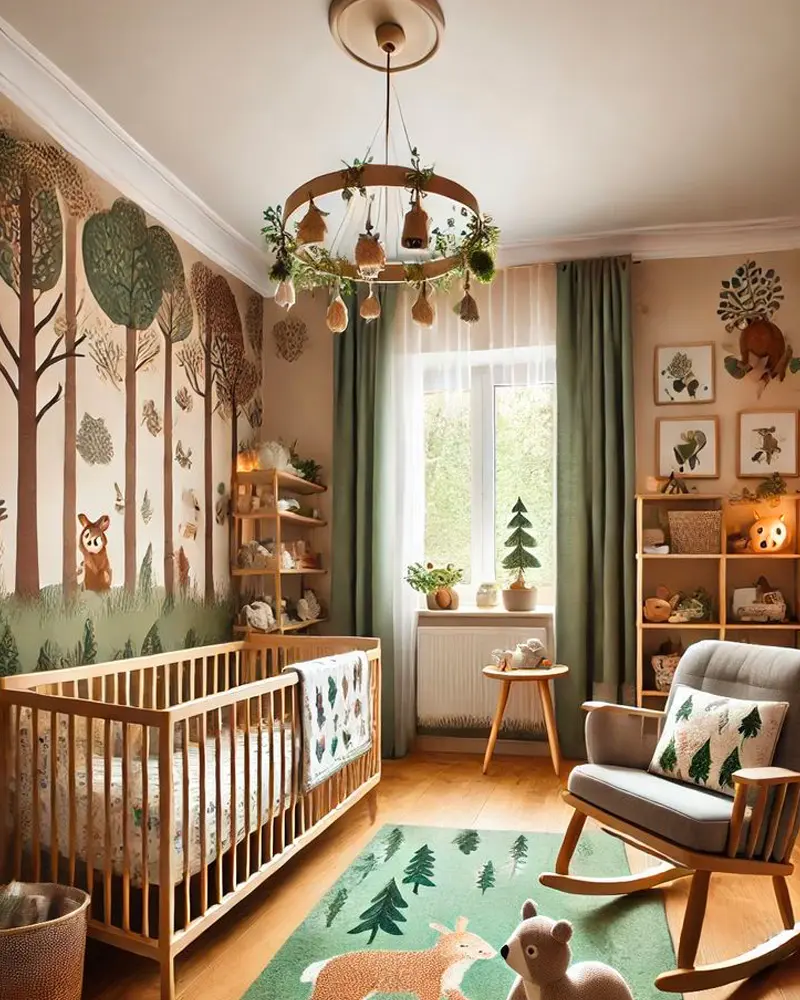
10. Painted trees, sage curtains and a green rug dotted with pines and foxes © Pinterest
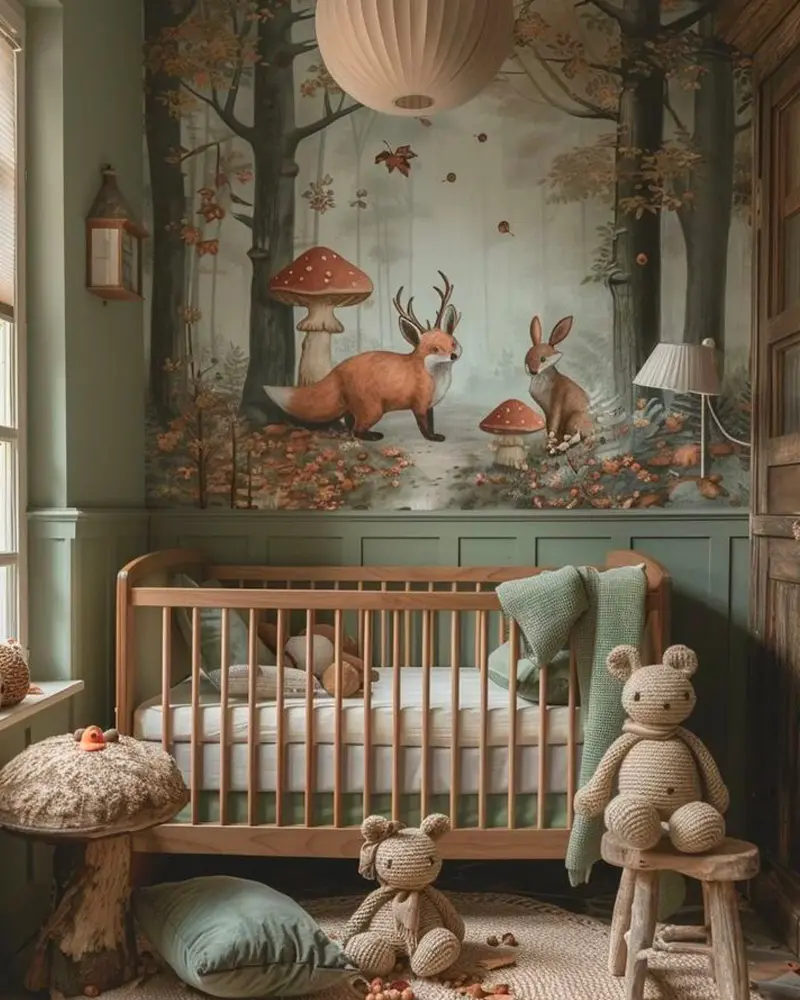
11. A storybook mural of a fox, deer and mushrooms above sage wainscoting © Pinterest
Wicker and rattan are, for me, absolutely essential here. Bring them in through storage baskets, a pendant light or even a rattan chair for a boho, natural touch with lots of character. Finally, wool and faux fur add warmth and coziness: a faux-fur rug near the crib or a wool throw draped over the glider feels irresistibly snug, perfect for chilly nights and cuddle time.
When you’re shopping for materials, look for solid wood or low-emission furniture, low-VOC or zero-VOC paint, and textiles certified to standards like OEKO-TEX or GOTS. And if you can, paint and assemble everything a few weeks before baby arrives so the room has time to air out.
3 ways to bring the cabin feel into a baby’s room
Now that we’ve covered colors and materials, let’s get practical with three ideas I find especially effective for creating a true cabin-in-the-woods feel. They work together and can be combined depending on your space and budget. What I love about each one is that they’re both pretty and practical, designed for the real day-to-day needs of a nursery.
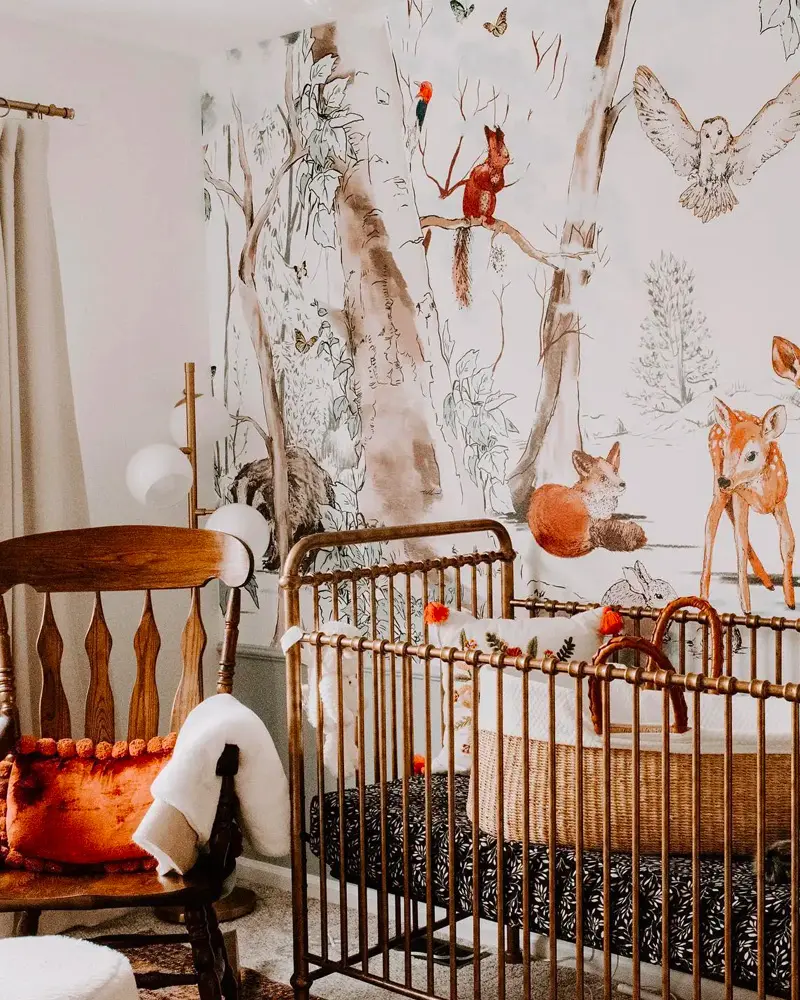
12. A brass crib and antique spindle chair below a sketched mural of owls and foxes © Teepee Joy
Before getting into the details, keep in mind that a cabin-style nursery is all about atmosphere rather than accumulation. A hand-sketched mural of owls and foxes, a brass crib and one old spindle chair are already enough to tell the story. The three ideas below simply help you build that same mood with wood, rustic accents and soft textiles.
1. Wrap the room in warm wood for a true cabin feel
The first idea is to choose furniture that evokes a real cabin to set the scene right away. A wooden house-frame crib or toddler bed is the centerpiece everything else revolves around: with its roof-shaped frame, it instantly feels like a little shelter where baby feels safe and secure. Some designs even include window-like cutouts that strengthen the little-house illusion. Whatever you choose, make sure the crib meets current safety standards and keep the sleep space bare: a firm, fitted mattress and nothing else.
To round out the furniture, I recommend a wardrobe and dresser with simple, warm designs, carved knobs, cabin-style doors or lightly weathered finishes for extra authenticity. Avoid overly sleek, modern lines that would break the mood. A tree-shaped bookcase or log-style wall shelf completes the cabin feel while adding practical storage. Anchor tall furniture to the wall, and you’ve got something both functional and decorative, exactly what a nursery needs.
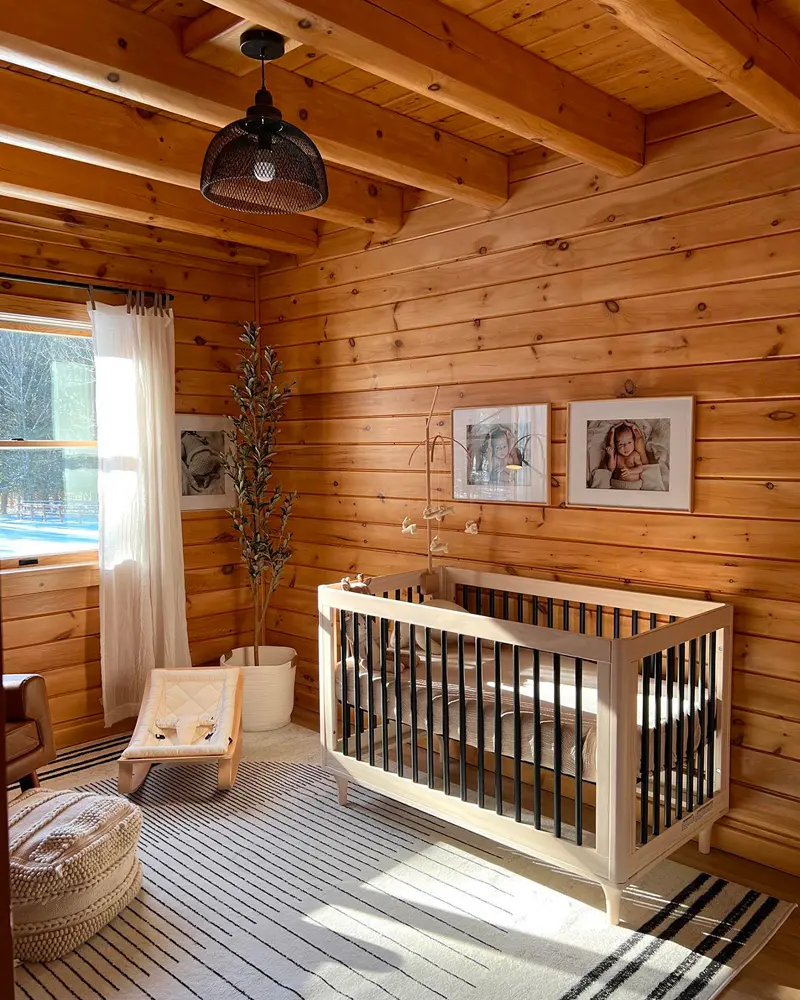
13. Knotty pine walls and beams make this nursery a real log cabin © Mountain Modern Life
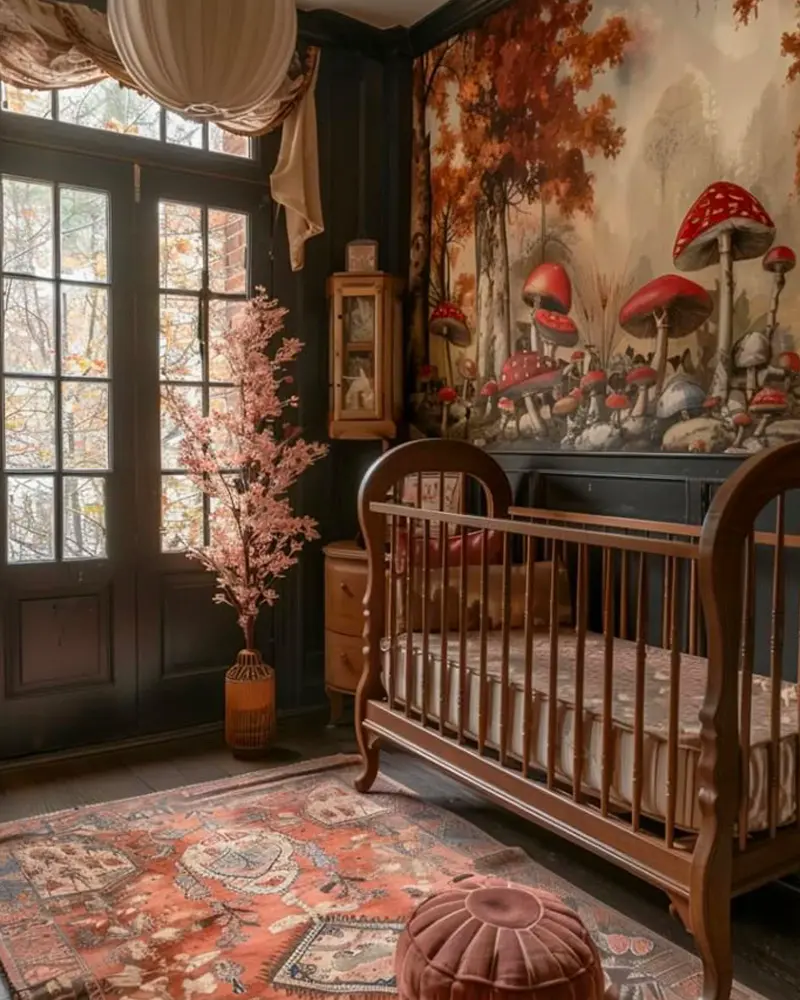
14. Red toadstools on an autumn mural, a carved wooden crib and a faded red rug © Pinterest
For an even more immersive feel, I love adding a little cozy corner, like a bench or storage chest under a window or by a decorated wall. It becomes the perfect spot for bedtime stories, quiet moments and making memories with your little one. Put all these pieces together and you get a nursery that’s functional and inspiring, straight out of a cabin in the woods, without sacrificing everyday practicality.
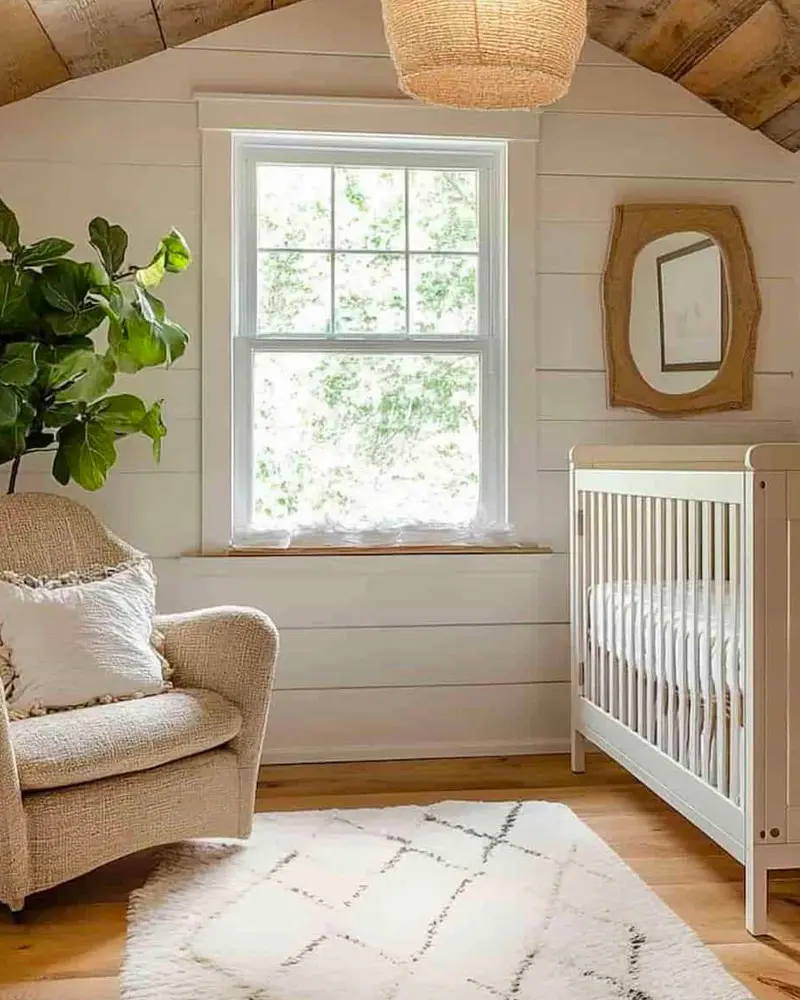
15. Shiplap walls, a cozy boucle armchair and a fiddle leaf fig under a sloped wood ceiling © Hello Hayley
Shiplap is a gentler alternative to full log-cabin paneling: painted or left pale, it brings the texture of wood without darkening the room. Under a sloped wooden ceiling, a cozy boucle armchair and a big fiddle leaf fig complete the picture and give you a comfortable corner for night feeds.
2. Pair plank walls with playful, rustic accessories
The second idea is to bring in nature-inspired accessories to bring the space to life with lots of forest details. On the walls, try framed woodland animal prints, leaf garlands, tree-shaped mirrors or a raw wood clock, all securely mounted and away from the crib. These pieces build a cohesive setting and tell a story baby will discover little by little. It’s these small details that make the difference between an ordinary room and one that feels truly lived in.
Toys and decorative objects have their part to play too. A mobile with little squirrels or leaves adds a poetic touch above the crib (remove it once baby can push up on hands and knees), while mushroom- or cloud-shaped night lights give off a soft, comforting glow for sleep time. Animal or tree-trunk storage baskets are also a great idea: practical, pretty and right on theme.
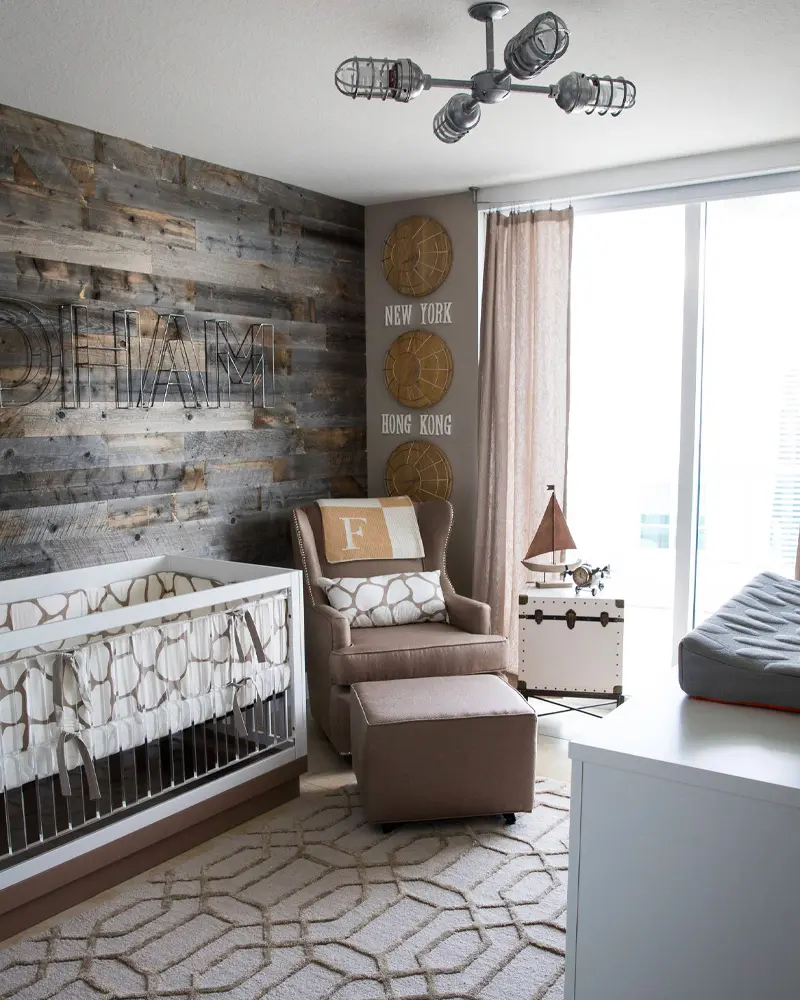
16. Weathered gray barnwood and a cage-style ceiling light add an industrial edge © Houzz
To go further, set up a teepee or play tent in a corner of the room. It’ll quickly become a play or reading nook where your little one can explore at their own pace. Add a few soft cushions inside and a cozy rug on the floor for a true sensory hideaway. I love this idea because it grows with your child and stays useful long after the baby stage. If you’re planning ahead, my woodland kids room ideas pick up right where this leaves off. Reclaimed barnwood or pine plank walls, like the two shown here, make a warm, rustic backdrop for all these finds.
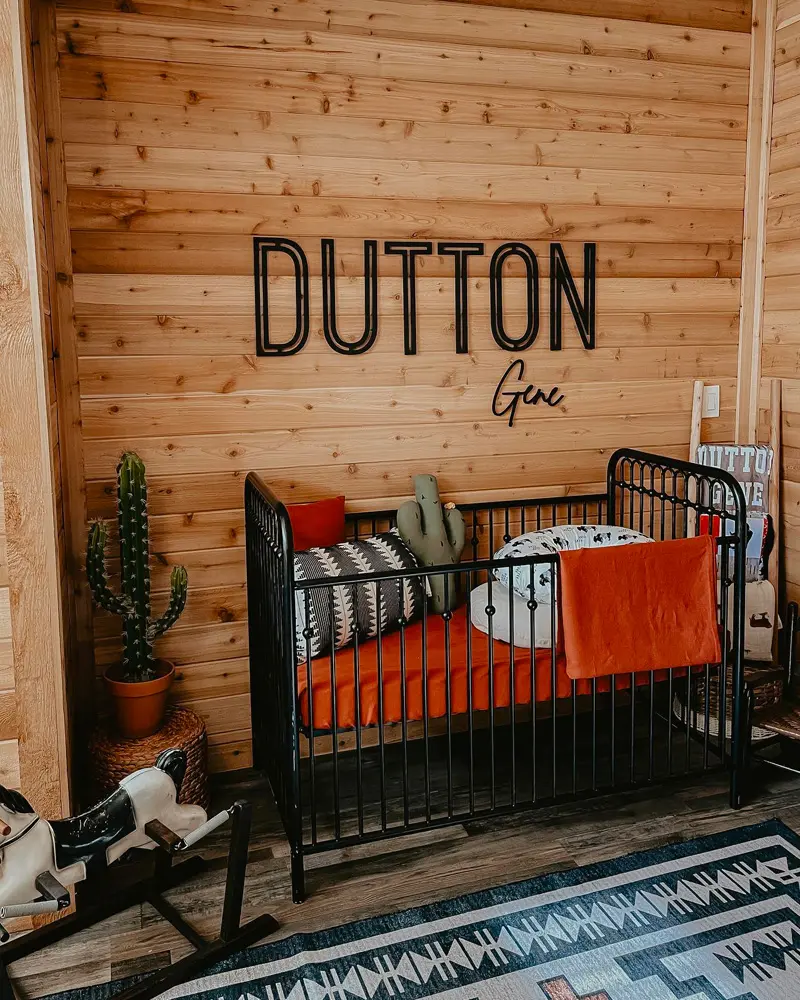
17. Rust bedding, a black iron crib and a potted cactus against pine planks © Pinterest
To keep the space safe, anchor dressers, bookcases and wall shelves to the wall, and choose rugs with a non-slip pad underneath. Those small precautions let you enjoy the cozy cabin look with complete peace of mind.
3. Layer a mountain mural and soft, textured textiles
The third and final idea is to add depth with carefully chosen wallpaper and textiles that structure the decor and strengthen the mood. Wallpaper is a major asset I really recommend: one wall covered in a forest pattern with pine trees, mountains or animals is enough to transform the room instantly. For an even more immersive effect, some trompe-l’oeil wallpapers mimic wood planks or stacked logs, making you feel like you’re truly inside a cabin. A mural of a misty landscape or a forest clearing also adds remarkable depth.
Textiles are just as important for a warm atmosphere, and it’s something I pay close attention to. A thick rug in the middle of the room instantly adds comfort and visually defines the space. Curtains can feature subtle foliage or little animal prints while softly filtering the light (choose cordless window treatments for safety). For the crib, keep it simple with a fitted sheet in a harmonious tone with a small nature-inspired print like stars, trees or forest animals.
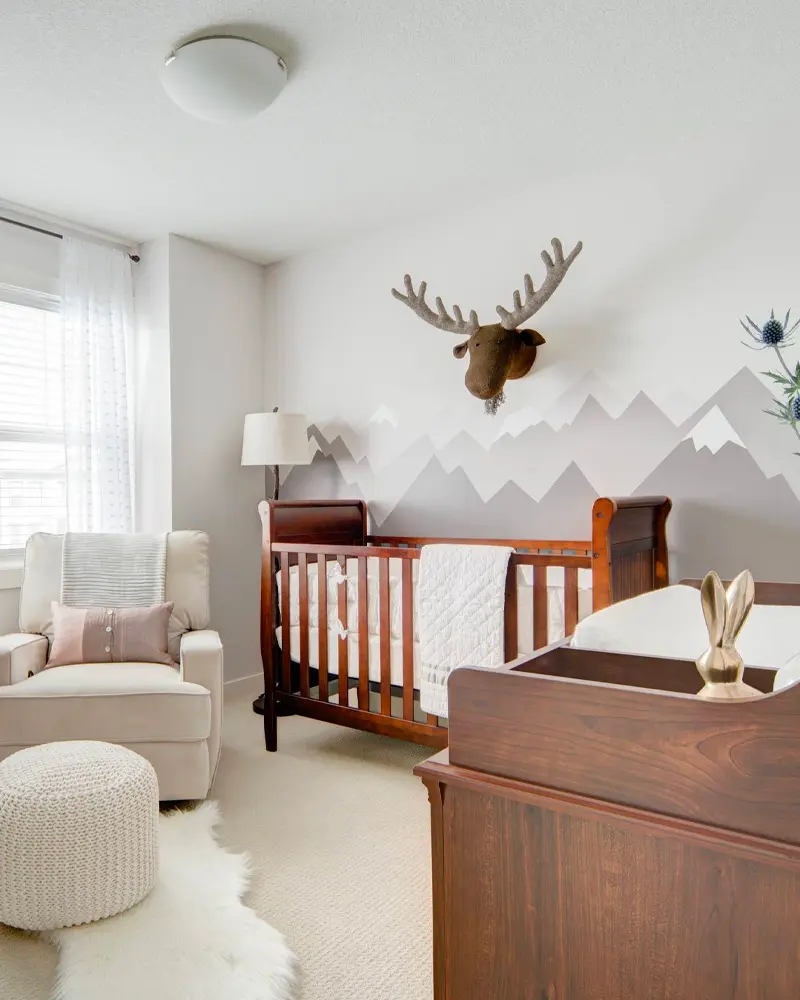
18. Painted gray mountains and a plush moose head above a wood crib © Houzz
In the end, it’s the little textile details that complete the look and make it memorable. A throw on the glider, a wearable blanket embroidered with woodland animals, or playful mountain- or cloud-shaped cushions for the reading nook add so much tenderness. I’m always amazed at how these simple pieces can transform a room and give it that wrapped-up, gentle feeling that makes a woodland nursery truly magical.
You don’t need to do everything at once, either. Start with the pieces that set the tone, like the crib and an accent wall, then add accessories, prints and textiles little by little. A woodland nursery is a style that grows easily with your child: swap the baby mobile for a bookshelf, the crib for a toddler bed, and the forest still feels just right years later.
Frequently asked questions
What is a woodland nursery theme?
A woodland nursery draws on the forest and cabin life: natural wood furniture, soft greens and earthy neutrals, and motifs like foxes, bears, deer, trees and mountains. It’s a gender-neutral, timeless theme that can easily evolve into a big-kid room.
What colors are best for a woodland nursery?
Sage and forest green, beige, warm white and soft terracotta or rust work beautifully with wood tones. Add a touch of light gray or charcoal for contrast, and keep bright colors to small accents.
How do you decorate a woodland nursery on a budget?
Start with one statement wall using peel-and-stick forest wallpaper or decals, then add a few wood accessories like frames, shelves or a wood bead garland hung out of reach. Thrifted wood furniture and woodland animal prints you can frame yourself go a long way.
Is a woodland theme safe for a crib area?
Yes, as long as decor stays outside the crib. Keep the crib bare with just a firm mattress and fitted sheet, hang frames and shelves away from it, anchor tall furniture to the wall, and keep string lights and cords out of reach.
Can a woodland nursery grow with my child?
Absolutely. Neutral walls, wood furniture and nature motifs work just as well for a toddler or school-age child. Swap the crib for a house-frame bed, add a teepee or reading nook, and the theme grows along with them.