

Decorating a nursery is one of those moments I find truly magical. You choose every detail with care, picture your little one growing up in the space, and look for a color that feels soft, soothing and beautiful all at once. If that’s the question on your mind right now, let me tell you: green is an answer I’m completely sold on. It evokes nature, calm and freshness, three qualities that are perfect for a room meant for sleep and early discovery.
In this post, I’ll walk you through all the ways to bring green into a nursery: the shades to choose, the materials that go with it, and three inspiring looks so you can find the one that feels like you. Whether you lean natural, modern or vintage, a green nursery has something for you. You’ll find more ideas in my nursery decor section and my green decor favorites. I hope these ideas help you create a space that’s as beautiful as it is welcoming for your baby.
Contents
1. Why green feels so restful in a baby’s room
2. From crisp white to dusty pink: which colors flatter green?
3. How to layer soft linen, warm wood and velvet in a green nursery
4. 3 ways to style a green nursery
Why green feels so restful in a baby’s room
Before getting into specific colors and materials, I think it’s helpful to understand why green feels so natural in a baby’s room. The color has a rich history and real decorating logic behind it, and that’s what makes it so relevant in our homes today.
Green is one of the oldest colors in our symbolic vocabulary. For centuries it has stood for growth, hope and renewal, values that resonate beautifully in a space designed to welcome a new life. It’s no accident that we instinctively link it with nature and calm places: there’s something deeply reassuring and refreshing about it.

1. A single strip of seafoam patterned wallpaper behind a white changing dresser © Sonia Saelens Deco
In the nursery, green plays a precious role. It sets a peaceful mood for sleep while offering gentle visual stimulation when baby is awake. What I love most is how versatile it is: from pale mint to deep forest green, by way of sage and seafoam, every shade creates a different feeling and suits very different decorating styles. It doesn’t go out of fashion and it grows up well with your child, which is no small thing.
Green is also a great gender-neutral nursery color, since it steps away from the traditional pink-or-blue codes. It’s timeless and elegant, and I’m convinced it will ride out the trends for years. Whether you use it on a whole wall, in the textiles or only in accessories, green gives the room structure and a real identity. If you love this color all over the house, take a look at my green decor ideas too.
Choosing the right shade is the trickiest part. Soft sage and eucalyptus greens are the safest bets for a calm sleep space, since their gray undertone keeps them restful. Mint feels fresh and airy, olive is warmer and more grown-up, and deep forest or emerald works best on a single accent wall. Test large swatches and watch them throughout the day, because green can shift noticeably between morning and evening light.
From crisp white to dusty pink: which colors flatter green?
Green is a generous color that loves company. What I really appreciate is that it pairs with a wide range of shades, from the most neutral to the boldest, which leaves plenty of freedom to personalize the nursery to your taste.

2. Khaki paint on one wall, green bunting and a white toddler bed below © Tinyme
The most classic and reliable pairing is green with neutrals: white, light gray and beige. These colors let green shine without overwhelming the space. White adds brightness and airiness, light gray brings a touch of sophistication, and beige warms everything up so the room never feels cold. Together they create a balanced, easy-on-the-eyes environment that’s perfect for a baby. For a softer neutral take, my beige nursery ideas pair beautifully with green accents.
If you’d like a slightly livelier room, green also works with brighter colors like pale yellow or pastel blue. Yellow, used in small touches on a pillow, a mobile or a rug, adds cheerful warmth without being harsh. Pastel blue creates an especially calming duo with green that recalls natural landscapes and brings serenity to the room.

3. Paper lanterns and a pink blanket brighten pale mint walls © Glamour
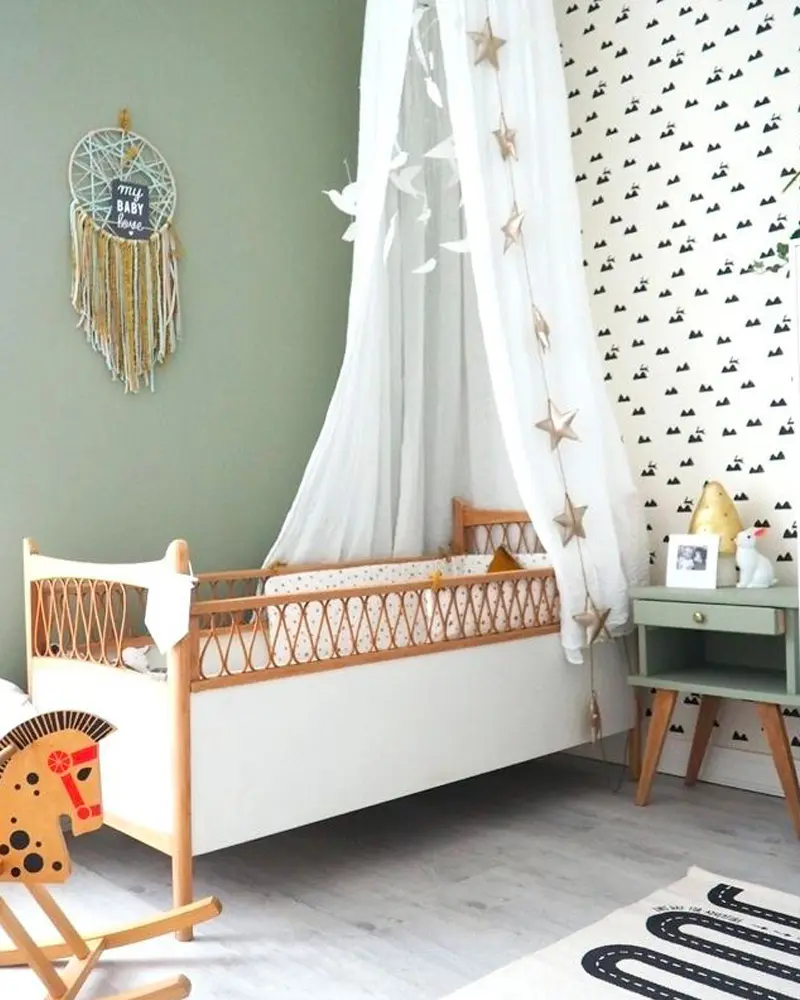
4. A cane-trimmed white crib and star garland canopy against sage walls © So Deco
Natural tones like taupe, sand or ocher also make lovely partners for green. These earthy colors reinforce the organic feel of the room and create a cozy, nature-inspired atmosphere. I especially love sage green with a rosy beige: the result is soft, modern and full of character.


5. A mint painted wardrobe, house-shaped shelf and pink polka dot garland © Pinterest
6. A deep forest green wall makes a pale wood crib and rubber plant pop © Elle
Finally, don’t hesitate to bring in a few metallic touches like gold or brass. A picture frame, a table lamp or a gold curtain rod adds a note of refinement and light that contrasts elegantly with the softness of green. That subtle play between natural and precious is one of my favorite combinations for a polished nursery.
How to layer soft linen, warm wood and velvet in a green nursery
If color sets the mood, materials bring it to life and give it depth. In a nursery, textures matter even more because they directly affect your baby’s comfort. Luckily, green works with a wide range of materials, each adding its own feel to the space.
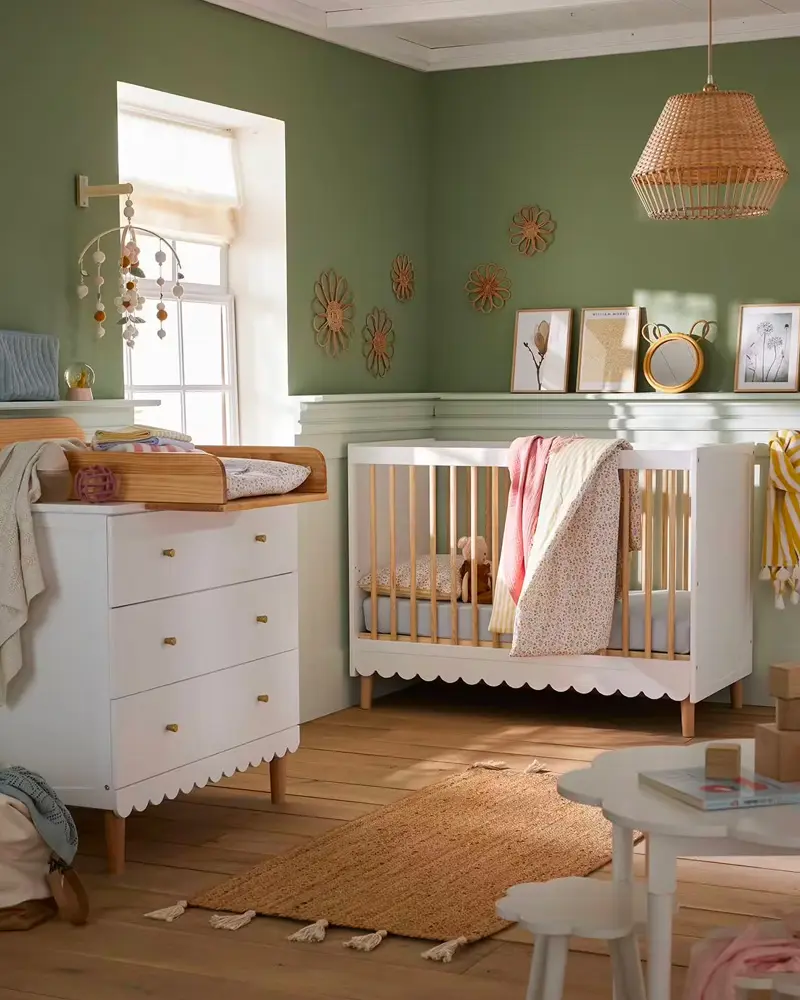
7. Scalloped white furniture, a rattan pendant and woven wall suns on olive walls © Vertbaudet
Linen and cotton are the first materials that come to mind for a successful nursery. Natural, soft and breathable, they’re ideal for curtains, crib sheets, pillows and blankets. Paired with green, they reinforce the organic, soothing feel of the room and add a slightly nubby texture that’s lovely to look at. Natural or bleached linen works especially well with pastel greens.
Wood is green’s natural partner in any well-designed home. Light wood furniture in oak or pine creates a warm contrast with green walls or textiles and adds a natural touch to the room. Raw wood shelves, simple dressers or a solid wood crib all fit perfectly into a green nursery, whether it’s natural, modern or vintage.

8. A sage painted crib against matching board-and-batten walls with navy curtains © Hello Hayley
Velvet is a material I love slipping into a nursery for depth and character. On pillows, a pouf or even a curtain, it brings a rich texture that contrasts nicely with airy linen or simple wood. In emerald or sage, velvet adds a sophisticated note without weighing the space down, and it’s wonderfully soft to the touch.


9. Plush bunnies, a green plaid blanket and a rattan pendant in a sage room © Pinterest
10. Mint wainscoting, floral wallpaper and dusty pink velvet curtains © Pinterest
Finally, metal, especially brass or copper, deserves a spot in a green nursery. I mostly use it for small accessories: drawer pulls, frames, lamps or curtain rods. The warm glow of brass creates a bright, precious contrast with soft green and gives the room a polished, modern look. It’s the kind of detail that really elevates the finish of a room.
3 ways to style a green nursery
Now that the basics are covered, let’s explore three concrete looks for a green nursery. Each has its own personality, but they all share the same ability to create a soft, beautiful space designed around your baby.
1. Go natural with soft greens, light wood and botanicals
The first idea is what I’d call the natural nursery. It’s one of the most popular looks for a baby’s room, and I understand why: it instantly feels serene, gentle and comforting. To get there, I go for fresh, light shades like seafoam, lime green or sage on the walls or textiles. They create a calming backdrop that supports sleep without ever feeling too strong.

11. One green wall behind an oak crib, a knotted cushion and a mint kids’ armchair © BB Malin
Materials play a central role here. I choose light wood furniture in oak or lightly finished pine for its natural warmth. Linen or organic cotton textiles complete the picture with their slightly raw texture that reinforces the organic spirit of the room. Everything feels visually coherent and restful, as if each piece found its place naturally. For a similar mood with little forest friends, see my woodland nursery ideas.


12. A sheer canopy over a white crib, backed by a green forest mural © Frenchy Fancy
13. A Moses basket, trailing ivy and a branch hanging keep greenery subtle © Visite Déco
If you want something bolder than a single painted wall, green wallpaper is the easiest way to add pattern while staying in a natural register. Emerald with tiny white dots reads almost like a starry forest, and it pairs beautifully with honey wood and a white glider. For smaller touches, a green ladder shelf, a rattan chair and a macrame leaf hanging keep the botanical theme going without overwhelming the space.


14. Emerald wallpaper with white dots behind a wood crib and white glider © Clem Around The Corner
15. A green ladder shelf, rattan chair and macrame leaf hanging © Idée de Déco
To finish the natural look, I add a few botanical touches. Easy-care houseplants bring welcome life (just keep them well out of baby’s reach), while leafy or floral patterns on curtains or bedding add a poetic feel. The result is a cozy, serene room that feels like a little green cocoon for welcoming your baby.
2. How to give a green nursery a modern edge
The second idea is for those who love clean lines and contemporary spaces. In a modern nursery, green takes on real character. I’m thinking of mint or olive green on the walls, two shades that are both on-trend and calming and make an ideal base for a stylish, confident look. Their contemporary feel pairs easily with simple furniture and a graphic spirit.


16. Blush pink lower wall, a green dresser with brass knobs and a plush bunny head © My Blog Deco
17. Green grid paneling and a felt star mobile over a honey wood crib © Benjamin Moore
Furniture is key in a modern space. I go for simple designs in black metal or light wood, with smart storage like floating shelves that keep the room feeling light. To give the room rhythm, I add pillows or rugs with geometric patterns that feel playful without going overboard. It’s a way to keep a kid-friendly feel while staying stylish.
To balance the green and keep the room from feeling too dark or heavy, I always pair it with neutrals like white, beige or light gray. That carefully measured contrast creates a mood that’s both lively and serene, stimulating during awake time and restful at nap time. That’s exactly what I love about modern style in a nursery: function in the service of beauty.
A modern nursery is also easy to adapt as your child grows: the clean-lined furniture and sober palette work just as well for a toddler or a big-kid room, and you can refresh the look simply by swapping prints and textiles.
3. Embrace vintage charm with thrifted wood and ditsy florals
The third idea is the one closest to my heart: vintage style. If you love retro charm and objects that tell a story, a vintage nursery is a wonderful way to combine softness and nostalgia. For this look I turn to forest green, deep and elegant, which instantly creates a warm, enveloping atmosphere. On one wall or in small touches, it creates a striking contrast with light tones and natural materials.
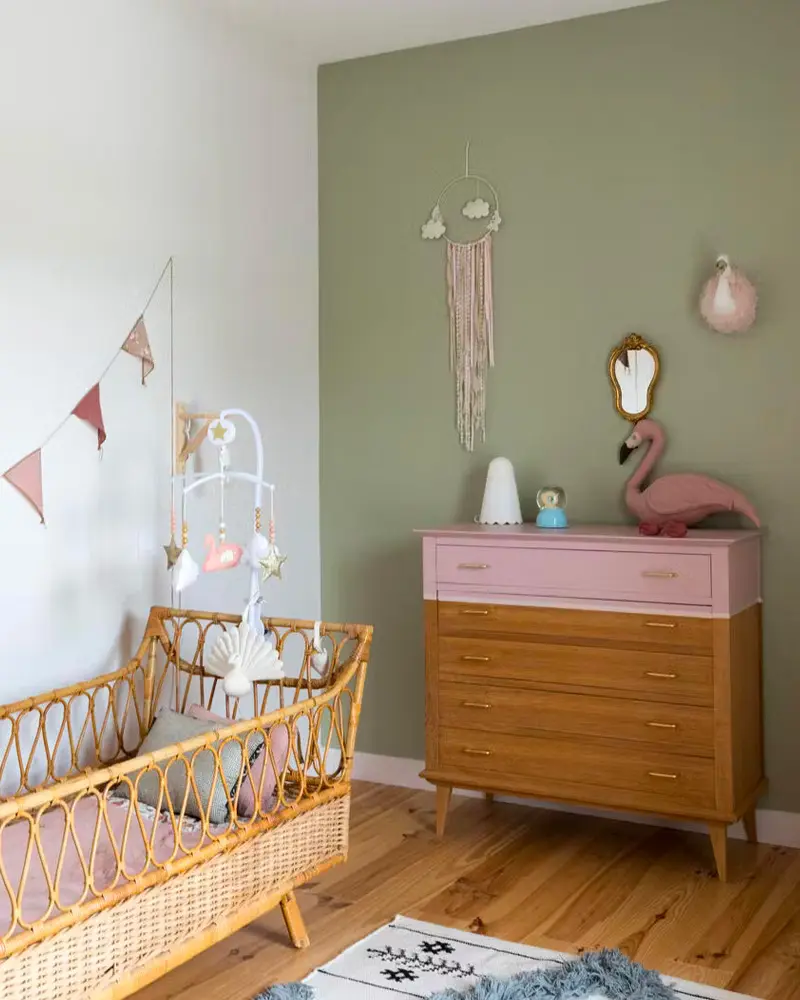
18. A rattan crib, pink-topped dresser and plush flamingo on olive green © Maison Créative
Furniture is the soul of a vintage nursery. I look for thrifted or retro-inspired pieces: a solid wood dresser with old-fashioned pulls, a rattan bassinet or a small wardrobe painted pastel green. These pieces have an authenticity you rarely find in new collections, and they give the room a charming, timeless story. Weathered decor like a retro table lamp or slightly aged gold frames completes the look.


19. A brass crib with floral sheets, a vintage chair and elephant print © Pipcke
20. Olive wainscoting, leafy wallpaper and a blue painted crib © Tinidoo
For textiles, floral prints, embroidery and old-fashioned patterns are all welcome. Ditsy floral curtains, a sleep sack in green and pink, or a rug in softly faded colors help create a tender, poetic world. Together they make a reassuring nest, both retro and timeless, that welcomes baby into a truly unique atmosphere I find so touching.
Vintage doesn’t have to mean expensive: thrift stores, estate sales and online marketplaces are full of solid wood dressers and frames waiting for a second life. Just check that any secondhand furniture is sturdy, and if an older piece might have lead-based paint (common in homes and furniture from before 1978), have it tested before sanding or refinishing it. A baby crib, on the other hand, is best bought new, to meet current federal safety standards.
Frequently asked questions
What shade of green is best for a nursery?
Soft, muted greens like sage, mint or seafoam are the most popular choices because they feel calm and restful. If you want more character, deeper shades like forest or emerald green work well on a single accent wall. Whatever you choose, slightly grayed or desaturated tones tend to feel cozier than bright, saturated greens.
Is green a good gender-neutral nursery color?
Yes. Green steps outside the traditional pink and blue codes, so it suits any baby, and it grows well with a child into the toddler and big-kid years. Pair it with white, beige or natural wood for a timeless room you won’t need to repaint soon.
What colors go with sage green in a nursery?
Sage pairs beautifully with white, cream, beige and natural wood for a soft, airy look. For warmth, add rosy beige, blush pink, terracotta or ocher; for a calmer feel, try pastel blue. Small brass or gold accents add a polished touch.
How can I add green to a nursery without painting?
Bring green in through textiles and accessories: crib sheets, a rug, curtains, pillows or a sleep sack. Removable wallpaper or wall decals are another paint-free option. Plants also add green, but keep them well out of baby’s reach.
What materials work best in a green nursery?
Natural materials like cotton, linen and wood suit a green nursery perfectly and feel soft and breathable for baby. Rattan, wicker and wool add texture, while a touch of velvet or brass brings a more elevated finish.