

Decorating a nursery is one of those projects that makes me genuinely happy, because you pour all the tenderness in the world into it. You think about colors, materials and the mood you want to create to welcome your little one into a space that feels just right. And lately, I’ve been completely won over by one shade in particular: beige. Calm, warm and timeless, it creates exactly the cozy, cocooning feel a baby needs in those first months.
What I love about beige is that it never shouts: it sets a serene, bright backdrop and lets materials and details tell the story. In this post, I’ll show you how to use this soft neutral in a nursery, with color pairings, material ideas and three distinct decor styles to explore. Get comfy, and let’s dive into a soft, elegant nursery together. For more inspiration, browse my nursery decor ideas and my favorite beige decor projects for the rest of the home.
Contents
1. Why beige is such a soothing backdrop for a baby’s room
2. How to pair beige with white, warm browns or soft pastels
3. How to warm up beige walls with natural materials
4. 3 ways to style a beige nursery
Why beige is such a soothing backdrop for a baby’s room
Before getting into the practical details, I always like to understand why a color works so well in a given space. In a nursery, beige isn’t a default choice: it’s a thoughtful one that answers real needs for calm, softness and harmony. It’s the shade that turns an ordinary room into a true haven for little ones.
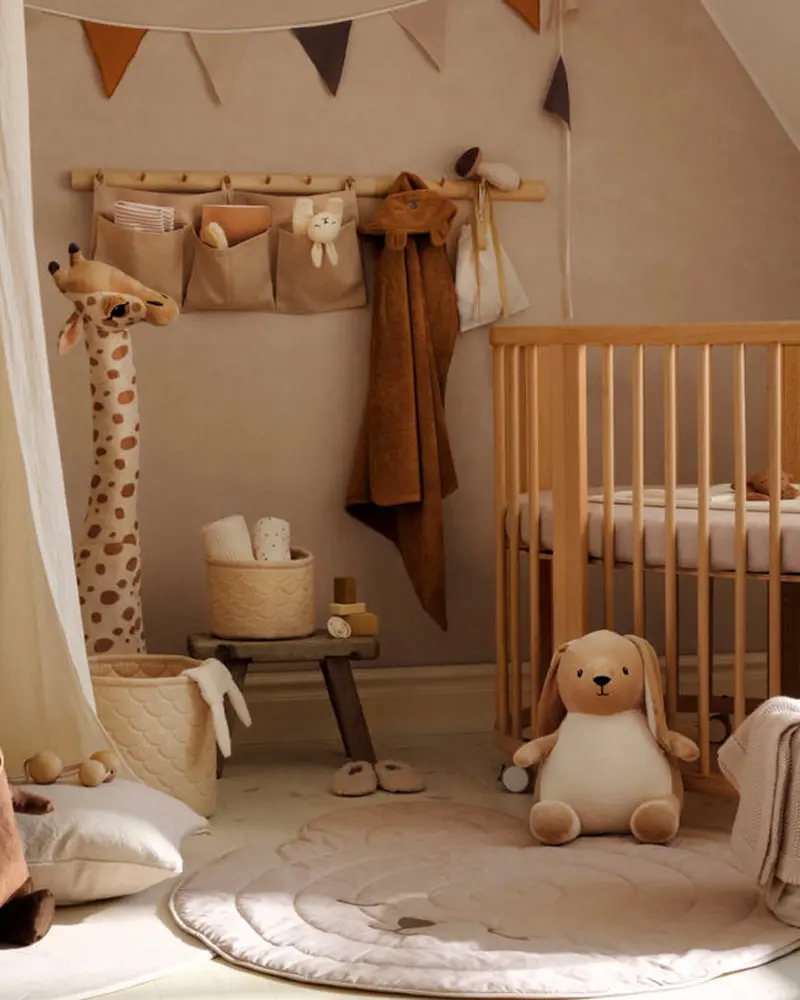
1. Pennant bunting, a wall pocket organizer and a plush giraffe beside a pine crib © Joli Place
Beige is a neutral that creates a soothing, enveloping mood, perfectly suited to a baby’s world. Far from boring, it’s a solid base you can build a rich, refined decor on. Because it reflects light without glare, it works in any room, whether it faces north or gets sun all day. Above all, it instantly brings that sense of serenity we want for a child’s first months.
What draws me to beige is how rooted it is in nature. It comes from the shades of sand, earth and raw stone, materials that evoke simplicity and calm. That connection to the natural world makes it especially harmonious in a nursery, where you want a cocoon that’s both reassuring and beautiful. Choosing beige means choosing a color that never goes out of style.
Beige is also a chameleon: it works with Scandinavian, boho or minimalist styles, which makes it an ideal starting point to personalize the nursery. You can play with shades, from very pale sand to a slightly deeper caramel, to add depth without overloading the space. The result is always the same: a room that breathes, rests and welcomes.
A practical tip when choosing paint: beiges have undertones, and they change a lot with the light. In a north-facing room, a beige with a warm yellow or pink undertone keeps the space from feeling gray, while a south-facing room can handle a cooler, greige-leaning shade. Always test two or three large paint swatches on different walls and look at them morning and evening before committing.


2. A sea turtle print and a cane nightstand next to a pale wood toddler bed © Les Voiles de Léon
3. Taupe paint stops at mid-height behind a natural wood crib and a plush rocking giraffe © Peinture Algo
To boost that calming effect, I recommend natural materials and carefully chosen accessories. Light curtains, a plush rug, a few natural-fiber baskets: each piece reinforces the soft, comforting feel of beige. The nursery becomes a beautiful retreat, designed for the first months but built to last well beyond them.
Beige is also a smart choice if you’d rather not decide on a gendered color scheme, or if you’re waiting to find out whether you’re expecting a boy or a girl. It works for every child, and it’s easy to warm up later with a favorite color as your little one grows and develops their own tastes.
How to pair beige with white, warm browns or soft pastels
One of beige’s great strengths is how generous it is: it goes with almost everything and adapts to any decor intention. Depending on what you pair it with, it can feel bright, warm, fresh or gently contrasted. Here’s a look at the pairings I find most successful in a nursery.


4. A woven rainbow hanging and cane-sided crib against blush beige walls © 20 Minutes
5. An alphabet poster, floating shelves and a rattan pendant over a white crib © April Eleven
The first pairing that comes to mind is beige and white. White brightens the room and highlights the shades of beige, creating a light, serene atmosphere that’s perfect for a baby’s room. Add light gray or taupe for a bit more depth while keeping the palette soft and soothing. These very neutral combinations have a timeless quality I really love.
If you want more warmth, beige also pairs beautifully with deeper natural tones like brown or pale yellow. Brown brings depth and quiet character, while pale yellow brightens the room without losing beige’s signature softness. These warm shades create a welcoming, comforting mood, ideal for a newborn’s first months.
I’m also a big fan of beige with cool shades like mint green or sky blue. These soothing colors balance beige’s warmth and bring a light, natural touch. Mint green, added through pillows or curtains, feels like a spring garden, while sky blue adds a sense of calm. It’s a balance I find especially lovely in a nursery. For more ideas along those lines, see my green nursery post.


6. Two-tone taupe and white walls, a round mirror and a petal-shaped ceiling light © Home by Marie
7. A white canopy crib, wooden dollhouse and toy train on a fluffy rug © Mes Animaux Déco
What I love about all these pairings is how flexible they are. You can go very soft and monochrome, or play with subtle contrasts to liven up the room without disturbing it. Beige remains the common thread that ties everything together and keeps the nursery visually calm, whatever style you choose.
If you’re unsure where to start, pick one accent color and repeat it three times around the room, for example on a pillow, in a framed print and on a storage basket. That repetition makes the palette look intentional, and you can change the accent easily later without repainting.
How to warm up beige walls with natural materials
Beyond color, materials are what give a beige decor body and a sensory feel. In a nursery, you’re looking for soft, natural, comforting materials, and beige is the perfect match. Here are the combinations I recommend for a space that’s both beautiful and easy to live in.

8. Rumpled blush and cream bedding in a white crib under two paper lanterns © Clem Around The Corner
Linen and cotton are the first materials I think of with beige. Linen, light and slightly textured, is perfect for curtains, pillows or bedding: it creates an airy, natural feel that goes beautifully with beige tones. Cotton brings unbeatable softness to blankets and crib sheets, adding to that sense of comfort you want in a nursery.
Wood is another material I love with beige in a baby’s room. Light wood furniture, like a crib, a dresser or shelves, creates a soft, warm contrast with beige walls while adding texture and depth. Wood keeps the natural, soothing feel and ages beautifully over the years. It’s a decor investment I never regret. My wood decor ideas show more ways to use it.
For an even cozier, more enveloping room, I also think of velvet and wool, two materials with incredible texture. A soft wool rug, beige velvet pillows or a textured throw amplify the cocooning feel while staying in a natural, harmonious palette. They’re ideal for a reading nook or play corner, where comfort and style need to meet.

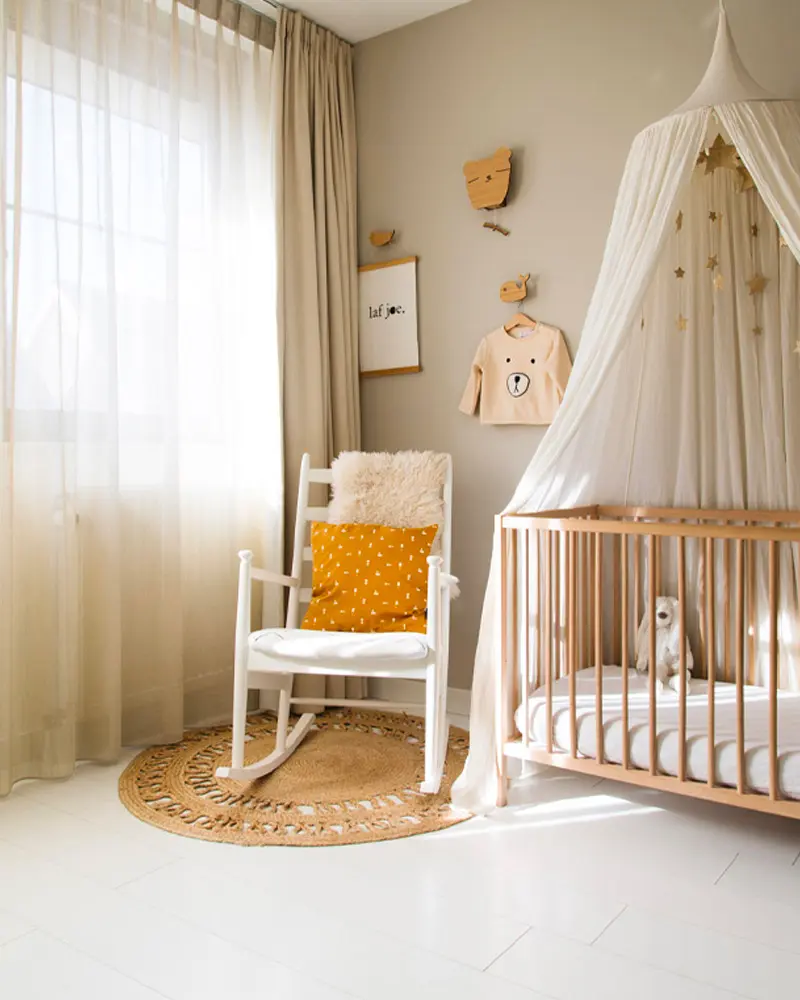
9. A blush canopy and terracotta sheets warm up a pine dresser and white crib © Clem Around The Corner
10. A white rocking chair with a mustard pillow sits on a round jute rug © Pinterest
Rattan and jute deserve a special mention too, especially if you love natural, handcrafted looks. Rattan baskets for toy storage, a natural-fiber armchair in a corner: these pieces bring an authentic, warm touch that fits perfectly with beige. And as a bonus, they’re often very practical, which in a nursery is never a small thing.
Whatever materials you choose, think about safety and easy care. Machine-washable covers and slipcovers are a lifesaver with a baby around, light beige fabrics benefit from a stain-resistant finish or a washable rug, and certifications like OEKO-TEX for textiles or GREENGUARD Gold for furniture and mattresses help limit chemical emissions. Remember, too, that the crib should stay bare: keep pillows, throws and plush toys for the reading chair or play area.
3 ways to style a beige nursery
Now that the basics are in place (colors, materials, mindset), I want to show you how beige plays out in different decor styles. Whether you lean clean, dreamy or minimalist, there’s a way to interpret it that suits you. Here are three looks I find especially inspiring for a nursery.
1. Keep it light and airy with Scandinavian simplicity
The first idea is a Scandinavian-style beige nursery. This style, one of my favorites, is all about simplicity, light and natural materials, and beige fits right in. This soft shade reflects light gently and creates a peaceful mood, ideal for baby’s long nights of sleep. For this look, I go for light beige walls with light wood furniture and natural linen or cotton textiles. A wool rug, understated pillows and clean-lined furniture finish it off: the result is cozy yet airy, functional and beautiful. My Scandinavian decor guide has more inspiration.

11. Floor-length sand curtains and a draped canopy turn the crib into a cozy nook © Mano Mano
What I especially love about the Scandinavian approach is its confident restraint. You don’t overload the room with decorative objects: each piece has its place and purpose, and that restraint is exactly what creates harmony. Furniture is functional and minimal, colors stay very soft, and the space breathes. For a baby, it’s the ideal environment: just stimulating enough, and soothing above all.


12. A rainbow print, crochet garland and a soft gray armchair around a white crib © Nuage Déco
13. Beige board-and-batten paneling, a white crib and a plush giraffe on guard © Cocon de Décoration
To get the look, keep walls a soft sandy beige, add white or birch furniture, and limit accents to one or two natural tones like oatmeal or soft gray. A simple paper star lamp or a wooden mobile above the changing table, rather than the crib, is enough to give the room its personality.
2. Go boho with jute, macramé and warm sandy tones
The second idea is a boho beige nursery, a look I find full of poetry and softness. Here you choose warmer, slightly golden beiges and pair them with natural materials like rattan, jute or macrame. Woven storage baskets, a rattan chair in a reading corner, a few green plants for life: the boho look is built in layers, generous but never excessive.

14. A tan canopy, an oversized rattan pendant and macrame hangings fill this boho corner © Bleu Canard
In a boho nursery, I also like decorative pieces that tell a story: a string of lights above the crib, a natural-fiber wall hanging, a rug with soft geometric patterns. These details add character and warmth without breaking beige’s serenity. It’s a look that ages well too: as your child grows, they’ll keep living in an inspiring, gentle space. For more on the style, see my boho decor ideas.
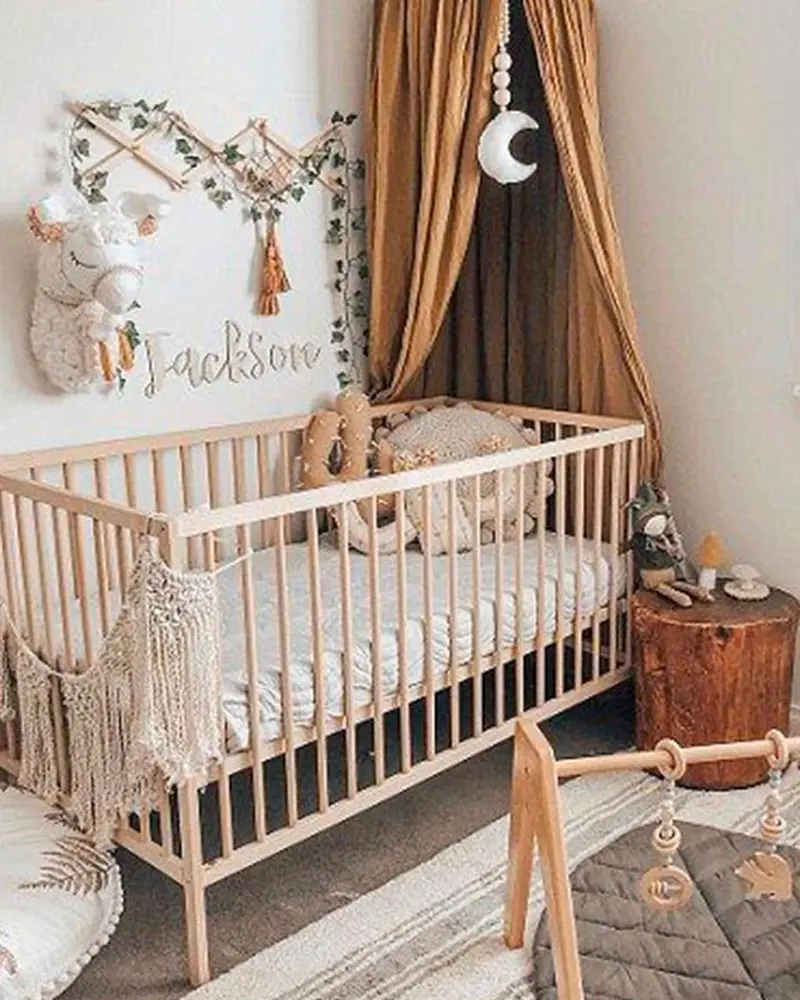

15. Macrame fringe, a felt moon and a caramel drape around a natural wood crib © Pinterest
16. Olive paint on the lower wall, botanical prints and a scalloped jute rug © Pinterest
Boho beige is also a chance to mix textures freely: velvet, wool, cotton and jute sit side by side and complement each other. The key is to stay within warm, natural tones so the whole room keeps a calm visual consistency. The result is a nursery that’s both dreamy and comforting, a true cocoon for baby.
3. Pare it back to a calm, minimalist cocoon
The third idea is a minimalist beige nursery, and it may be the one that speaks to me most. Minimalism is the art of saying more with less, and beige adds a quiet warmth that keeps the room from feeling cold or clinical. Choose furniture with clean, simple lines, in light wood or metal, and give each piece room to breathe.

17. Cream walls, a curvy armchair and a few plush animals on open shelves © Pinterest
In a minimalist nursery, beige cotton bedding, light curtains and a soft rug are enough to create a perfectly orderly, peaceful atmosphere. You limit extras, keep only the essentials, and that simplicity is exactly what supports calm and baby’s sleep. Minimalism also makes it easy to evolve the room: swap a few accessories and you refresh the look without starting over.
Clever storage is the secret to keeping a minimalist nursery calm. Closed cabinets, a dresser with deep drawers and a few lidded baskets hide diapers, clothes and toys, so the room stays visually quiet even on busy days.

18. Soft plaid wallpaper above the wainscot and an oval white crib © I Love Wallpaper
What I take away from the minimalist beige look is proof that simplicity can be deeply elegant. No need to pile on colors or accessories to create a beautiful room: a few well-chosen pieces and a consistent palette around beige, and the nursery becomes a retreat that’s both stylish and functional, suited to a little one’s needs as well as the parents’ wishes.
Whichever style you choose, beige gives you a soft, flexible foundation that will grow with your child. Start with the walls and the main furniture, then let textiles and accessories bring in personality. It’s a nursery you’ll love spending time in, too, through every late-night feeding and bedtime story.
Frequently asked questions
Is beige a good color for a nursery?
Yes. Beige creates a soft, calm and timeless atmosphere that suits a newborn and grows easily with your child, so you won’t need to repaint in a couple of years. It also works with almost any style, from Scandinavian to boho.
What colors go well with beige in a nursery?
Off-white keeps things clean and bright, while sage green, powder blue or terracotta add character without breaking the soft mood. Warm naturals like caramel and honey also pair beautifully with beige for a cozy, cohesive room.
What materials work best in a beige nursery?
Natural materials like cotton, linen, light wood and rattan reinforce the warm, organic feel of a beige palette. Mixing these textures also adds depth and keeps a neutral room from feeling flat.
How do you keep a beige nursery from looking boring?
Layer textures, such as velvet, knits and raw wood, for visual richness. Add a few accessories in slightly bolder shades like moss green or rust, or bring in personality with a mobile, a graphic print or a patterned rug.
Is a beige nursery gender neutral?
Yes, beige is one of the easiest gender-neutral nursery colors. You can lean it softer with blush pink, cooler with sky blue, or keep it fully neutral with white, wood and natural fibers.